Secure both original document parts, coordinate SNCA export formalities and inspect the car before arranging transport to Germany.
Before buying, check the vehicle identification number (VIN), authority to sell, documented history and current condition. Then agree how you will receive both original parts of the vehicle documents after processing by Luxembourg's registration authority, SNCA, and how the car will reach Germany. The existing Luxembourg plates are not a ticket home: the previous registration documents become invalid when ownership changes. The export certificate does not replace registration for driving. (Guichet.lu)
This guide concerns a used car already registered in Luxembourg which you buy as a private individual resident in Germany and intend to register there. With CarAudit, you can have the actual vehicle inspected directly at the seller's premises in Luxembourg before paying the price or travelling to collect it. You should know the inspection scope and its limitations as well as the required documents.
Contents: Original documents · Export certificate · SNCA notification · Transport · Vehicle inspection · Checklist · Germany: taxes and registration · FAQ
Which papers should be available before buying?
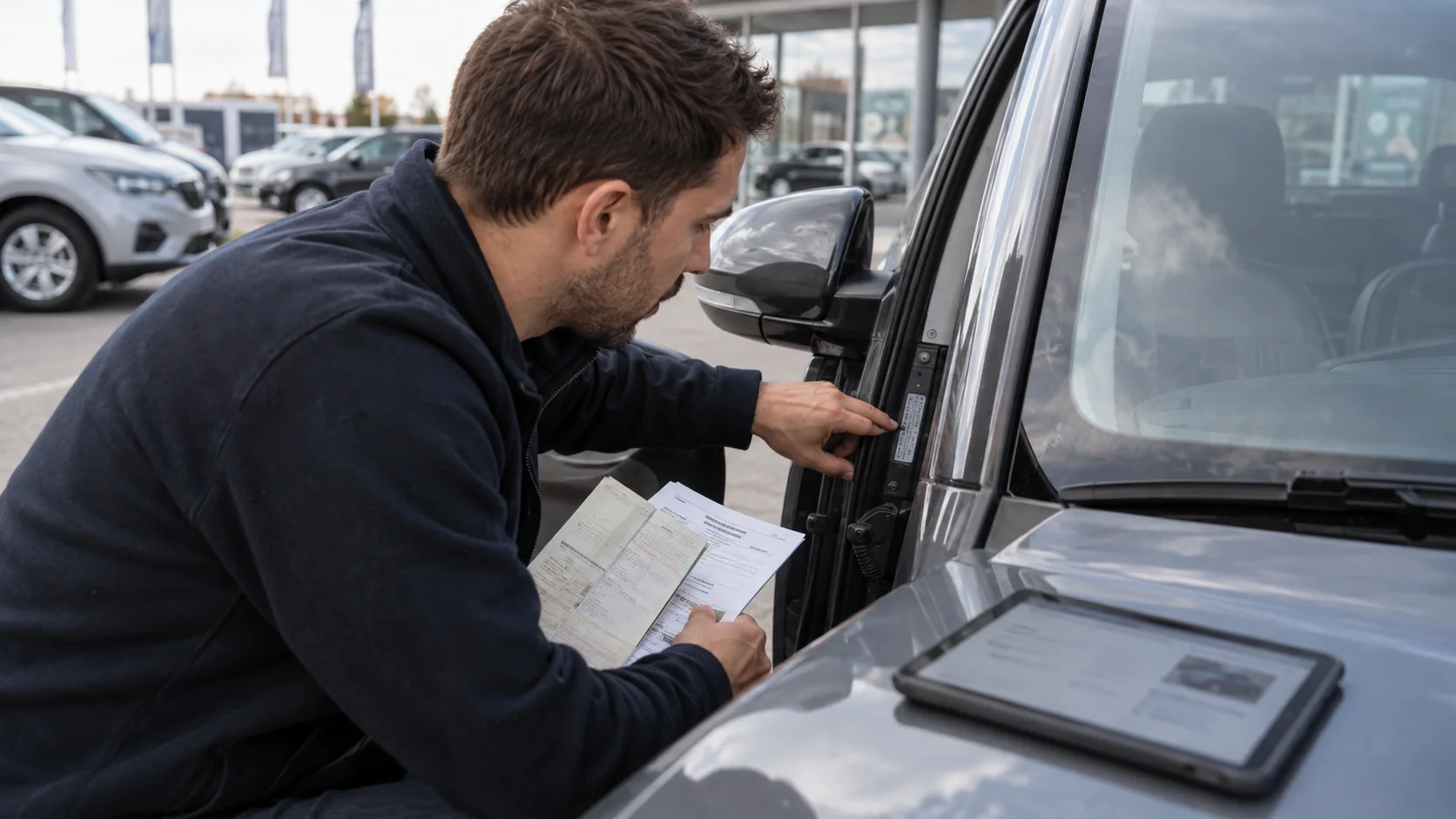
Before travelling, request legible images of the registration certificate: part 1 is grey, part 2 yellow. Compare the VIN with the advert and later directly on the vehicle. Establish who is registered as keeper or owner and the capacity in which the seller is acting. For deregistration, SNCA additionally requires a power of attorney or proof of ownership from an applicant who is not registered. (Guichet.lu)
Also request the draft purchase contract or invoice, any COC documents, the last technical inspection report and maintenance records. Originals are decisive for later German registration; photographs initially serve preparation. Explicitly agree who will submit the originals to SNCA and hand them to you after processing. (Service Berlin)
Record price, VIN, mileage, known damage, promised documents and the balance-payment and handover process in writing. Check whether you are actually buying from a dealer or a private individual. Your German residence does not automatically apply German warranty rules to every foreign purchase contract; applicable law must be considered separately. (ADAC)
Why do you need the export certificate?
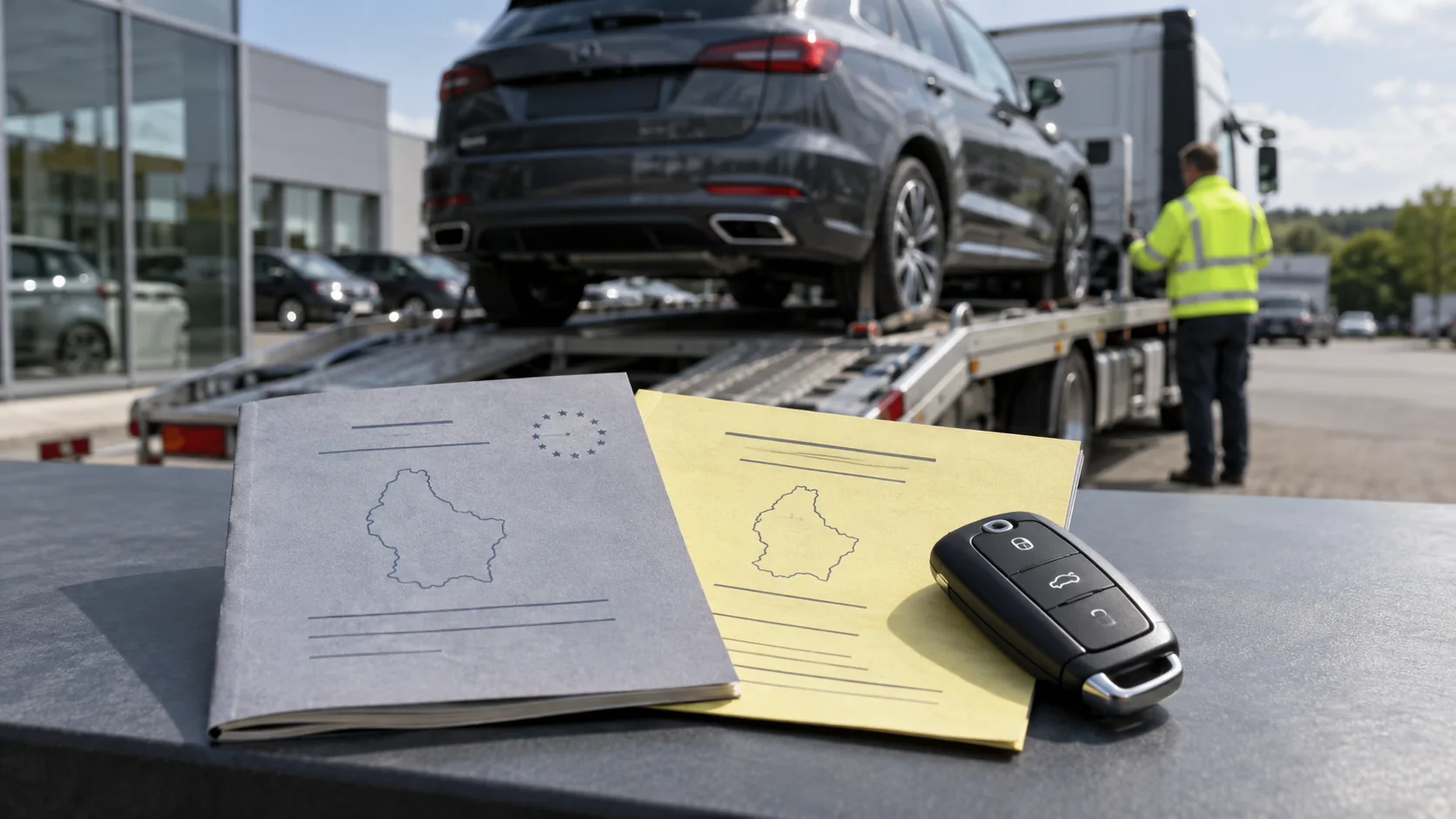
For registration abroad, SNCA describes the export certificate as both parts of the registration certificate marked “unregistered vehicle”. Do not therefore expect only an additional letter alongside unchanged vehicle papers. Have both document parts, processed accordingly, handed over to you. (SNCA: sale for export)
The simplest arrangement is for the seller to apply for the export certificate together with deregistration. If they omitted it, you as the foreign buyer can subsequently apply to SNCA yourself using the original purchase contract or proof of ownership. (Guichet.lu)
The acknowledgement of withdrawal from service documents deregistration. The export certificate is intended for further registration. Neither confirms technical condition or replaces valid registration and insurance for the journey home. SNCA explicitly states that a document marked as unregistered does not permit driving on public roads. (Guichet.lu, SNCA: registration FAQ)
What must the seller report to SNCA?
The sale or export must be reported to SNCA within five working days. Deregistration requires, among other things, the completed and signed form, both parts of the registration certificate and proof of identity. The seller must remove the existing plates. (Guichet.lu)
The notification deadline is not five days' permission to keep driving. The registration certificate and any conformity sticker (vignette de conformité) automatically become invalid when the owner or keeper changes. Coordinate notification, document processing and collection before concluding the contract, not on the day of the journey home. (Guichet.lu)
How do you plan the journey without valid previous registration?
Start by planning for a transporter or suitable trailer carrying the car entirely as a load. Obtain a quotation for the actual collection location and German delivery address. Establish whether it can be loaded, how keys will be handed over and how its condition will be photographed at collection. Transfer then does not depend on the previous registration. (ADAC)
A separate Luxembourg export-registration procedure is available for driving. According to SNCA, conditions include an official Luxembourg address for the last seller. The process includes applying for an export registration number with the purchase contract or invoice, insurance from an insurer authorised in Luxembourg, vehicle registration and the plates. Confirm the responsible SNCA location before travelling. (SNCA: export plates)
Before collection, obtain confirmation that the selected registration and insurance package cover the planned route, including Germany, and the travel date. The car must also be technically roadworthy. An export certificate alone is insufficient; do not rely on the seller's previous insurance after sale and deregistration. If these points remain unresolved, have the car transported as a load. (Guichet.lu, ADAC)
What should be inspected before you pay?
Arrange maintenance invoices, inspection reports and mileage statements chronologically. Ask about earlier countries of registration: today's Luxembourg location does not establish that the entire earlier history is documented there. A database report with no damage entry does not prove an accident-free history. Equally, a statutory technical inspection is not a comprehensive pre-purchase assessment of condition, repairs and wear. A preliminary inspection is a recommendation for your buying decision, not a general legal requirement. (TÜV NORD: AutoKaufCheck)
Bodywork, underbody and powertrain
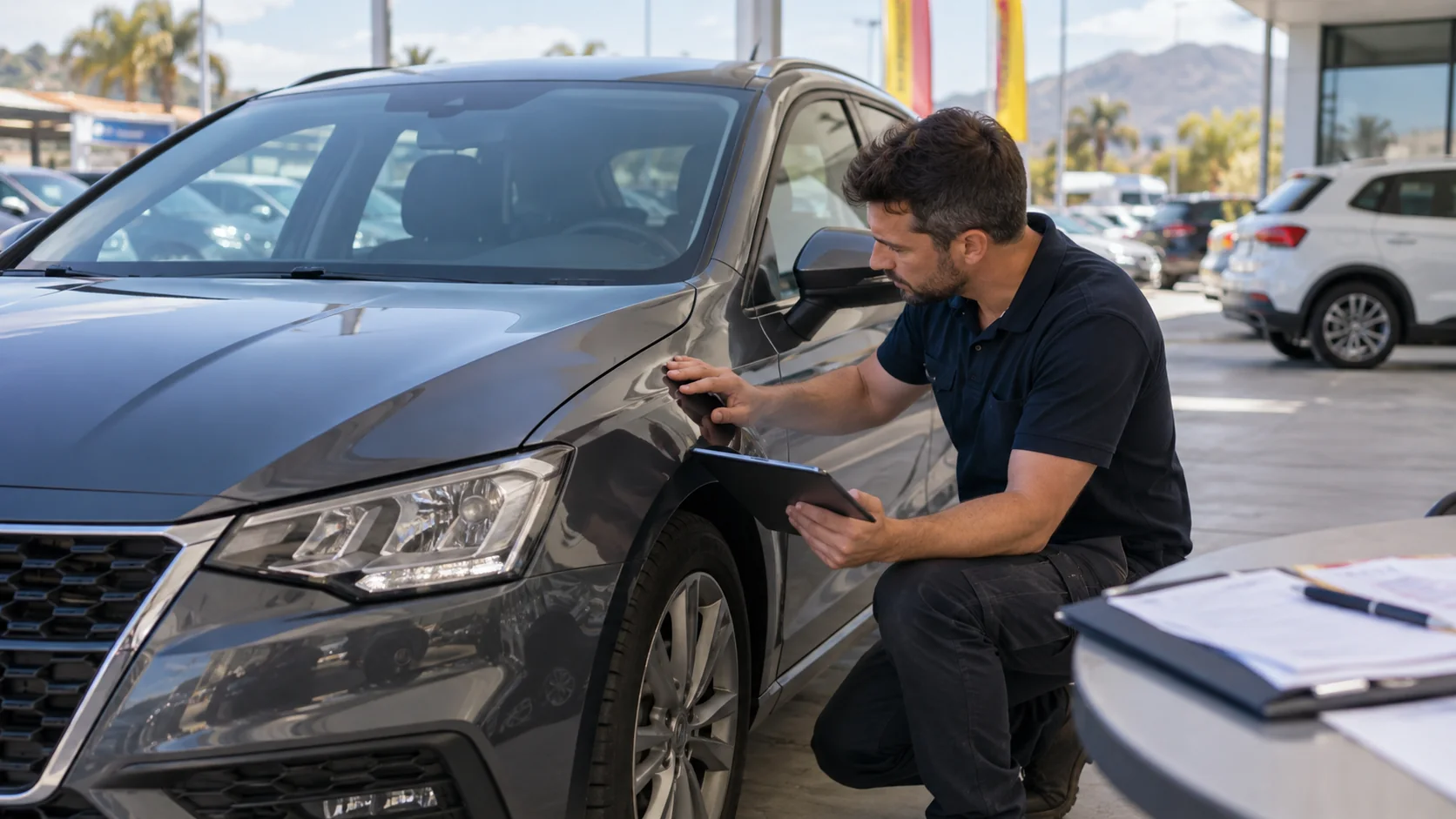
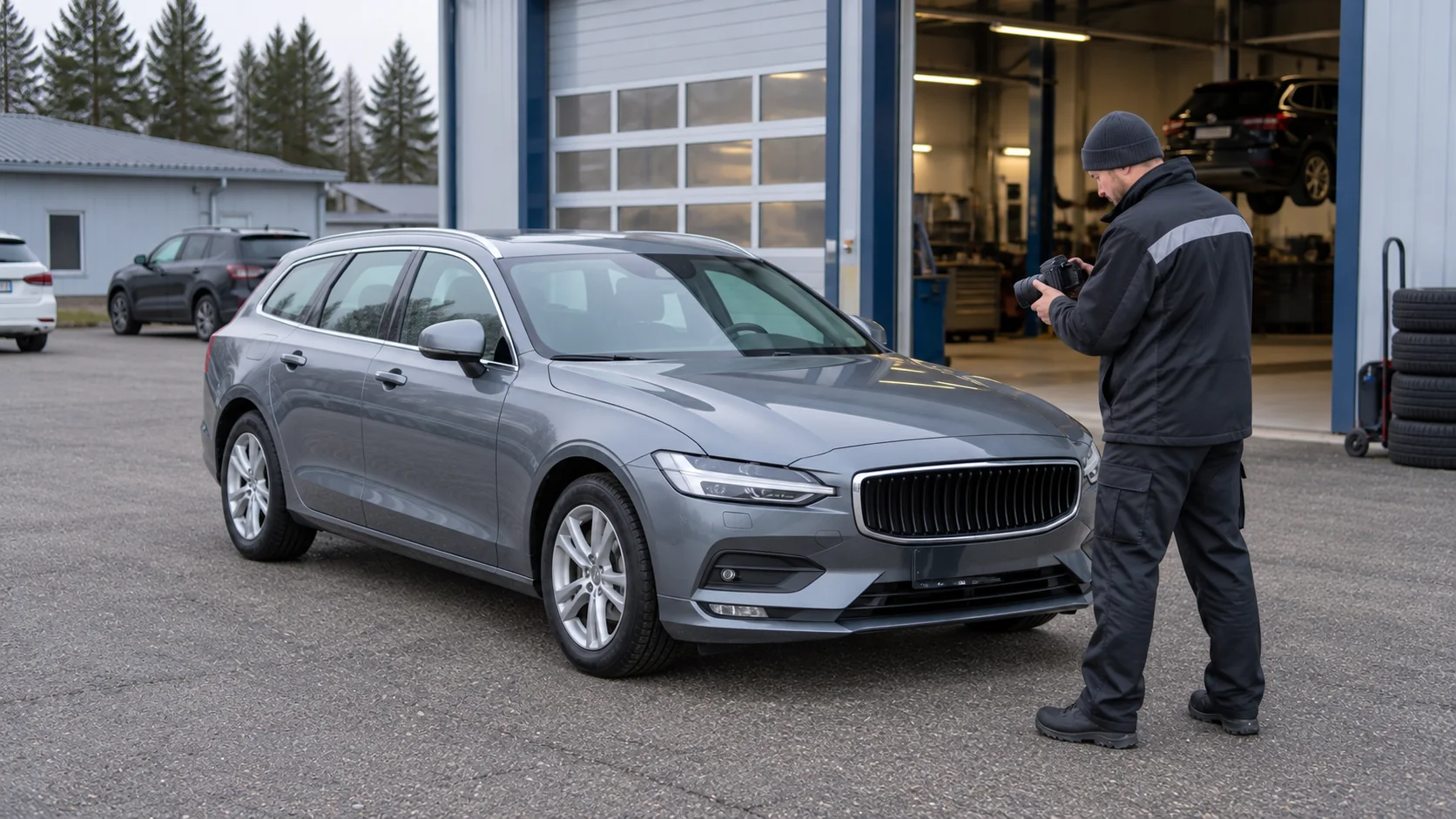
Arrange underbody access and the opportunity to examine the car with a cold engine. Body repairs, corrosion, fluid leaks, suspension and powertrain belong in the condition assessment. Unusual findings should be documented with photographs and understandable descriptions. A single paint reading explains neither why a panel was repainted nor the repair quality. (CarAudit: what we inspect)
Test drive, diagnostics and remaining limitations
If possible, arrange a test drive before ownership changes, while registration, insurance and vehicle condition permit it. Agree on diagnostics and inspection access beforehand. A fault code is not yet a repair estimate; an empty fault memory does not certify a defect-free car. Inaccessible components and an unavailable test drive must appear as limitations in the report. (Guichet.lu, CarAudit)
Our recommendation: pause payment and collection if the VIN is unresolved, authority to sell is doubtful, obstacles to ownership transfer exist, essential originals are missing or a serious technical finding remains unexplained. First establish the specific cause. A higher price does not replace this inspection.
Your checklist before purchase and collection
Use these six questions to coordinate with the seller, inspector and registration authority. “Open”, “Evidence reviewed” and “Discrepancy to resolve” record only your progress. Even six reviewed items do not confirm their validity or provide a technical verdict on the purchase.
| Check question | What the evidence means | Next step | Source / checked | Progress |
|---|---|---|---|---|
| Which papers should be available before buying? | Luxembourg registration documents consist of part 1 (grey) and part 2 (yellow). | Check both original parts and the seller's authority; agree on handover after SNCA processing. | Guichet.lu; Service Berlin; 2026-09-07 | Open |
| Why do you need the export certificate? | SNCA describes it as both document parts marked “unregistered vehicle”. It does not authorise driving. | Obtain the export certificate with deregistration if possible, and collect both processed document parts. | Guichet.lu; SNCA: export; 2026-09-07 | Open |
| What must the seller report to SNCA? | SNCA must be informed within five working days; previous registration becomes invalid when ownership changes. | Coordinate SNCA notification, deregistration and removal of previous plates before collection. | Guichet.lu; 2026-09-07 | Open |
| How do you plan the journey without valid previous registration? | Without suitable registration and insurance, driving is not a secured collection option. | Obtain a transport quotation; if driving, have suitable temporary registration and insurance confirmed for the entire route. | Guichet.lu; ADAC; SNCA: export plates; 2026-09-07 | Open |
| Has the current technical condition been investigated adequately? | Register information does not replace a vehicle inspection. Inaccessible parts remain unchecked. | Request an inspection report covering bodywork, underbody, powertrain and test drive; document limitations. | TÜV NORD; CarAudit; 2026-09-07 | Open |
| Are the German registration documents agreed? | Confirm original papers, proof of purchase, eVB, technical data and required inspection evidence with your registration authority. | Before buying, establish the vehicle-specific document requirements with the responsible registration authority. | Service Berlin; 2026-09-07 | Open |
Some evidence is still missing. Use the next steps listed.
How do you prepare for costs and registration in Germany?
Which taxes apply when buying a used car in the EU?
For VAT purposes, a car is used only if it has travelled more than 6,000 km and, at delivery, more than six months have passed since first registration. Exactly 6,000 km or no more than six months is enough for classification as new for tax purposes. Previous registration alone therefore does not make it a used car for VAT. (Your Europe)
For an ordinary passenger car that is used for tax purposes, no import customs duties apply between Luxembourg and Germany, and moving it does not by itself trigger additional German VAT. A dealer's invoice depends on the VAT regime applied, including possible margin taxation. As a private buyer, you cannot automatically demand a net price. (Your Europe)
A vehicle that is new for tax purposes is instead subject to acquisition taxation in Germany. In that case, clarify the required tax declaration and payment deadlines with your tax office before entering into the contract; do not defer this until after registration. (Your Europe)
What does the German registration authority need?
The Berlin document list shows a specific local procedure: registration application, original foreign papers, purchase contract or invoice, proof of identity, electronic insurance confirmation (eVB) and SEPA direct-debit mandate. A COC or manufacturer data confirmation provides technical evidence for type-approved vehicles.
The required evidence of a valid HU inspection must also be established; depending on the car's age, it may not yet be due. Before buying, ask your responsible registration authority whether the existing Luxembourg inspection report is sufficient or a further inspection is necessary. A missing COC does not automatically mean an assessment under section 21 StVZO. Berlin specifies that for vehicles without type approval. Submit the existing documents to the authority for preliminary clarification. (Service Berlin)
Do not rely on German registration to complete Luxembourg deregistration. Berlin explicitly notes that withdrawal from service in the country of origin is not automatic. The SNCA process described above must therefore still be arranged. (Service Berlin)
How do you budget for the total cost?
Alongside the price, consider vehicle inspection, transport or export registration with insurance, document procurement, any HU inspection or expert assessment, German registration and plates, and documented repairs. Also establish who pays SNCA fees. Use actual quotations instead of flat import budgets. An unknown transport or repair amount remains unresolved and is not entered as zero. (ADAC, Service Berlin)
Frequently asked questions
Can the old Luxembourg plates automatically be used after sale?
No. The previous plates must be removed, and previous registration documents become invalid on a change of ownership. The five-day notification deadline does not permit continued driving. (Guichet.lu)
What is the SNCA export certificate for?
It serves registration outside Luxembourg. SNCA describes it as both document parts marked “unregistered vehicle”. It replaces neither valid registration for driving nor insurance. (SNCA)
When must the sale be reported to SNCA?
Within five working days after sale. Agree with the seller who will submit the papers and when you will receive the processed originals. (Guichet.lu)
Can I apply for the export certificate myself afterwards?
Yes. If the seller did not request it during deregistration, you as the foreign buyer may apply to SNCA yourself with the original purchase contract or proof of ownership. (Guichet.lu)
Have the car inspected before paying and collecting
We inspect your chosen car in Luxembourg directly at the seller's premises. Our technician travels to the vehicle; you receive documented findings for your decision before payment and travel. See the inspection scope for what we examine and where limitations remain.
Send us the advert, the car's location and the seller's contact details.