How to read a Car-Pass, inspect a car in Belgium, obtain the documents and an X plate, and register the car safely in Poland.
Belgium has a tool that buyers in many countries would wish for: Car-Pass. Yet its strength creates a typical mistake. Someone sees a smooth mileage curve and starts treating the car as though it has been checked in full. In reality, they have completed only one, albeit important, part of the work.
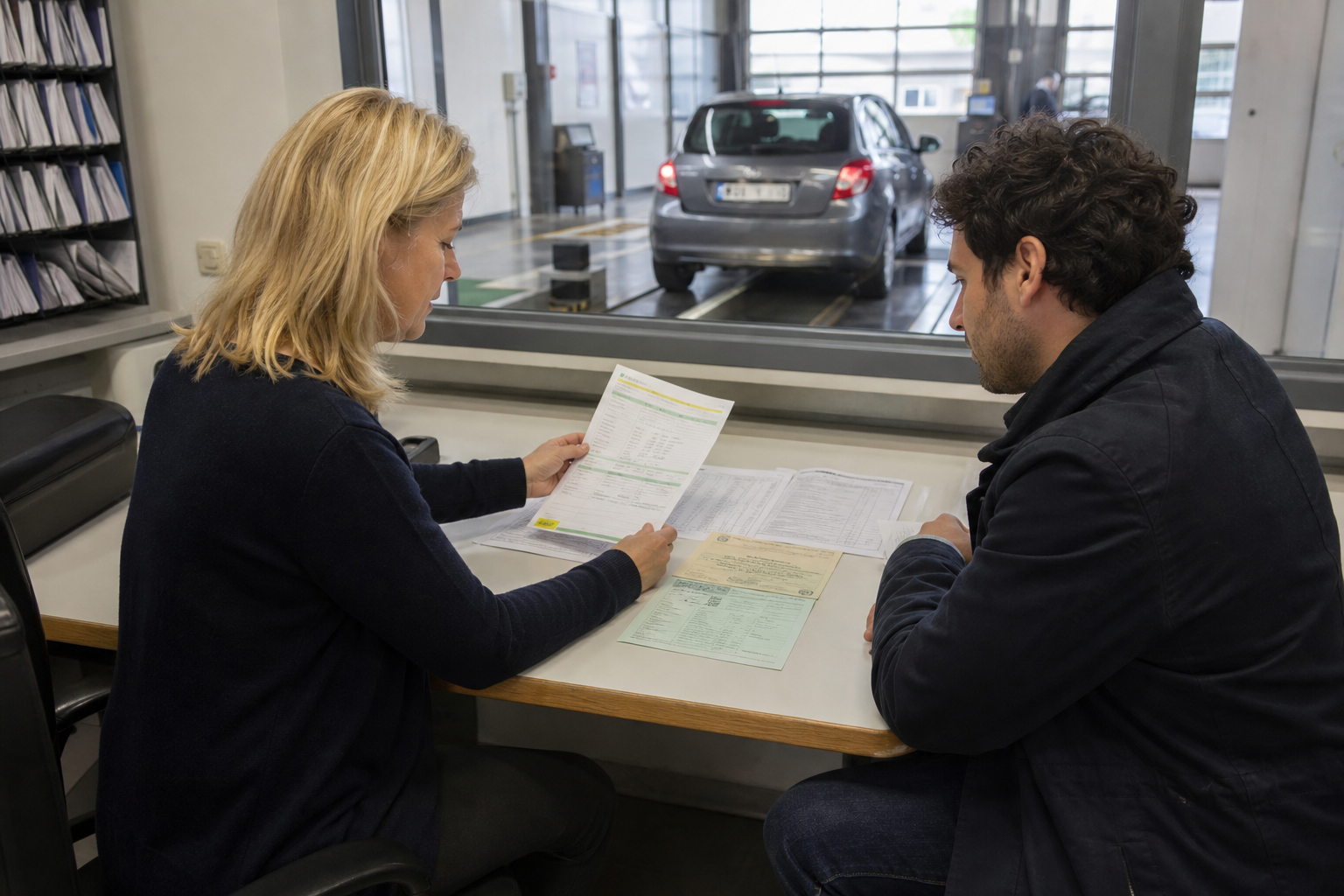
Read Car-Pass as a data trail, not a certificate of quality
When a used Belgian car is sold to a private buyer abroad, Car-Pass also applies when the vehicle is leaving Belgium. The document has a limited validity period, so check its date of issue and the current mileage. The curve should be logical. A jump, a long period without a record or an inconsistency with invoices needs an explanation.
For an imported car, the foreign portion of its history may be incomplete. The Belgian record does not automatically begin at the vehicle's first kilometre. Ask where the car came from, when it was first registered in Belgium and which documents cover the earlier period.
The documents that should be on the table before signing
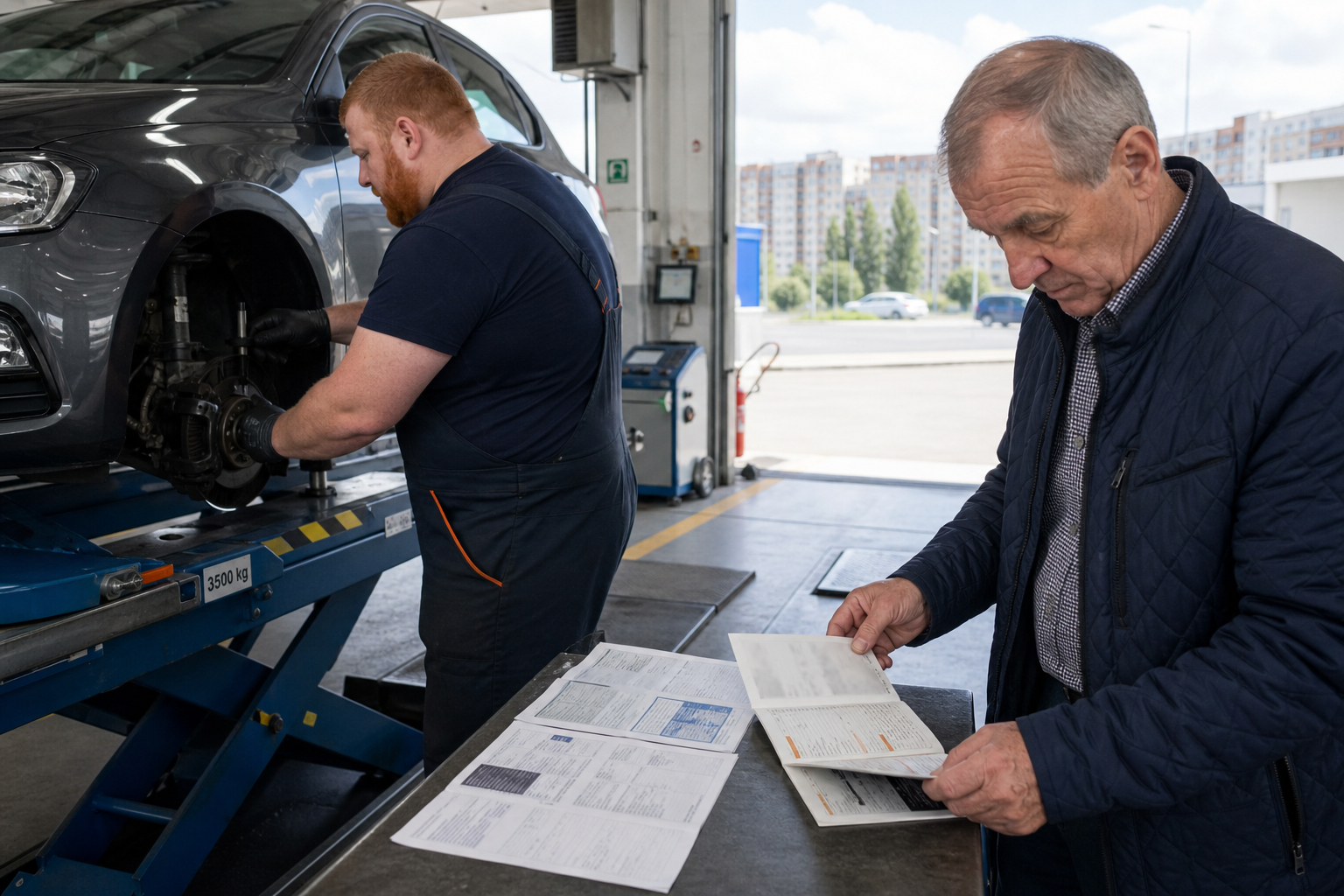
Expect the seller to provide a sales contract or invoice, the registration certificate, Certificate of Conformity, the latest technical inspection report and the Car-Pass. For export, establish who will arrange deregistration, insurance and the X plate. The Belgian authority responsible for transit requires original documents and a registration application; not every insurer offers short-term cover.
Photographs of the documents before travelling are for screening, not a substitute for the originals. Without the originals, the entire export can come to a halt even if the car is technically sound.
The physical inspection must look for contradictions between the paperwork and the car
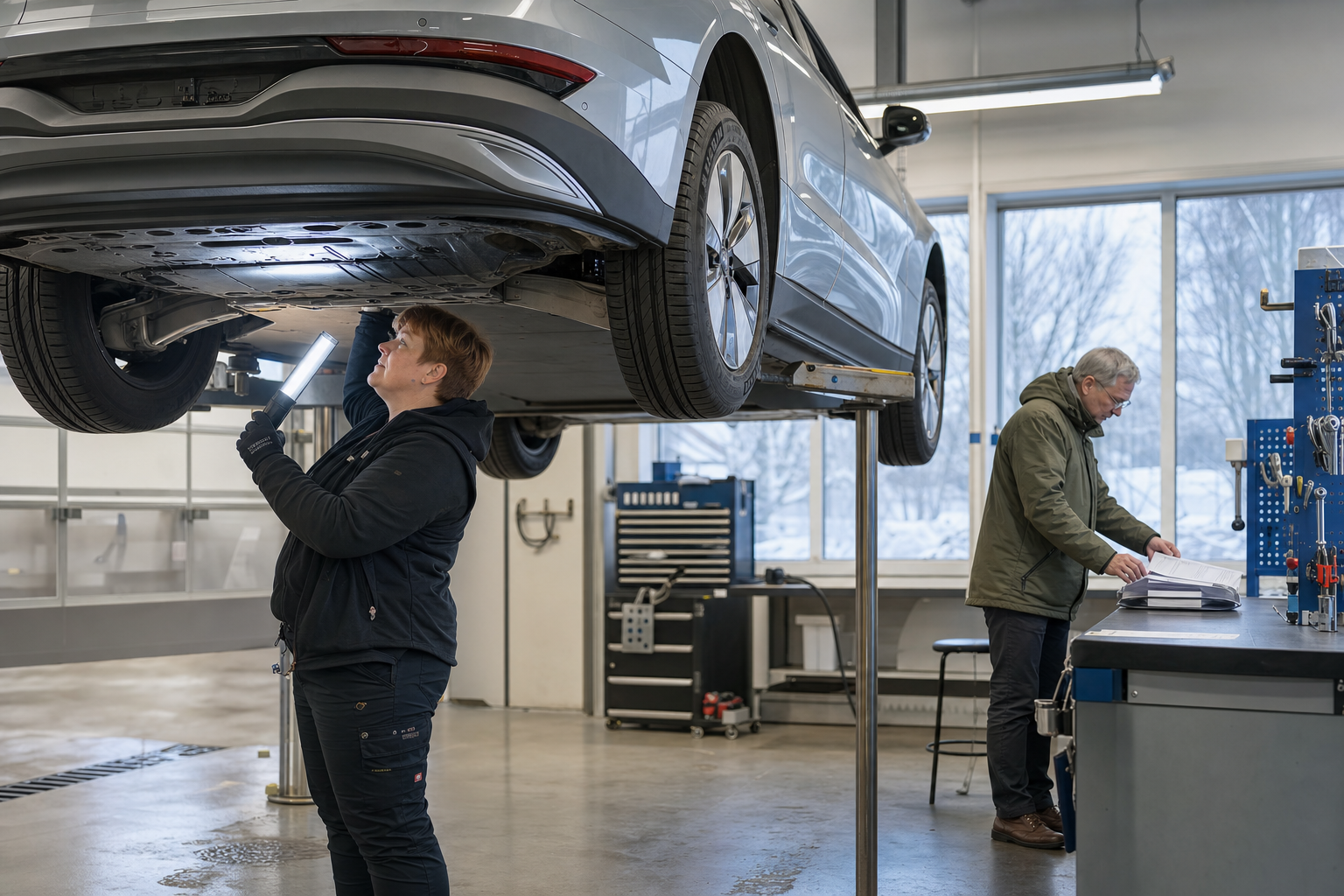
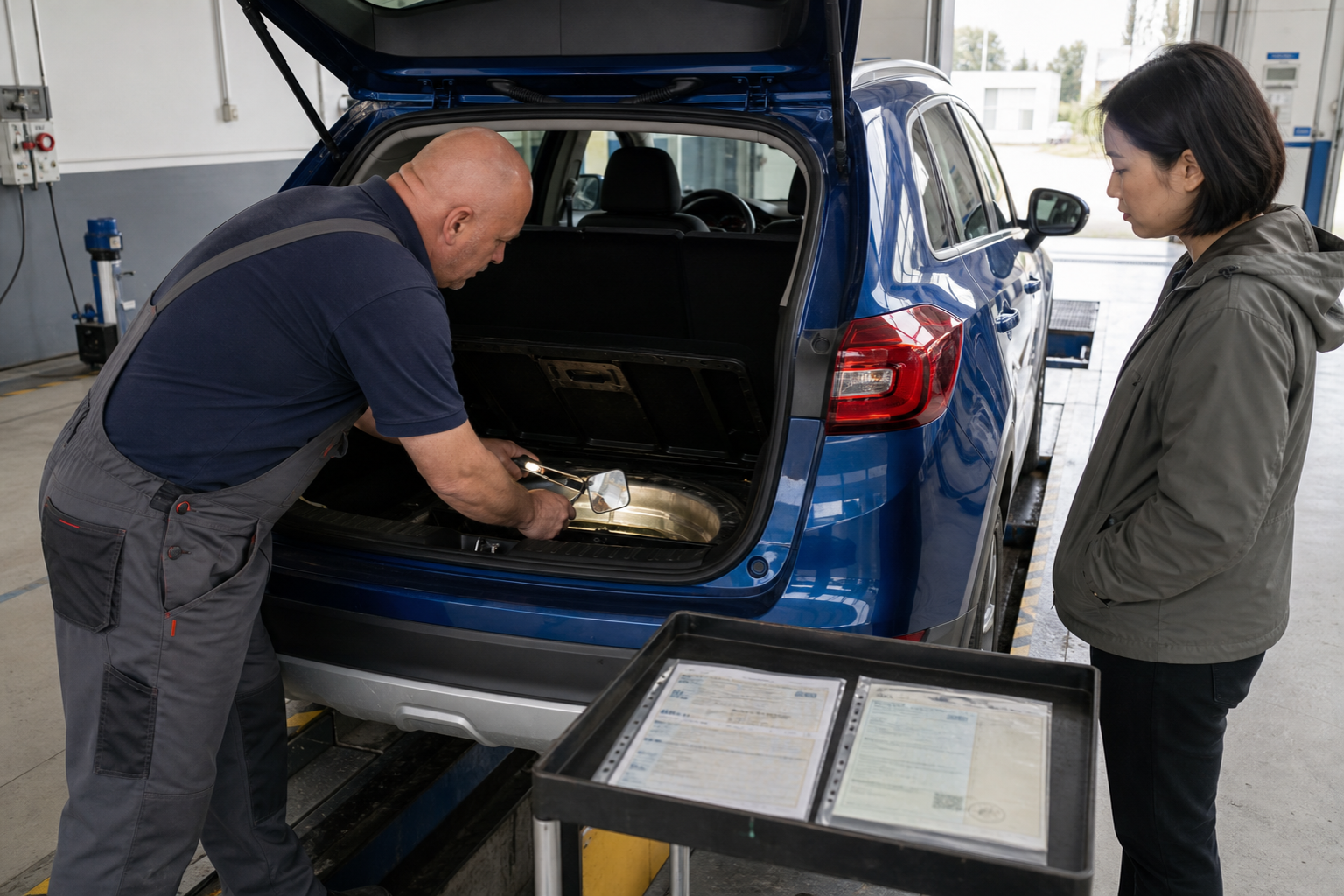
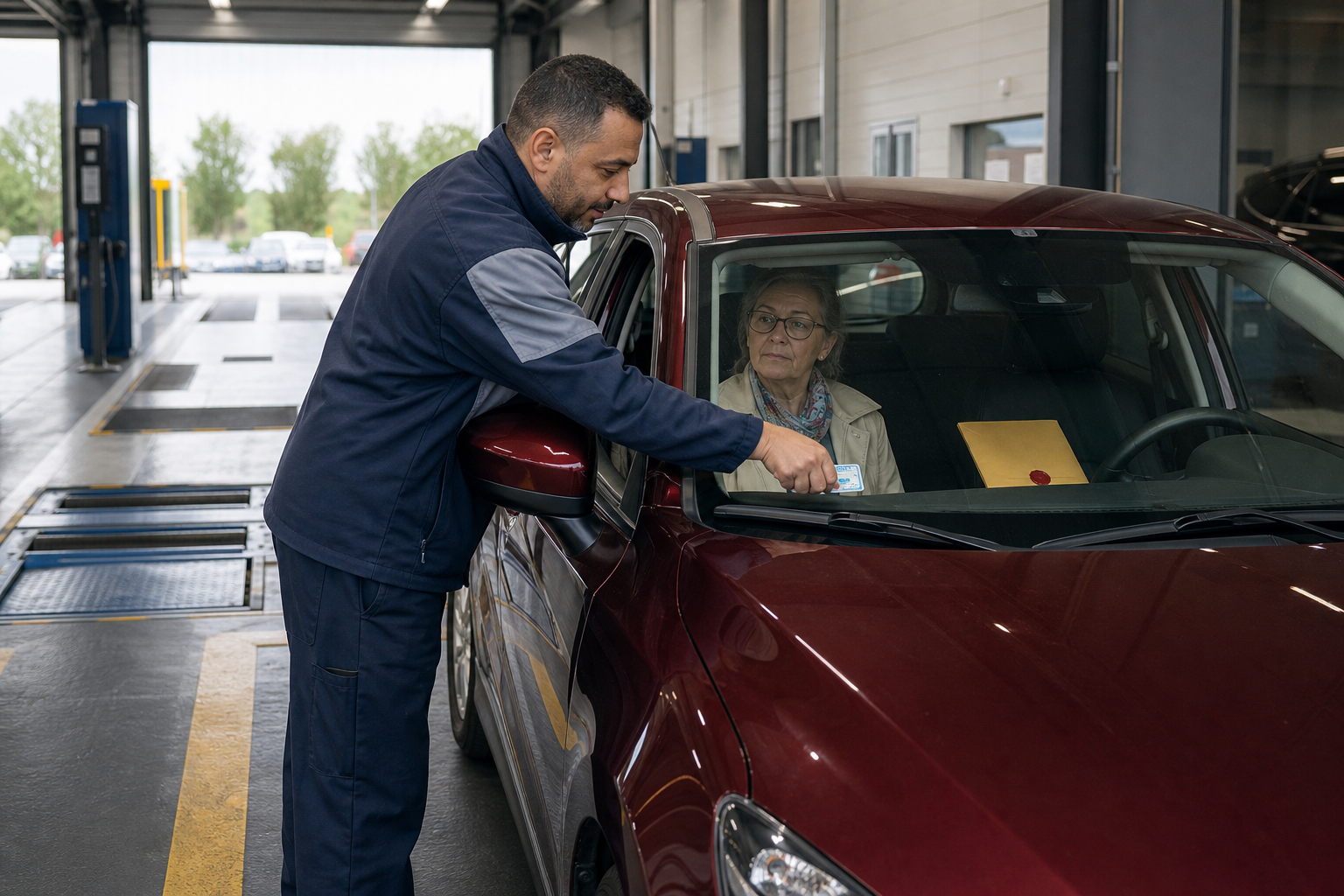
Start with the VIN and identity. Then measure the paint and check the wing bolts, welds, sills, floor and dates on the glass. Look under the car for corrosion, leaks and poor repairs. Diagnostics should cover the available control units, and the test drive must reveal the behaviour of the transmission, brakes, steering and suspension.
Car-Pass can show that the mileage probably forms a coherent sequence. It will not tell you whether the car received a cheap gearbox from a scrapyard last month or whether a repair following a minor recorded accident was performed badly.
The transit X plate: treat it as a logistics project
The X plate is intended for export and transit. The application involves a contact address in Belgium, a registration form, insurance and the original documents. Do not be reassured by the phrase “the agent will sort it out”. Obtain the agency's name, price, list of documents and timescale, along with confirmation of who will hold the temporary insurance.
For an older car or where the validity of the technical inspection is uncertain, compare the X plate route with using a transporter. Transport may cost more, but it removes the risk that an administrative or insurance detail will stop the journey.
What follows in Poland
The administrative process is not complete when the car crosses the Polish border. Customs duty does not normally apply to a used car from the EU, but the buyer must deal with Polish excise duty, registration, insurance and, where necessary, a technical inspection or translations. The AKC-US declaration is normally filed within 14 days of the tax liability arising, and the tax is paid within 30 days. An application to register a car imported from another EU member state must be submitted within 30 days of import.
VAT cannot be determined solely from the fact that the listing describes the car as used. Under EU rules, a vehicle is new if it has travelled no more than 6,000 km or was supplied within six months of first registration. It is used only when it meets both opposite conditions. For a dealer invoice, the VAT scheme applied also matters. Keep the Car-Pass after registration. It is an important historical record for a future sale and for explaining the mileage sequence.
A Polish administrative step cannot rescue a missing Belgian document. Before paying, therefore, check that the purchase document, foreign registration document, any deregistration confirmation and the technical records form an unbroken chain for one VIN.
Five phrases that should make you slow down
“We will provide the Car-Pass later.” “The car was imported, but we do not know where from.” “You can get an X plate without the originals.” “An inspection on a lift is not possible.” “We will put a lower price in the contract for tax reasons.” Each phrase carries a different risk, but together they show that the transaction is not ready for a safe cross-border purchase.
FAQ
Is a Car-Pass needed when selling a car to a foreign buyer?
A Car-Pass is normally provided when the car is sold to a private buyer abroad. Check the current exceptions and the document's validity period before publication.
Does Car-Pass show accidents?
It contains recorded information within a defined scope, but it is not a complete reconstruction of every accident or an assessment of repair quality.
How can a car be exported from Belgium?
One option is a transit X plate with insurance and the original documents. Professional transport is the alternative.
What should I check if the car was previously imported into Belgium?
The date of Belgian registration, origin, foreign documents, continuity of servicing and physical condition. Allow for a possible gap before the Belgian records begin.
Primary sources
- Car-Pass - documents when selling a vehicle - Car-Pass for a private buyer abroad
- Car-Pass - FAQ - limitations and mileage verification
- Belgian Mobility - export/transit X plate - the X plate, insurance and documents
- PUESC - AKC-US - declaration within 14 days and payment within 30 days
- Polish Ministry of Infrastructure - vehicle registration - the 30-day deadline and registration framework