Check Czech mileage records, vehicle identity and condition, and arrange original export documents and registration in Germany.
Before buying, check the VIN, authority to sell, mileage history and current condition. At the same time, establish which original documents you will receive, how the car will reach Germany and what your registration authority requires. This process covers a used car already registered in Czechia which you buy as a private buyer resident in Germany and intend to register there. A car located in Czechia with foreign papers does not automatically fall within this scope.
You do not have to wait until collection for the technical inspection: our CarAudit technician visits the vehicle at the seller's premises in Czechia. You receive documented findings before paying the purchase price and travelling there yourself. Find the inspection scope here.
Contents: Before buying · Mileage history · Condition inspection · Export and collection · Checklist · Registration in Germany · FAQ
Which documents should you see before committing?
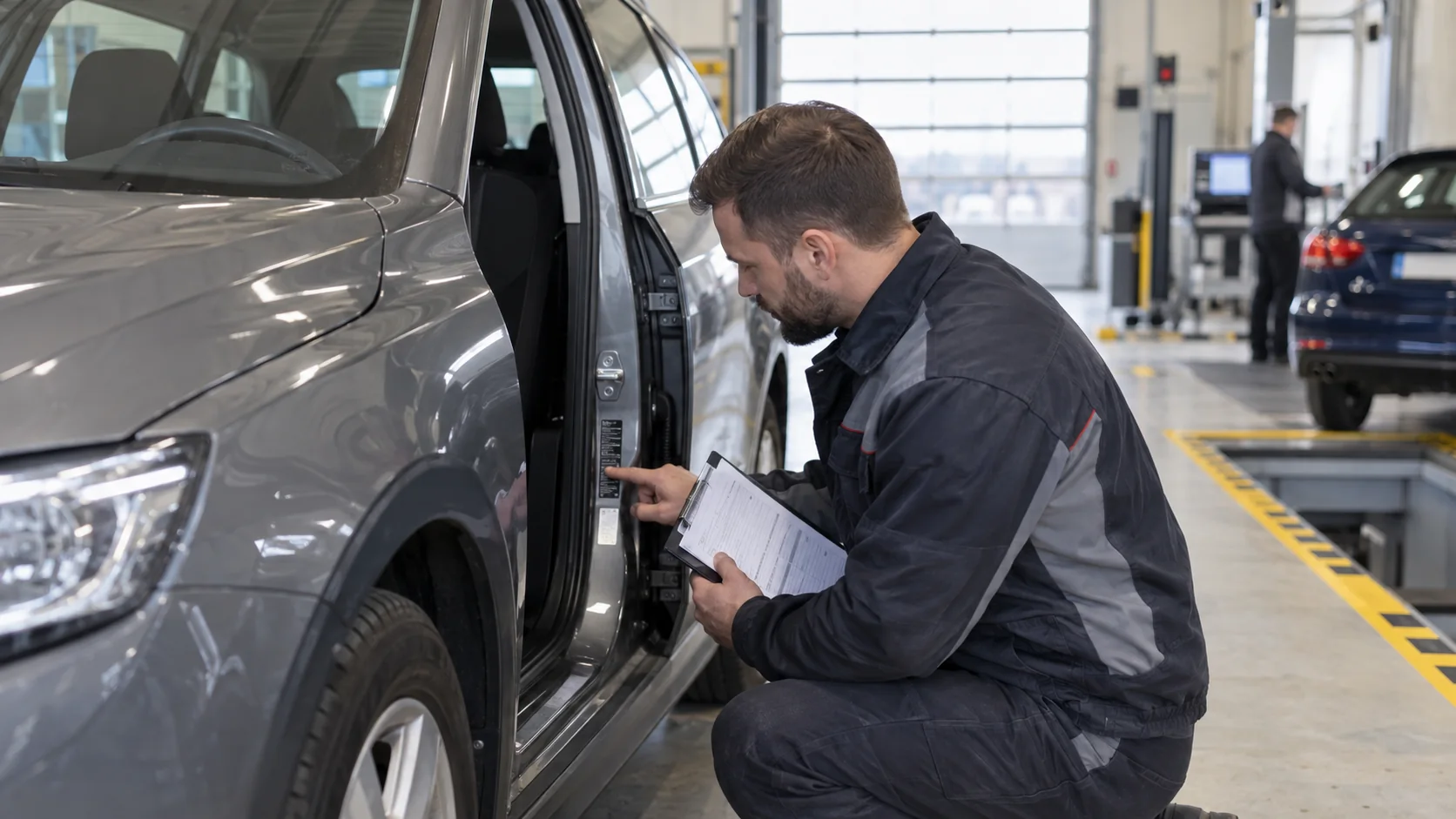
Request the vehicle identification number (VIN, called FIN in German), photographs of the Czech registration documents, first-registration date, current mileage, maintenance invoices and available STK and emissions-inspection reports. Also ask for the COC, the EC certificate of conformity. Later, compare the VIN on the car with the original documents and purchase contract.
Establish who owns the car and who may sell it. If names differ, you need a clear explanation and appropriate evidence of authority. Record known damage, mileage promises, missing documents and the agreed handover in writing. Whether you buy privately or from a dealer, and which law applies to the contract, makes a difference. Your German residence alone does not apply all German warranty rules to a Czech purchase. ADAC's guidance on buying a used car abroad in the EU provides orientation.
How does the Czech mileage query work?
Enter the VIN at Kontrola tachometru. The Czech Ministry of Transport query shows odometer readings recorded during technical inspections (STK) and emissions measurements. The ministry explicitly notes that these readings do not necessarily represent the actual total mileage today.
Read the entries chronologically and compare dates and mileage with workshop invoices and today's odometer reading. An increasing sequence is useful evidence, but not a complete confirmation of mileage. If the car was previously registered in another country, specifically request records for the period before Czech registration.
What should you do about missing or conflicting entries?
If a period is missing, that part of the history remains unproven. If a reading decreases, request a specific explanation supported by original records. A documented repair or instrument replacement may explain it; the seller's assertion alone is insufficient. A decrease by itself is not yet legal proof of fraud.
Until clarified, do not treat the mileage as established. The mileage query also does not replace a current mechanical diagnosis. Even plausible figures do not answer whether the gearbox, suspension or a previous accident repair is in good condition today.
What should be inspected before you pay?
Bodywork, underbody and powertrain
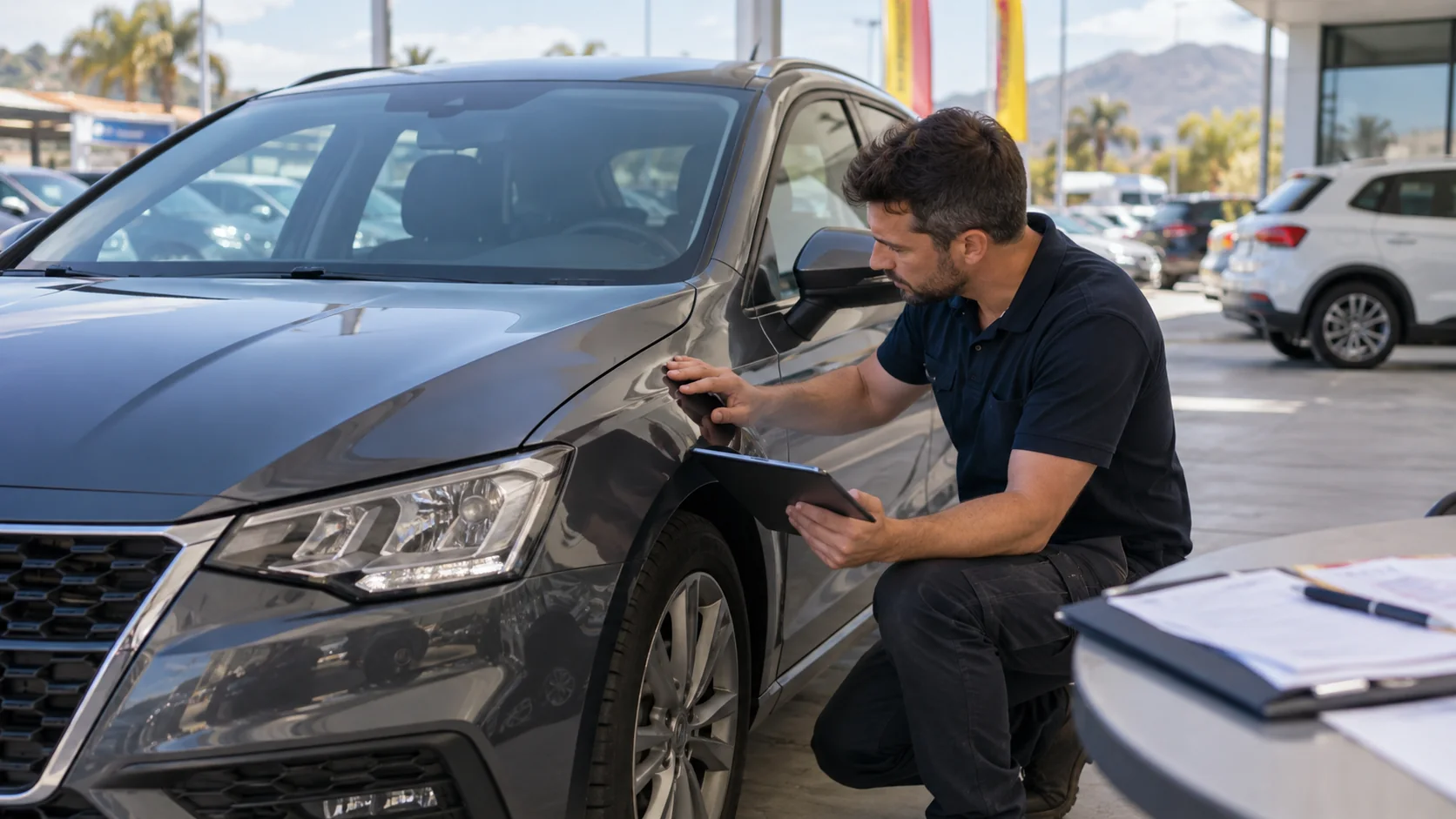
Have paintwork, repair traces, structural areas, underbody, brakes, tyres and powertrain examined. Compare wear with the claimed mileage without deriving an exact mileage from it. Paint measurements require professional interpretation; one universal threshold is insufficient. Arrange the necessary access beforehand and have findings recorded in photographs and the report.
Test drive, diagnostics and remaining limitations
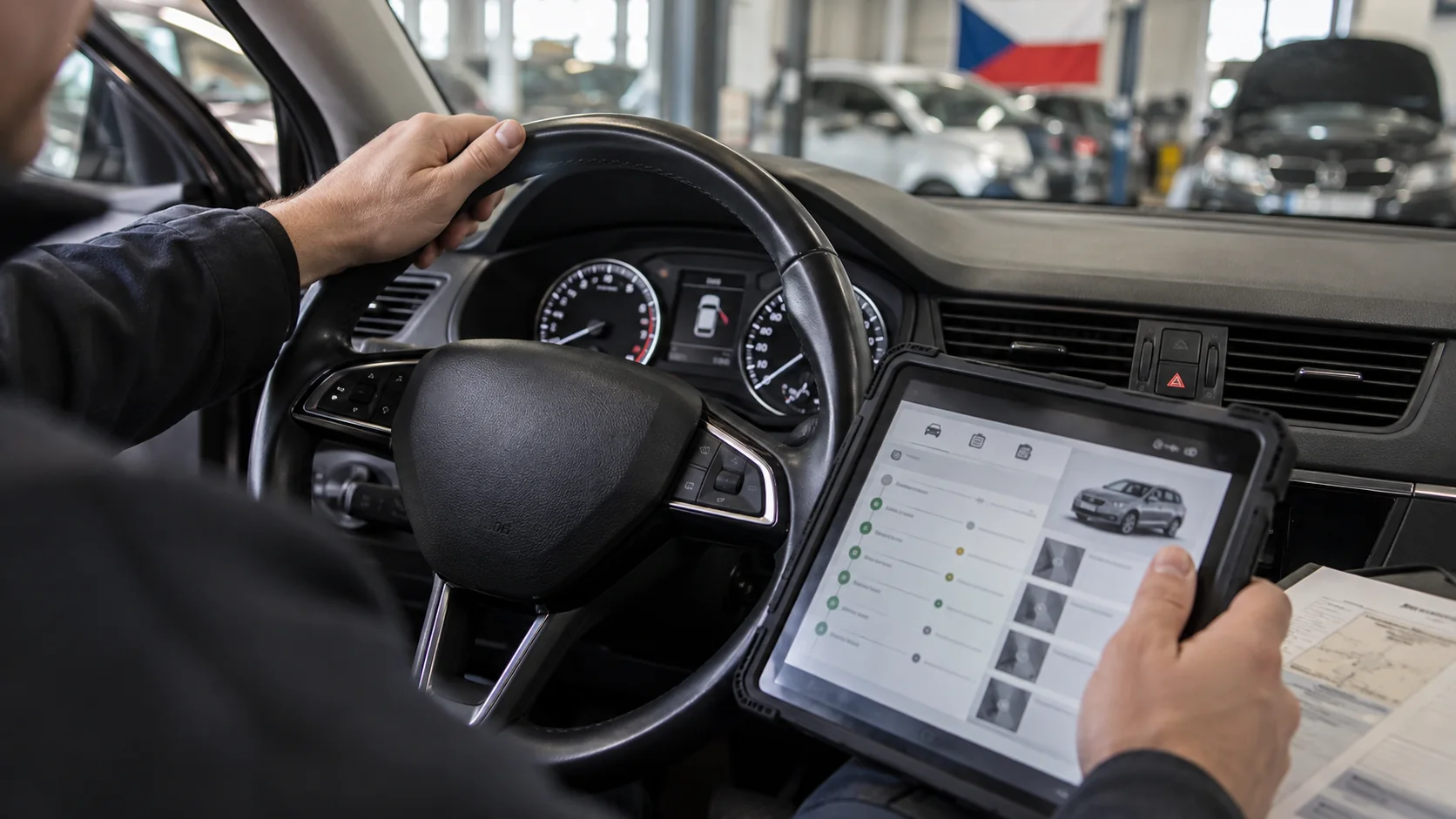
Establish the possibility of a cold start, test drive and diagnostics before the appointment. A fault code is not yet a repair quotation, and an empty fault memory is not evidence of a fault-free car. Inaccessible components and an unavailable test drive must be reported as limitations. An inspection without dismantling cannot completely exclude hidden internal damage. You can read the scope of our CarAudit inspection before commissioning it.
A valid periodic HU roadworthiness inspection does not replace a pre-purchase assessment of wear and repair quality; TÜV NORD also explains this distinction. The additional condition inspection is a buying recommendation, not a general legal requirement. Our recommendation: postpone payment and departure while identity, authority to dispose of the car, a transfer restriction, essential papers or a serious technical finding remain unresolved.
Which two routes does the ministry describe for EU export?
The Czech Ministry of Transport describes two routes for recording export to another EU country:
Apply for export plates. A municipal registration authority with extended competence, known as an ORP, issues a plate with limited validity for export.
Subsequently register in Germany. After export, the new owner registers the vehicle in another EU country. That country's authorities then notify Czechia of the registration within two months. Without subsequent EU registration, this route is unavailable.
The two months concern notification between authorities. They are neither a general registration deadline for you nor a general entitlement to drive. Agree with the seller and authorities how notification will be tracked and the Czech register status resolved. The administrative route alone provides neither insurance cover nor valid plates for driving.
Who applies for export plates, and which documents are required?
The registered owner or a person authorised by them in writing may act. The ministry lists proof of identity, the registration certificate, the technical vehicle document (technický průkaz) if one was issued, and all previous plates for surrender. Company vehicles additionally require a business licence or commercial-register extract in original form or as a certified copy. The authority checks whether the vehicle has a valid evidenční kontrola. This is a vehicle identity check, not a check of the applicant's identity document. The official export procedure is decisive.
Do not routinely demand reissue of the former large technical vehicle document. Instead, before the authority appointment, establish which existing papers will be submitted and which originals or export documents you will receive for Germany. Do not wait until after paying to discover that an important document stayed with the seller.
How do you arrange collection and transfer?
Plan the journey using the documents actually issued: plate and registration validity, technical roadworthiness and insurance cover must be established for the whole route. Do not assume without checking that the previous plates and seller's insurance remain valid after sale or deregistration. Obtain confirmation for the actual transfer.
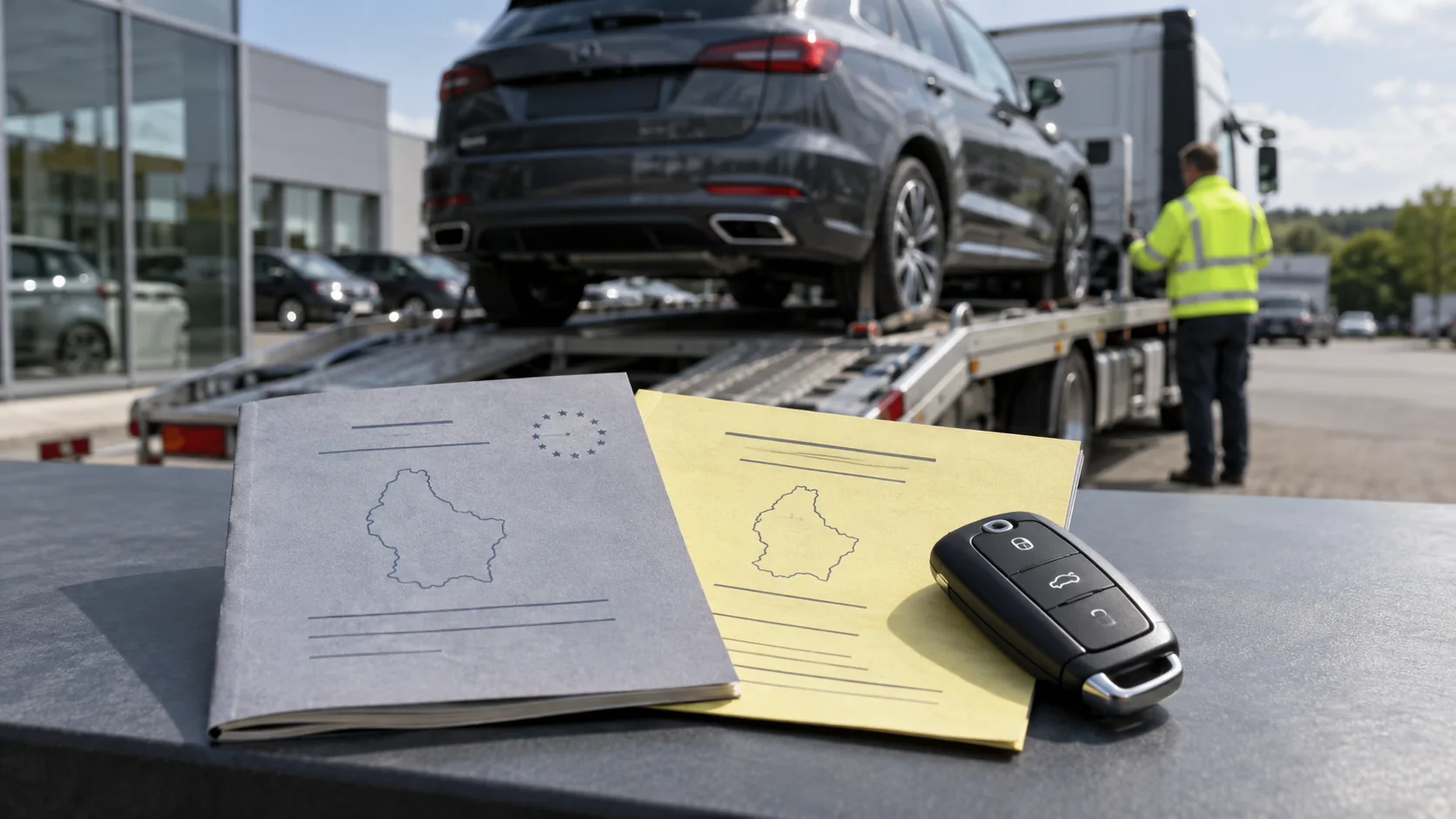
If a legal and safe journey has not been established, arrange transport with the vehicle loaded. ADAC provides preparation guidance. Coordinate payment and handover of the car, keys and original documents around this process. The following table helps record outstanding points before discussing the purchase.
Your checklist before purchase and collection
The six steps document which evidence you have reviewed. “Open”, “Evidence reviewed” and “Discrepancy to resolve” are personal progress states, not an automatic check or recommendation to buy. Even six reviewed items confirm neither their validity nor the car's condition.
| Check question | What the evidence means | Next step | Source / checked | Progress |
|---|---|---|---|---|
| How does the Czech mileage query work? | The query shows readings from STK and emissions inspections, not a guarantee of actual total mileage. | Enter the VIN and compare the date sequence with invoices and current mileage. | Czech Ministry of Transport: mileage query; 2026-09-07 | Open |
| What should you do about missing or conflicting entries? | Gaps and decreasing readings need explanation; they are neither an all-clear nor proof of fraud by themselves. | Resolve discrepancies through original records; until then, do not present the mileage as established. | Czech Ministry of Transport: mileage query; TÜV NORD: AutoKaufCheck; 2026-09-07 | Open |
| Which two routes does the ministry describe for EU export? | There are two administrative routes. With subsequent EU registration, authorities provide notification. This does not automatically authorise driving. | Agree on the appropriate export route and later notification with the seller and registration authority. | Czech Ministry of Transport: vehicle export; 2026-09-07 | Open |
| Who applies for export plates, and which documents are required? | The registered owner or their written representative acts. Clarify original documents, any technical vehicle document and the valid evidenční kontrola on the vehicle checked by the authority. | Establish authority to dispose of the car, power of attorney, original documents and surrender of previous plates before the appointment. | Czech Ministry of Transport: vehicle export; Service Berlin: register an EU/EEA used vehicle; 2026-09-07 | Open |
| Has the current technical condition been investigated adequately? | Register information does not replace a vehicle inspection. Inaccessible parts remain unchecked. | Request an inspection report covering bodywork, underbody, powertrain and test drive; document limitations. | TÜV NORD: AutoKaufCheck; CarAudit: what we inspect; 2026-09-07 | Open |
| Are the German registration documents agreed? | Confirm original papers, proof of purchase, eVB, SEPA mandate, technical data and required inspection evidence with your registration authority. | Before buying, establish the vehicle-specific document requirements with the responsible registration authority. | Service Berlin: register an EU/EEA used vehicle; 2026-09-07 | Open |
Some evidence is still missing. Use the next steps listed.
How do you prepare for costs and registration in Germany?
Which taxes apply when buying a used car in the EU?
For VAT purposes, the car is used only if it has travelled more than 6,000 km and is supplied more than six months after first registration. Exactly 6,000 km or delivery within no more than six months falls under the new-car rules. “Already registered” therefore does not automatically mean “used for VAT purposes”. The EU VAT rules for car purchases are decisive.
An ordinary transfer of an EU used car from Czechia to Germany incurs no customs duty. As a private buyer, you do not pay German VAT again merely because it is moved. A dealer's invoice depends on the tax regime used, possibly margin taxation. There is no automatic entitlement to a net-price purchase. For a car that is new for tax purposes, VAT is instead due in Germany as the destination country. Clarify this different situation with your tax office before buying, including declaration and payment; do not simply wait until after registration.
What does the German registration authority need?
Before committing to buy, send copies of the vehicle documents to your responsible registration authority and ask about requirements for this exact car. As a specific local example, Berlin generally requires original documents: foreign registration papers, purchase contract or invoice, proof of identity, electronic insurance confirmation (eVB), SEPA direct-debit mandate and registration application. Existing foreign plates must be presented for vehicles that are still registered.
For type-approved vehicles, a COC or manufacturer data confirmation provides technical evidence. The required proof of a valid HU inspection also applies; an age-dependent exception may cover young vehicles. Using the actual Czech inspection report, establish which evidence will be recognised and whether an inspection is necessary. Without type approval, an expert report under section 21 StVZO is required. A missing COC alone, however, does not automatically make that route necessary.
Berlin notifies the country of origin of registration but does not promise automatic deregistration there. For your Czech car, notification and register status must therefore fit the chosen Czech export route. The Berlin list is a local example, not a binding promise from your own authority.
How do you budget for the total cost?
Add to the confirmed price the vehicle inspection, collection or transport, transfer insurance, documents and authority procedures, any HU inspection or expert report, German registration and documented repairs. Subsequent ongoing insurance and vehicle-tax costs also belong in the budget. Obtain specific quotations. Amounts not yet known are unresolved costs, not zero entries. Guidance is available from ADAC and the Berlin registration authority.
FAQ
Does the Czech mileage check confirm the actual mileage?
No. It shows readings from STK and emissions inspections, not a guarantee of today's total mileage. Compare them with invoices and the car. Source: Kontrola tachometru.
Must every Czech car be exported using export plates?
No. Another route is subsequent registration in another EU country followed by notification between authorities. Permission to drive is not automatically resolved by this. Source: Ministry of Transport.
Must the old large technical vehicle document always be applied for again?
No. The export procedure requires the technical vehicle document if one was issued, together with the registration certificate. This does not create a general obligation to have that former large paper document reissued. Source: Ministry of Transport.
Have the car inspected before paying and travelling
Send us the advert, vehicle location and seller's contact details. We will organise your CarAudit inspection directly at the car in Czechia. You receive documented findings and the limitations of the inspection performed as a basis for your purchase decision before paying the price and setting off to collect it.