Prepare Swiss export and German import clearance, proof of preferential origin, import VAT, technical documents and an independent used-car inspection before payment.
A Swiss used car must pass through customs procedures on both sides of the border for permanent import into Germany. Before payment, clarify the vehicle registration document, proof of purchase, technical registration documents and any proof of preferential origin. The Swiss export declaration does not replace the German import declaration. A used car is not exempt from German import VAT simply because of its age. FOCBS: exporting vehicles; Your Europe: buying a car outside the EU.
This guide covers an ordinary purchase of a used passenger car for your private use as a resident of Germany: direct transport across the Swiss–German border and import clearance in Germany. A route through another EU country requires separate customs or transit planning. Removal goods, collectors’ vehicles, returned goods and special tariff arrangements are outside the standard case covered here.
Contents: Swiss documents · Inspection before payment · Origin and customs duty · Export and transport · German import · Registration · Checklist · FAQ
Which Swiss documents do you need before buying?
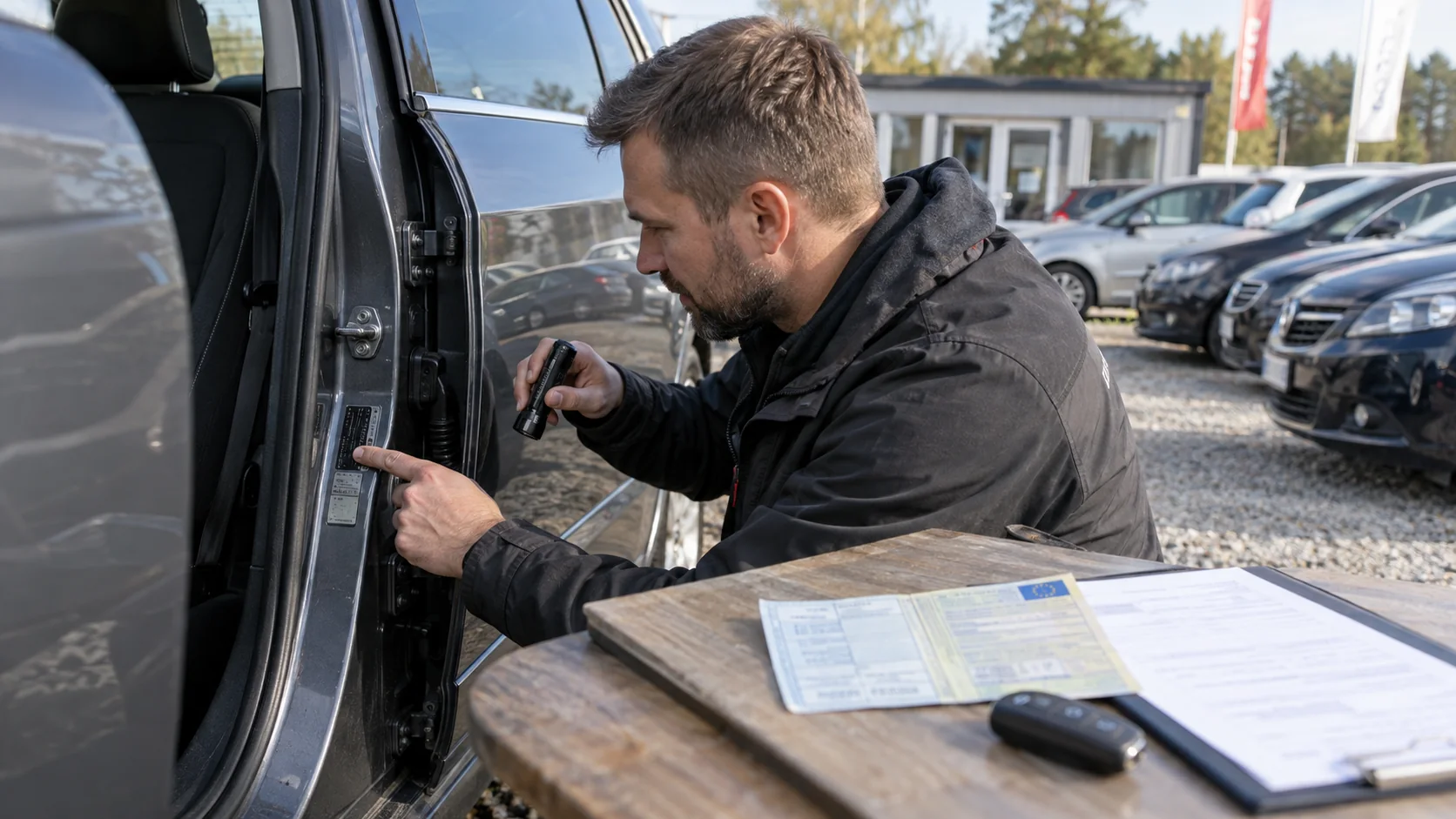
Request the Swiss vehicle registration document (Fahrzeugausweis), the vehicle identification number (VIN), a draft contract or invoice and any available technical documents. The vehicle registration document and original proof of purchase form part of the later registration process in Germany. Check that the vehicle’s identity and the seller’s details are consistent; if a representative is selling, obtain clear evidence of their authority. ADAC describes the documents for a Swiss purchase.
Establish early whether the particular vehicle has evidence of suitable EU type approval. Its previous Swiss registration alone does not answer that question. Send the documents to your competent German registration authority in advance and clarify which technical evidence is required. Berlin distinguishes between cases where a certificate of conformity (CoC) or manufacturer’s data confirmation is sufficient and those requiring an assessment under section 21 of the German Road Traffic Licensing Regulations (StVZO). Berlin’s conditions for registration of vehicles from third countries.
For your buying decision, we also recommend maintenance invoices, available inspection reports and repair documentation. Arrange the information by date and mileage. The absence of a damage report does not confirm that a car is accident-free; inaccessible history remains an information gap. A reference to the Swiss periodic vehicle inspection (MFK) does not replace a current pre-purchase inspection either. TÜV NORD explains the different purposes of periodic inspections and condition assessments.
What should be checked on the car before payment?
Have the actual car inspected independently instead of relying on the reputation of its country of origin. The following inspection is a recommendation to support your buying decision, not a general legal requirement. A technical finding does not become unimportant simply because the customs paperwork is complete. Guidance on inspection scope: CarAudit.
Bodywork, underbody and powertrain
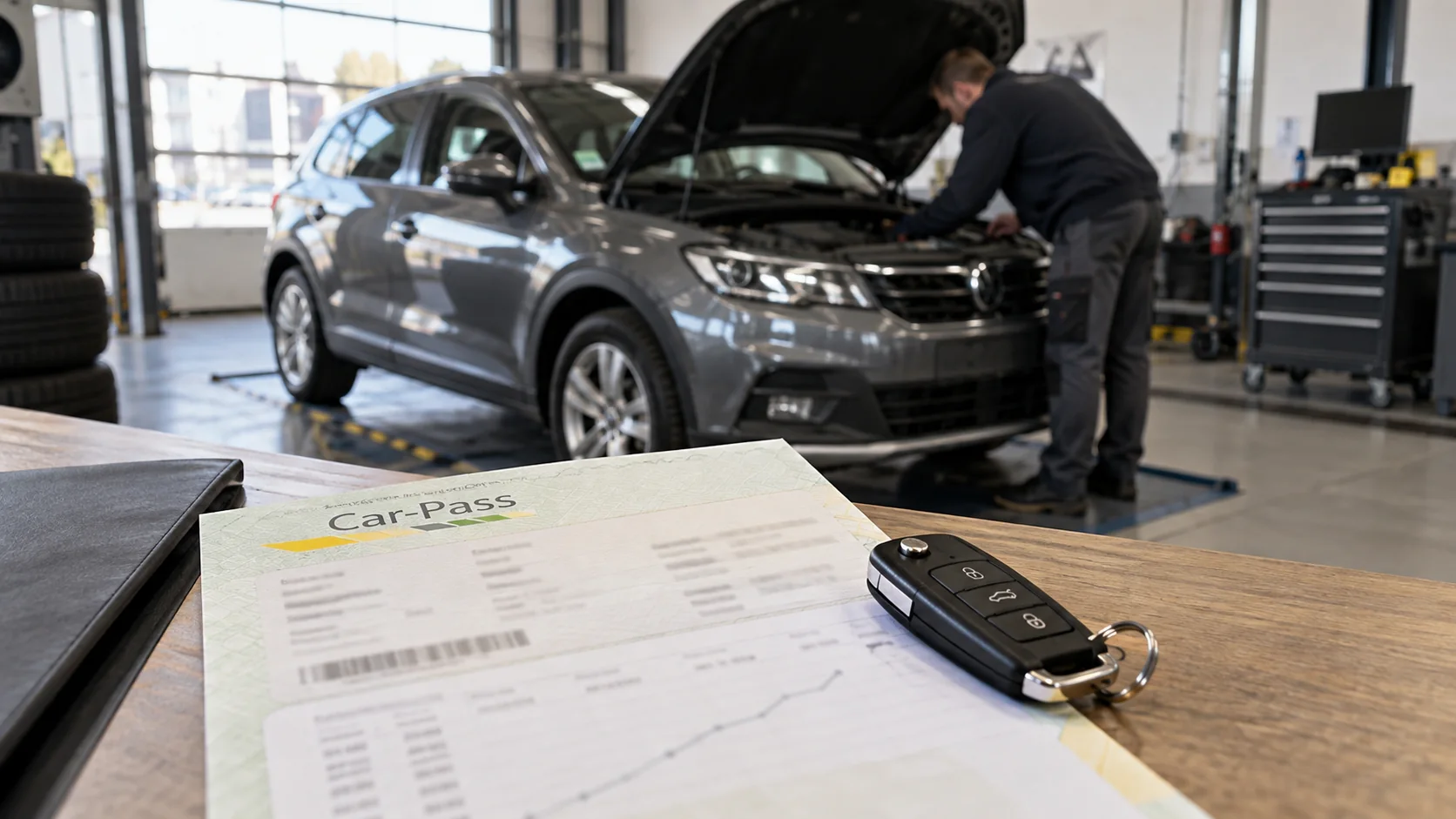
Agree on conditions that provide proper access for the inspection, preferably including a lift. Have body repairs, the underbody, corrosion, suspension, brakes, tyres, leaks and the engine or electric powertrain checked. Request photographs and clear descriptions of areas of concern. A paint reading alone explains neither the cause nor the quality of a repair; the checklist contains no universal threshold proving a car accident-free. Areas that remain concealed must be documented as uninspected. CarAudit’s inspection points.
Test drive, diagnostics and remaining limitations
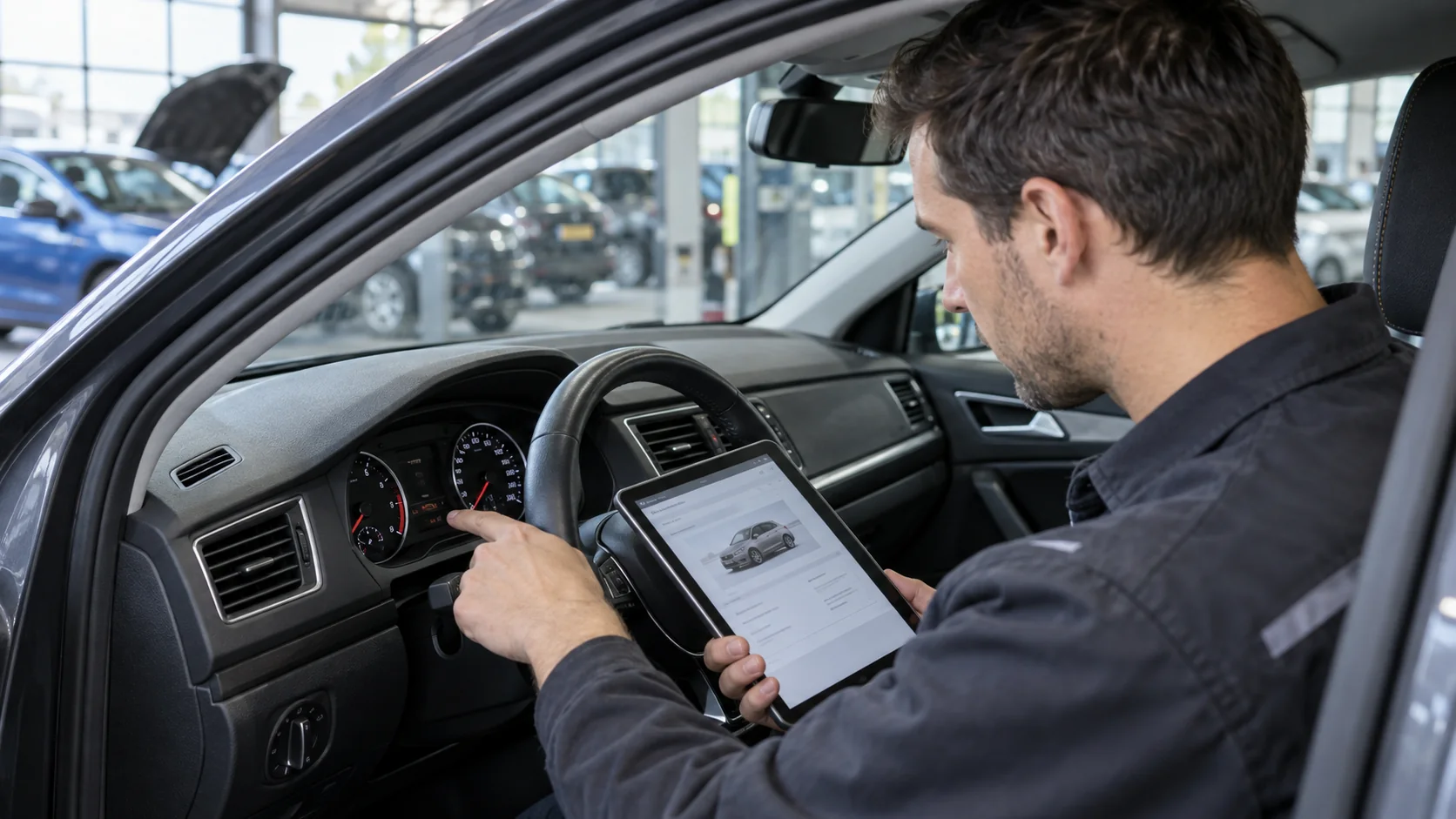
Prepare for a lawful, insured test drive and diagnostics. Have starting, gear changes, steering and braking behaviour observed. Fault-memory readings and a test drive complement the visual inspection but do not provide a complete guarantee. A fault code is not a repair estimate; an empty memory does not prove the absence of defects. For a battery test, the measurement method and conditions matter, rather than deriving a service life from a single value. CarAudit inspection scope; TÜV NORD AutoKaufCheck.
Before signing, clarify whether the sale is private or through a dealer and which law applies. German residence does not automatically mean German statutory warranty conditions govern the Swiss agreement. Record specific defects, outstanding documents, accessories and promised work in writing. If identity is unresolved, a transfer is blocked, essential documents are missing or a serious finding remains unexplained, we recommend pausing payment and departure. ADAC guidance on the contract for a Swiss car purchase.
When can proof of origin affect customs duty?
The place of purchase is not the preferential origin. A European vehicle brand alone does not establish entitlement to reduced customs duty either. What matters is the origin rules of the applicable agreement and evidence accepted for your vehicle. According to the Swiss Federal Office for Customs and Border Security (FOCBS, known as BAZG in German), the Swiss exporter must issue the required proof of origin before export if you intend to claim preferential treatment in the destination country. FOCBS: conditions for preferential treatment.
A EUR.1 movement certificate may, in particular, be an appropriate form of evidence; clarify with the exporter and customs offices which form is permitted in your case. A CoC, by contrast, concerns technical conformity, not origin for customs purposes. Treat the two documents as separate tasks. ADAC: proof of preferential origin; Service Berlin: technical documents.
For your cost calculation, this means asking before payment whether the seller can actually obtain the required evidence. If preferential treatment is unresolved, do not simply enter zero for customs duty. The customs authority decides whether the specific proof is accepted, not the wording of the advertisement.
How do you declare the export in Switzerland?
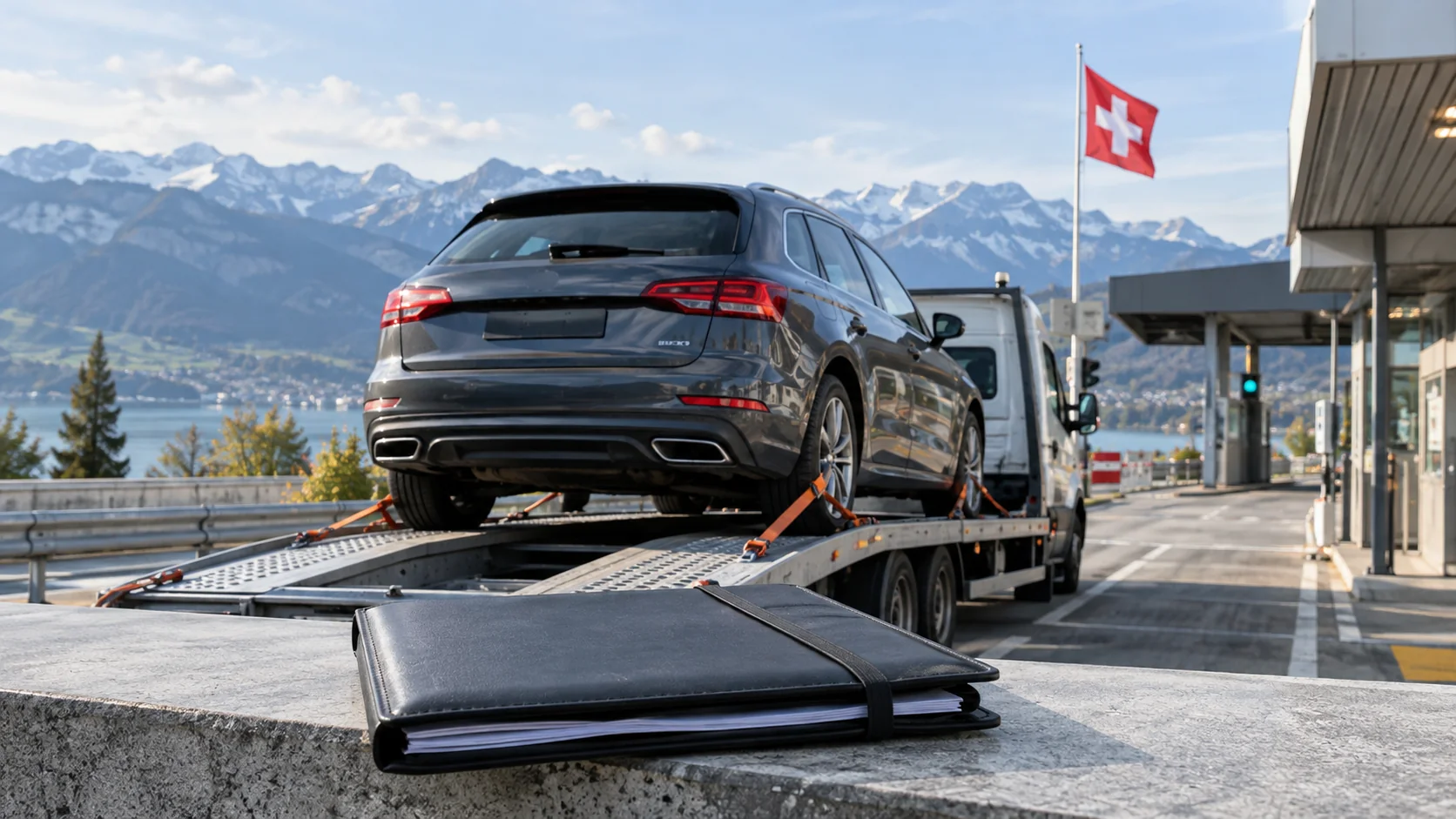
For permanent export, you must declare the vehicle without being prompted at a Swiss customs office that processes commercial goods. FOCBS lists the vehicle registration document, proof of identity, an export customs declaration and, where applicable, proof of origin as accompanying documents. The vehicle registration document may already have been cancelled. The official vehicle export procedure.
Before collection, establish who will prepare and submit the declaration. Coordinate the border crossing, clearance procedure and opening hours for goods clearance. An open road across the border does not mean your customs appointment is fully prepared. Take the purchase document and the papers agreed for both sides of the border.
How should you plan transport and the total cost?
Swiss export plates may be used when driving the car; the relevant cantonal road traffic office is responsible. Clarify their validity period, insurance and whether they can be used all the way to your German destination. Alternatively, the vehicle can be moved on a transporter or trailer. FOCBS describes both transport options.
Coordinate deregistration and handover with the seller. Do not assume that their existing plates and insurance will automatically remain valid. Before driving the car yourself, the plates, registration status, roadworthiness and insurance cover must be appropriate for the entire route. At handover, record the condition, mileage, keys and original documents supplied. ADAC: transporting a car from Switzerland.
Add quotations for inspection, transport, customs processing, documents, any required technical assessment, registration and evidenced repairs to the documented purchase price. Also record the purchase currency and any conversion costs. Compare the complete cost of getting a usable car in Germany; leave unresolved costs open.
How do you declare the import, and what costs arise?
On the direct route, declare the vehicle for import to German customs when entering Germany. Swiss export clearance does not fulfil this obligation. If you enter through another EU country, arrange clearance at the first EU entry point or a proper customs transit procedure. Do not continue without the appropriate procedure intending to declare the import at home at some later date. ADAC: export, import and transit.
For an ordinary passenger car, ADAC states standard rates of 10% customs duty and, for import into Germany, 19% import VAT. These are not universal promises for every vehicle: tariff classification, applicable preferential treatment and special rules can change the result. Unlike a normal EU used-car purchase, the Swiss route is a third-country import. A private purchase does not turn it into a VAT-free movement within the EU. ADAC: import charges; Your Europe: buying outside the EU.
The basis of calculation is not simply the advertised price. The customs value takes account of the relevant vehicle value and costs that must be included, such as transport and insurance. The import VAT assessment base also includes customs duty and, where applicable, other relevant costs. Have the amount calculated using the purchase document and transport quotation. Simply adding 10% and 19% to the same purchase price does not accurately reflect the process. ADAC: calculating charges.
Clarify declaration, assessment of charges, payment processing and release with the clearing office before travelling. Payment is part of the customs procedure and must not be mentally postponed until after registration. If using transit, its completion requirements apply. Keep the clearance and payment documents for German registration. ADAC: customs procedures and evidence.
Is Swiss VAT refunded?
You must agree any possible refund with the dealer and support it with the required export evidence. Record the amount, documents and conditions in writing. Do not unilaterally deduct anything from the agreed purchase price. An ordinary private sale has no corresponding dealer refund. ADAC: refunds of Swiss VAT.
Which documents does the German registration authority need for a third-country import?
Prepare German registration before buying. As a local example, Berlin lists original vehicle papers, proof of acquisition, identification, electronic insurance confirmation (eVB), a SEPA mandate, evidence of the periodic roadworthiness inspection (HU) and a customs clearance certificate (Zollunbedenklichkeitsbescheinigung). If the latter is not submitted, the registration authority informs the main customs office. This is not a way to avoid import charges. Service Berlin: registration of vehicles from third countries.
The technical side needs particular attention: under Berlin’s procedure, a CoC or manufacturer’s data confirmation is sufficient only if the third-country documents show that the EC type-approval number was recognised for registration there. Otherwise, an expert assessment under section 21 StVZO with a technical data sheet may be necessary; deviations may also require exemptions. Berlin’s official service explains the specific distinction.
Have your local registration authority confirm the procedure using the actual papers. A vehicle registration document, a CoC or a reference to an MFK inspection alone does not justify promising that every Swiss car can be registered in Germany without further examination.
Your checklist before purchase and collection
Every item starts as Open. Evidence reviewed refers only to your examination of it, and Discrepancy to resolve indicates inconsistent information. A discrepancy takes priority over missing evidence. Even six reviewed items confirm neither the validity of the documents nor the condition of the vehicle. The date refers to the editorial source check, not an inspection of your car.
| Question | Significance | Next step | Direct source | Checked / status | Progress |
|---|---|---|---|---|---|
| Which Swiss documents do you need before buying? | The Swiss vehicle registration document, proof of purchase and specific type approval must be checked separately. | Clarify the vehicle registration document, proof of purchase and type approval with the competent registration authority in advance. | ADAC – importing a car from Switzerland; Service Berlin – third-country registration | 07.09.2026 · Open | Open |
| How do you declare the export in Switzerland? | Permanent export must be declared at a competent Swiss customs office. | Arrange the export declaration and border customs office before collection; make a firm decision on the means of transport. | FOCBS – vehicle export | 07.09.2026 · Open | Open |
| When can proof of origin affect customs duty? | Preferential origin does not follow solely from the country of purchase or vehicle brand. | Check eligibility for preferential treatment and the required evidence before payment; do not enter zero for unresolved customs duty. | FOCBS – vehicle export; ADAC – importing a car from Switzerland | 07.09.2026 · Open | Open |
| How do you declare the import, and what costs arise? | When entering Germany directly, the import must be declared to German customs. Customs duty, import VAT, transport and registration costs belong in the overall comparison. | Prepare the import declaration and obtain a complete quotation including customs processing, transport and German tax; allow for a refund only if the agreement is confirmed. | ADAC – importing a car from Switzerland; Your Europe – VAT when buying a car | 07.09.2026 · Open | Open |
| Has the current technical condition been inspected sufficiently? | A register search does not replace inspection of the car. Inaccessible parts remain uninspected. | Request an inspection report covering bodywork, underbody, powertrain and test drive; document limitations. | TÜV NORD – AutoKaufCheck; CarAudit – what we inspect | 07.09.2026 · Open | Open |
| Have the requirements for German registration been clarified? | Third-country registration: clarify customs evidence and technical approval in addition to the original papers. | Clarify the vehicle-specific document requirements with the competent registration authority before purchase. | Service Berlin – third-country registration | 07.09.2026 · Open | Open |
Some evidence is still missing. Use the next steps listed.
FAQ: buying a car in Switzerland
Is customs duty waived simply because I buy in Switzerland?
No. A reduction depends on recognised preferential origin, suitable evidence and the customs procedure. Buying in Switzerland is not enough. FOCBS: origin and vehicle export.
Does a CoC also serve as proof of preferential origin?
No. The CoC concerns technical registration requirements. Preferential origin for customs treatment must be evidenced separately. FOCBS: proof of origin; Service Berlin: CoC and type approval.
Should Swiss VAT automatically be deducted from the purchase price?
No. A possible refund requires an agreement with the dealer and the appropriate evidence. An ordinary private sale does not have this refund mechanism. ADAC: VAT refunds.
Establish the condition before finalising the import
A complete customs folder does not replace a condition assessment, and a convincing inspection report does not replace import papers. Use CarAudit’s inspection points to prepare a suitable independent inspection. This lets you bring together findings, missing evidence and the full import cost before making your decision.