Check RDW mileage data, BPM arrangements and export documents before buying a Dutch used car and bringing it to Germany.
Before buying a car in the Netherlands, compare the vehicle's identity with the seller's documents, check RDW data and maintenance records, and have its current condition inspected. At the same time, establish which export documents you will receive and how the car will reach Germany. Only then should you settle the price, contract and payment.
This process covers a typical used car already registered in the Netherlands. You are buying as a private individual, live in Germany and intend to register the vehicle there. A particularly important point: a traceable mileage history replaces neither a condition inspection nor a complete set of export documents.
In this article: RDW and mileage | Previous imports | BPM and price | Inspection before payment | Export documents | Transport | Checklist | Germany | FAQ
How do you interpret RDW data and mileage?
Before viewing the car, request its Dutch registration number, vehicle identification number (VIN), current odometer reading and photographs of the registration documents. Later, compare the VIN on the car with the originals. Check the seller's identity and authority to sell; if someone is acting on their behalf, check the power of attorney too. The RDW buying advice explains why a registration-number search alone does not rule out a false vehicle identity.
For the RDW mileage check, enter the registration number and the exact current odometer reading. By contrast, a basic registration-number search assesses the last recorded reading. “Logisch” means an increasing sequence, “onlogisch” indicates a discrepancy and “geen oordeel” means there is insufficient information for an assessment. A discrepancy could result from a recording error or tampering, for example, and needs to be resolved.
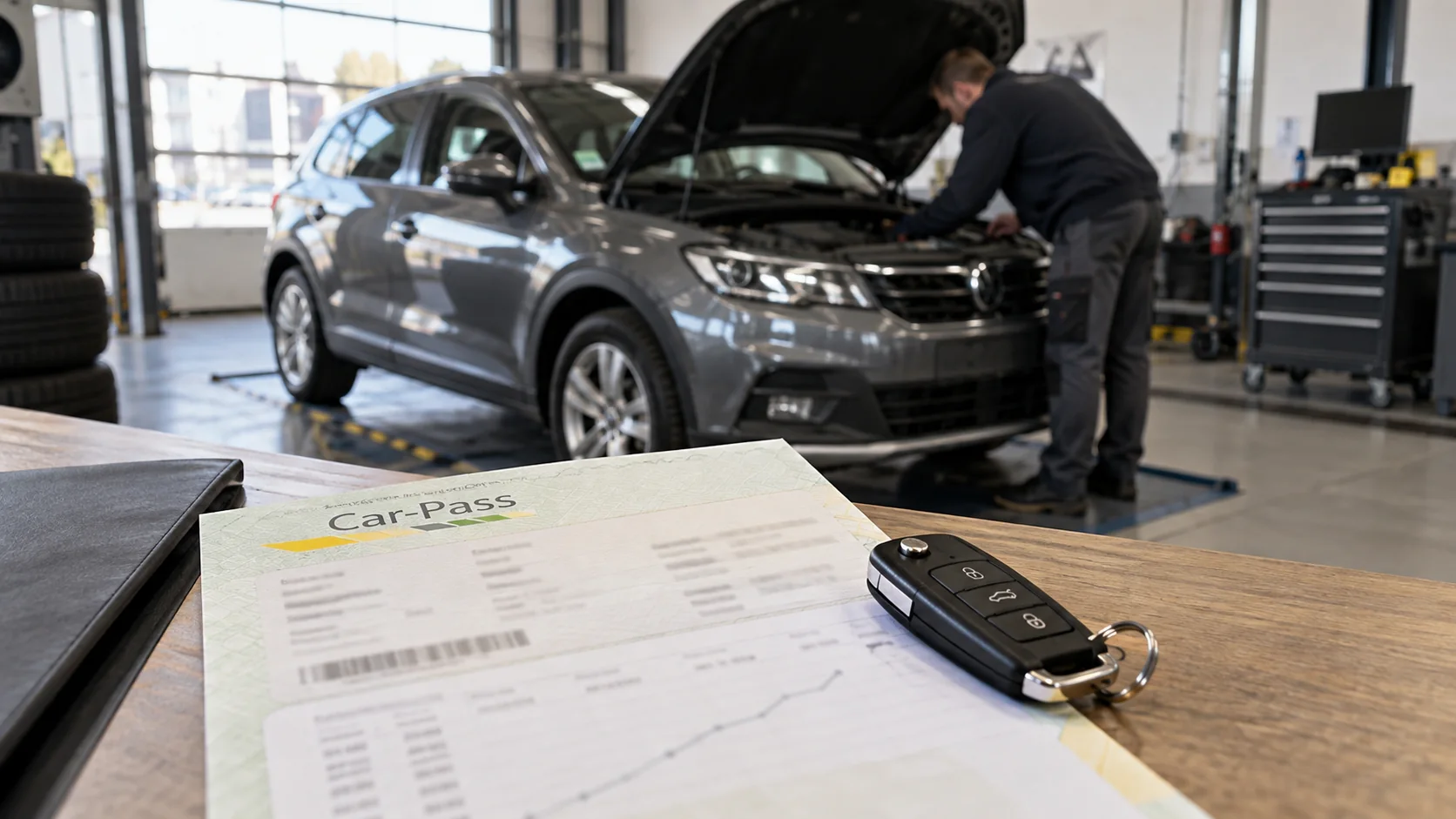
According to RDW, a NAP logo concerns plausibility at the last entry, not a complete vehicle biography. Also ask the registered keeper for the RDW Voertuigrapport, which contains recorded odometer readings, and supplement it with maintenance invoices and digital service entries. Even an unremarkable register status does not replace proof of authority to sell.
What if the vehicle was previously imported?
Compare the date of first registration with the date of first Dutch registration. Its location in the Netherlands tells you nothing about where the car was driven before. Obtain additional evidence for earlier countries of registration; periods without supporting records remain unresolved. The RDW vehicle report includes both registration dates.
For vehicles imported from Germany from 3 February 2026, RDW also incorporates German mileage data. This does not apply retrospectively to cars previously registered in the Netherlands. Even an increasing imported mileage history still receives “geen oordeel vanwege invoer”, because other earlier countries of registration may be unknown. RDW explains the inclusion of German odometer readings here.
Be careful with an offer that includes only a Dutch individual approval document, an IGC, but no registration certificate. This is not the standard situation covered here. RDW explicitly warns that other countries do not automatically accept this approval. Before making a binding commitment, have the actual documents checked to establish whether the car can be registered in Germany.
How does BPM affect the export price?
BPM is a Dutch vehicle tax, not an additional German import charge. A partial refund may be available when a used vehicle is exported. The Belastingdienst conditions include paid BPM, first Dutch registration on or after 16 October 2006, RDW “Export” status, and actual transport to and permanent registration in the destination country, here Germany. That registration must take place within 13 weeks of the RDW export status.
The car must not be a “schadevoertuig”, meaning a damaged vehicle within the refund rules. Vehicles intended for scrapping or with “wacht op keuring” status (inspection pending) are also excluded. This does not mean the vehicle has never had an accident. The official application and explanatory notes also specify a separate deadline: send the completed, signed application with proof of foreign registration within 13 weeks of the end of Dutch registration. This is not a payment deadline.
Under those notes, the tax refund goes to the last Dutch registration holder. Your price agreement is a separate matter: who applies, is the expected refund already included in the export price, will its financial benefit be passed on, and who will supply proof of German registration on time? Record this in writing before paying. Do not deduct a possible refund a second time as a discount.
What should be inspected before you pay?
Bodywork, underbody and powertrain
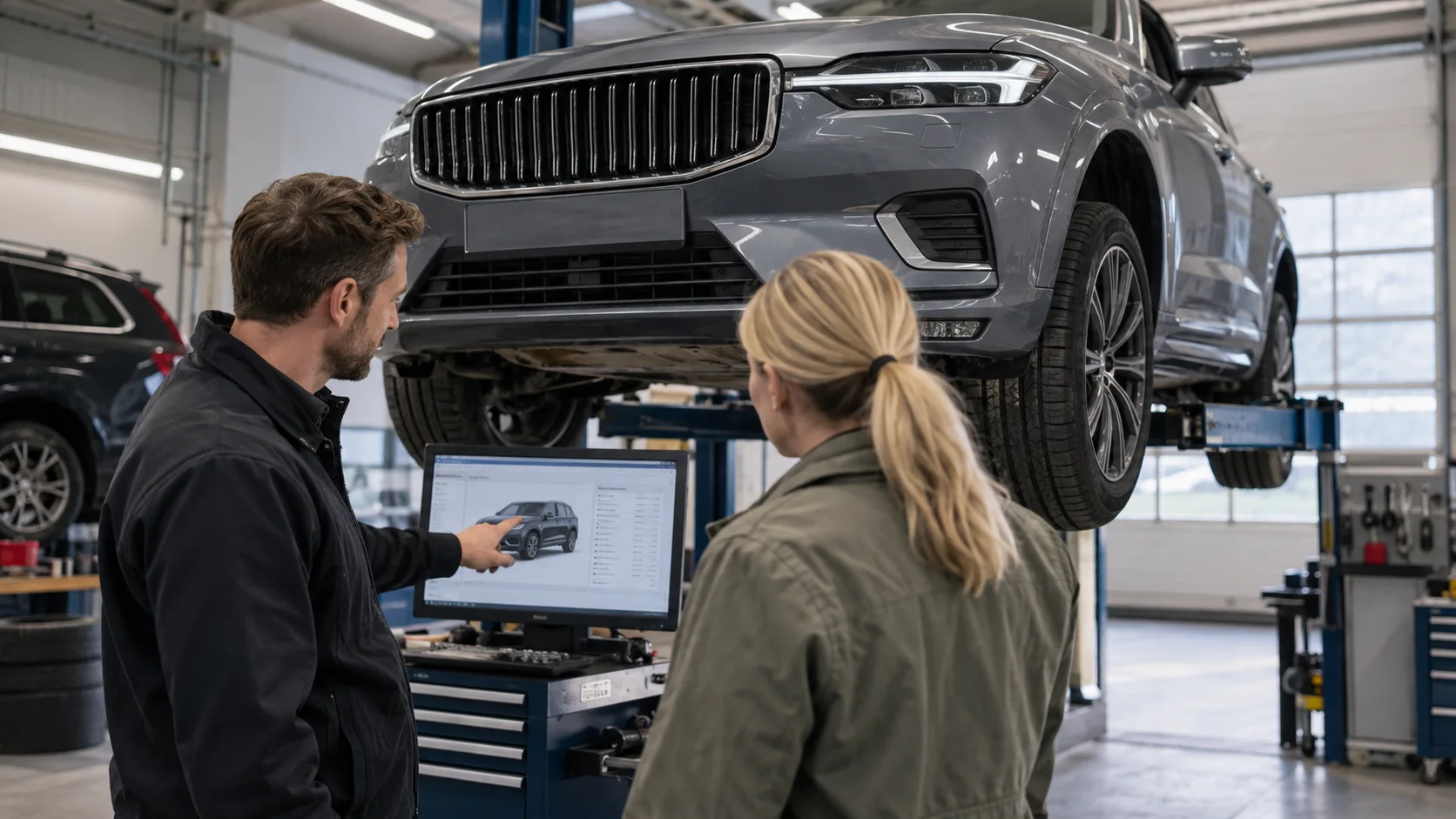
Arrange access to a vehicle lift and, if possible, a cold start. Have repair traces, corrosion, underbody, brakes, suspension and powertrain inspected, with findings documented in photographs. Paint measurements must be interpreted in the context of the panel and the overall findings; one reading is not universal proof of an accident. Compare maintenance records and stated mileage with the wear found. These areas are also part of our CarAudit inspection scope.
Test drive, diagnostics and remaining limitations
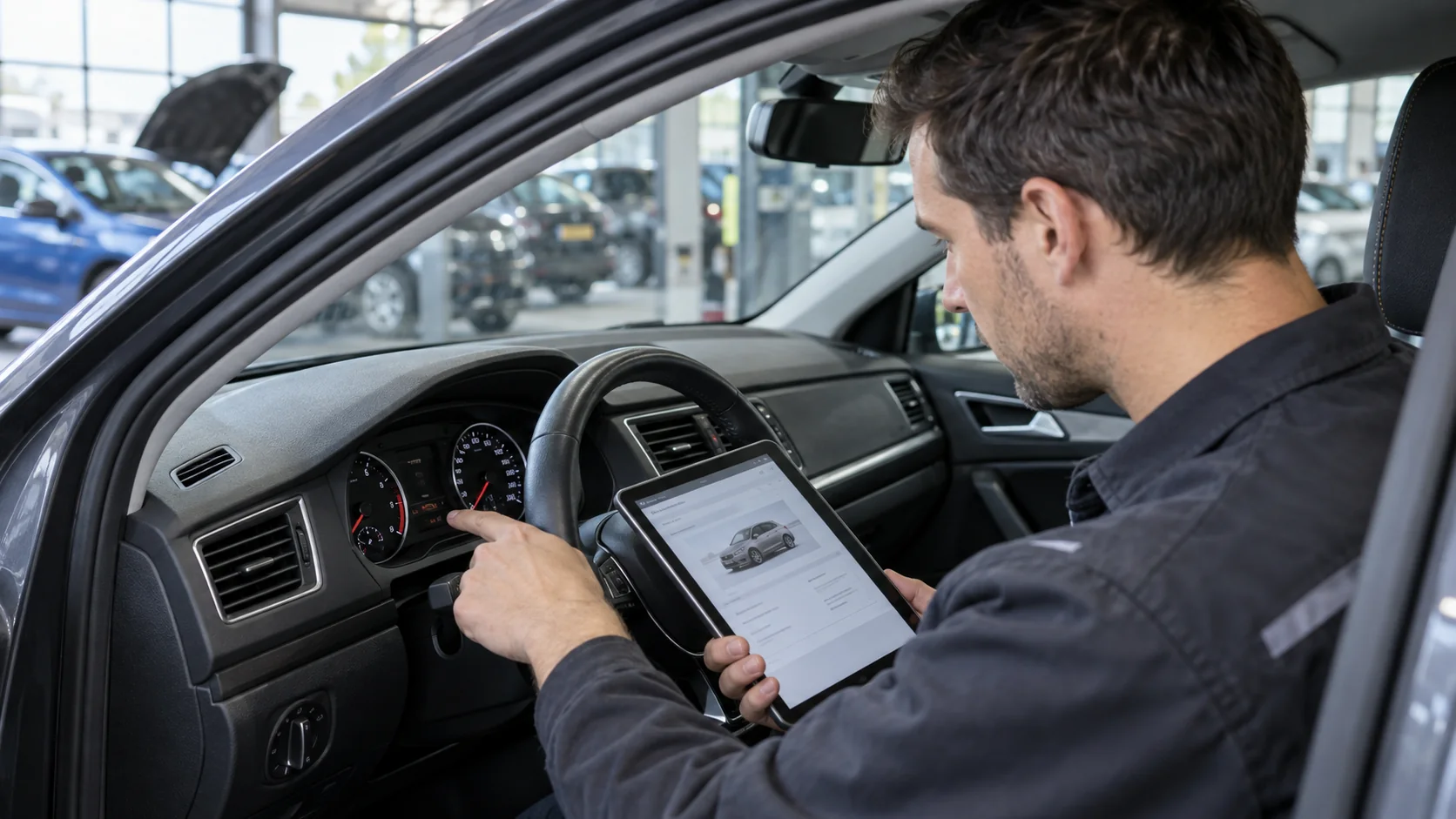
Agree on a test drive and diagnostic access before the appointment. A fault code is not yet a repair quotation; an empty fault memory does not confirm the absence of defects. If a test drive or underbody access is unavailable, the report must state those limitations. A pre-purchase inspection helps you make a decision; it is not a general legal requirement. TÜV NORD accordingly distinguishes the statutory roadworthiness inspection from an assessment of condition, previous damage and wear.
Our recommendation: suspend payment and departure if identity is unresolved, transfer is blocked, essential original documents are missing or a serious finding remains unexplained. Record confirmed defects, stated mileage, price, documents to be supplied and the handover date in writing. Distinguish a dealer from a private seller: living in Germany does not automatically apply every German warranty rule to a Dutch contract. ADAC provides guidance on buying abroad.
Which export documents must you take with you?
Arrange export deregistration at an RDW office or a recognised export business. Usually, you will need valid proof of identity, the registration card with its registration code or the corresponding older paper documents, and the number plates to surrender. Have the export processed in your name. The seller must obtain replacements for missing registration documents before export; according to the RDW export procedure, replacements can no longer be requested afterwards.
At the counter, check that the document package is complete:
- Vrijwaringsbewijs: confirmation that the previous registration has ended.
- Registration certificate: the card with its corner cut off or the older part 1B document.
- Export certificate part II: required together with the registration certificate for later registration abroad.
The deregistration paper alone therefore does not replace the two registration documents. Agree in advance on handover of the car, keys and original documents and on payment, and also take the purchase contract or invoice. RDW describes the document package.
Do not wait until you are in Germany to deregister online: in the separate online procedure for a vehicle already abroad, RDW issues no export certificate part II. Do not confuse this option with the regular export procedure.
Can you drive to Germany yourself after deregistration?
After export deregistration, RDW permits a further 14 days on Dutch public roads using export plates: the previous registration characters in black on white plates. A passenger car needs insurance and a valid APK, the Dutch technical inspection. If a necessary condition expires earlier, you cannot simply use the full 14 days.
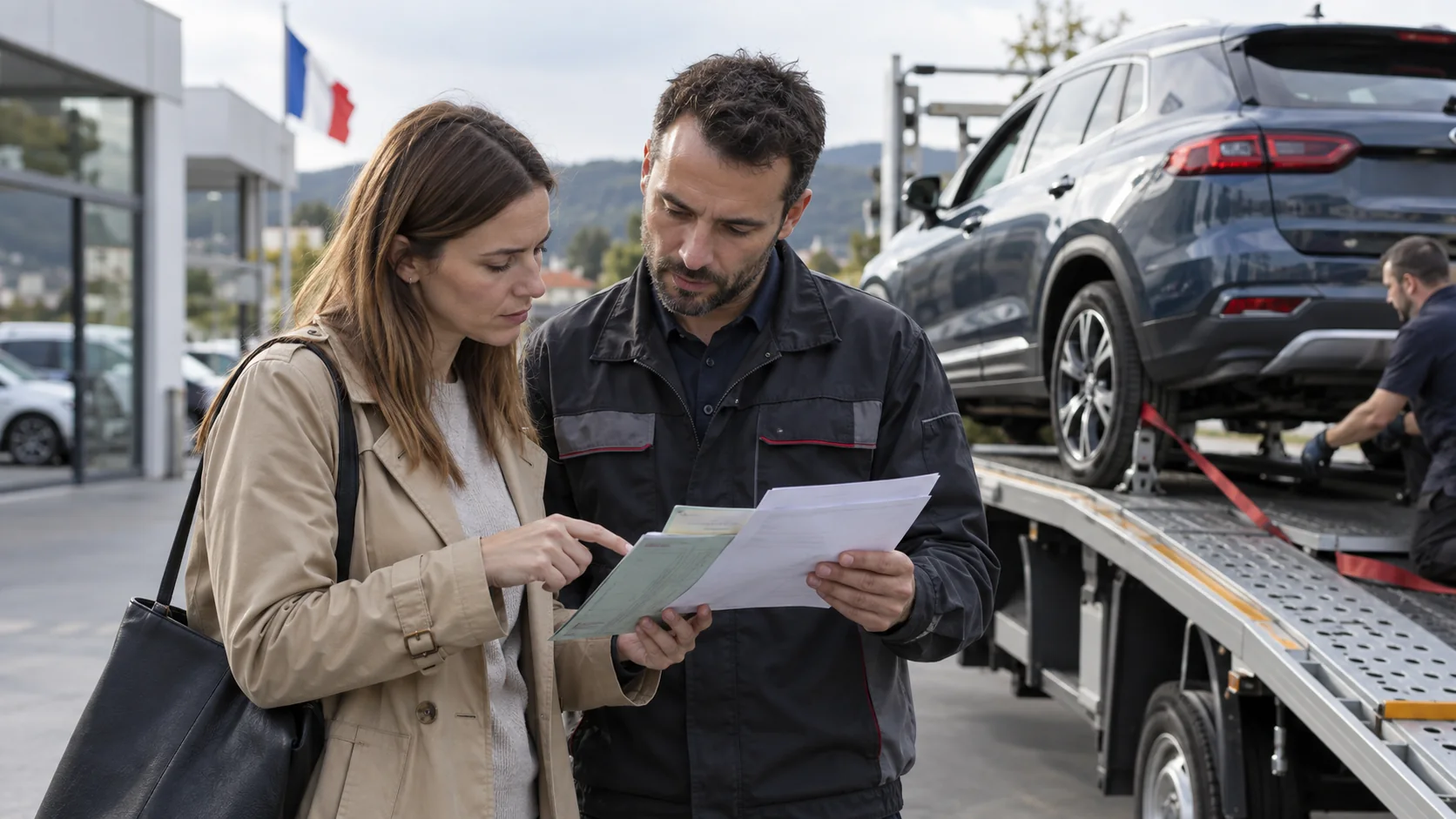
This RDW information does not automatically confirm that you may drive in Germany. Using the actual export documents, check validity and insurance cover for the whole route with the insurer and responsible registration authority. Your Europe highlights the lack of EU-wide harmonisation of temporary transit plates. Do not rely on the previous plates or the seller's insurance without checking. If requirements remain unresolved, arrange transport loaded onto a trailer or car transporter, rather than improvising the journey home.
Your checklist before purchase and collection
Use these seven questions for your records. “Open”, “Evidence reviewed” and “Discrepancy to resolve” describe only your progress. A selection confirms neither the validity of a document nor the condition of the car.
| Check question | What the evidence means | Next step | Source / checked | Progress |
|---|---|---|---|---|
| How do you interpret RDW data and mileage? | A logical mileage sequence concerns recorded readings, not the vehicle's overall condition. | Run an RDW query using the current odometer reading and add service records. | RDW: buying advice; RDW: check mileage; 2026-09-07 | Open |
| What if the vehicle was previously imported? | Earlier countries of registration and individual approvals require separate checks. | Establish previous countries of registration and technical approval before buying. | RDW: buying advice; RDW: vehicle export; 2026-09-07 | Open |
| Which export documents must you take with you? | Later registration requires export certificate part II and the other registration documents. | Collect export certificate part II together with the original registration documents. | RDW: vehicle export; 2026-09-07 | Open |
| Can you drive to Germany yourself after deregistration? | RDW's 14 days apply to Dutch roads; passenger cars need insurance and a valid APK. | Confirm APK, export documents, plates and insurance for the whole route; otherwise transport the car as a load. | RDW: vehicle export; ADAC: buying a used car in the EU; 2026-09-07 | Open |
| How is BPM accounted for in the export price? | The refund is conditional, not an automatic discount. For this refund route: German registration within 13 weeks of RDW export status; send the application within 13 weeks of the end of Dutch registration. | Before payment, agree in writing who applies, how the refund is reflected in the price, who benefits and who supplies proof of German registration. | Belastingdienst: BPM refund; Belastingdienst: conditions in Dutch; Belastingdienst: BPM application and notes (PDF); 2026-09-07 | Open |
| Has the current technical condition been investigated adequately? | Register information does not replace a vehicle inspection. Inaccessible parts remain unchecked. | Request an inspection report covering bodywork, underbody, powertrain and test drive; document limitations. | TÜV NORD: AutoKaufCheck; CarAudit: what we inspect; 2026-09-07 | Open |
| Are the German registration documents agreed? | Confirm original documents, proof of purchase, eVB, technical data and required inspection evidence with your registration authority. | Before buying, establish the vehicle-specific document requirements with the responsible registration authority. | Service Berlin: register an EU used vehicle; 2026-09-07 | Open |
Not all evidence has been marked as reviewed yet. Use the next steps listed.
How do you prepare for costs and registration in Germany?
Which taxes apply when buying a used car in the EU?
For VAT purposes, the car is used only if it has travelled more than 6,000 km and is supplied more than six months after first registration. Exactly 6,000 km or no more than six months triggers the tax rules for a new vehicle. An ordinary transfer of an EU used car incurs neither customs duty nor additional German VAT simply because it is moved. A dealer's invoice depends on the VAT procedure applied, possibly margin taxation; a net-price purchase is not automatically available. The EU rules for private car buyers are decisive.
For a vehicle that is new for tax purposes, VAT is payable in Germany as the destination country. Before buying, establish the declaration and payment procedure with your tax office instead of automatically postponing both until after registration.
What does the German registration authority need?
If possible, have your responsible registration authority check the documents before you buy. Berlin lists for EU used vehicles, in particular, original registration documents, a purchase contract or invoice, proof of identity, eVB electronic insurance confirmation and a SEPA mandate for vehicle tax. For type-approved vehicles, a COC or manufacturer data confirmation provides the technical basis. A missing COC alone does not automatically require an individual approval inspection; for a vehicle without type approval, Berlin specifies an expert report under section 21 StVZO.
Whether the existing APK documents provide sufficient inspection evidence depends on those documents and German inspection intervals. Section 8 FZV takes corresponding inspections from EU/EEA countries into account. A young vehicle may not yet be due for a German HU inspection. Obtain confirmation of the specific requirement. German registration does not replace the Dutch export procedure; Berlin also points out that deregistration in the country of origin is not automatic.
How do you budget for the total cost?
Alongside the agreed purchase price, allow for the pre-purchase inspection, collection or transport, export processing, plates and insurance, any replacement documents, an HU inspection or expert report, German registration and documented repairs. Obtain quotations for unresolved items. An unknown amount is not zero; a BPM refund already reflected in the purchase price must not be deducted again.
Frequently asked questions
Does NAP evidence guarantee the mileage?
No. It concerns the logical sequence of recorded readings at the last entry. It does not confirm a complete maintenance history or the current condition. Supplement the RDW information with records and a vehicle inspection.
Which RDW documents do I need in Germany?
For a regular export, export certificate part II together with the Dutch registration certificate. You also need the documents requested by your German registration authority. The Vrijwaringsbewijs alone is insufficient as an export document package.
Do the 14 days with export plates automatically apply in Germany too?
No. RDW describes use in the Netherlands. Check the German part of the route and insurance cover separately; the period does not replace valid documents or technical roadworthiness.
Is a BPM refund automatically an additional discount?
No. Entitlement is subject to conditions. Whether the financial benefit is already reflected in the price or will be passed on must be agreed in writing. Do not assume you will automatically receive a payment as a German buyer.
Have the actual car inspected before buying
With CarAudit, you can arrange a vehicle inspection in the Netherlands. Confirm availability at the specific location and access at the seller's premises in advance. The scope depends, among other things, on lift access and a test drive; our inspection involves no dismantling and is not a statutory guarantee.
View inspection scope and availability. The areas we inspect and the limitations: What is inspected on the vehicle?