Check Slovak vehicle history, export documents, transport and German registration: costs, tax treatment and pre-purchase checks for private buyers.
Before paying, check the vehicle's identity, the authority to sell it, original documents, history and current condition. Then agree export deregistration, document handover and transport. This guide is for private buyers resident in Germany purchasing a used car already registered in Slovakia; its location alone proves neither registration nor previous use.
When comparing offers from different countries, the guide to buying cars abroad (in German) helps you choose the right buying route.
Check the seller and original documents first
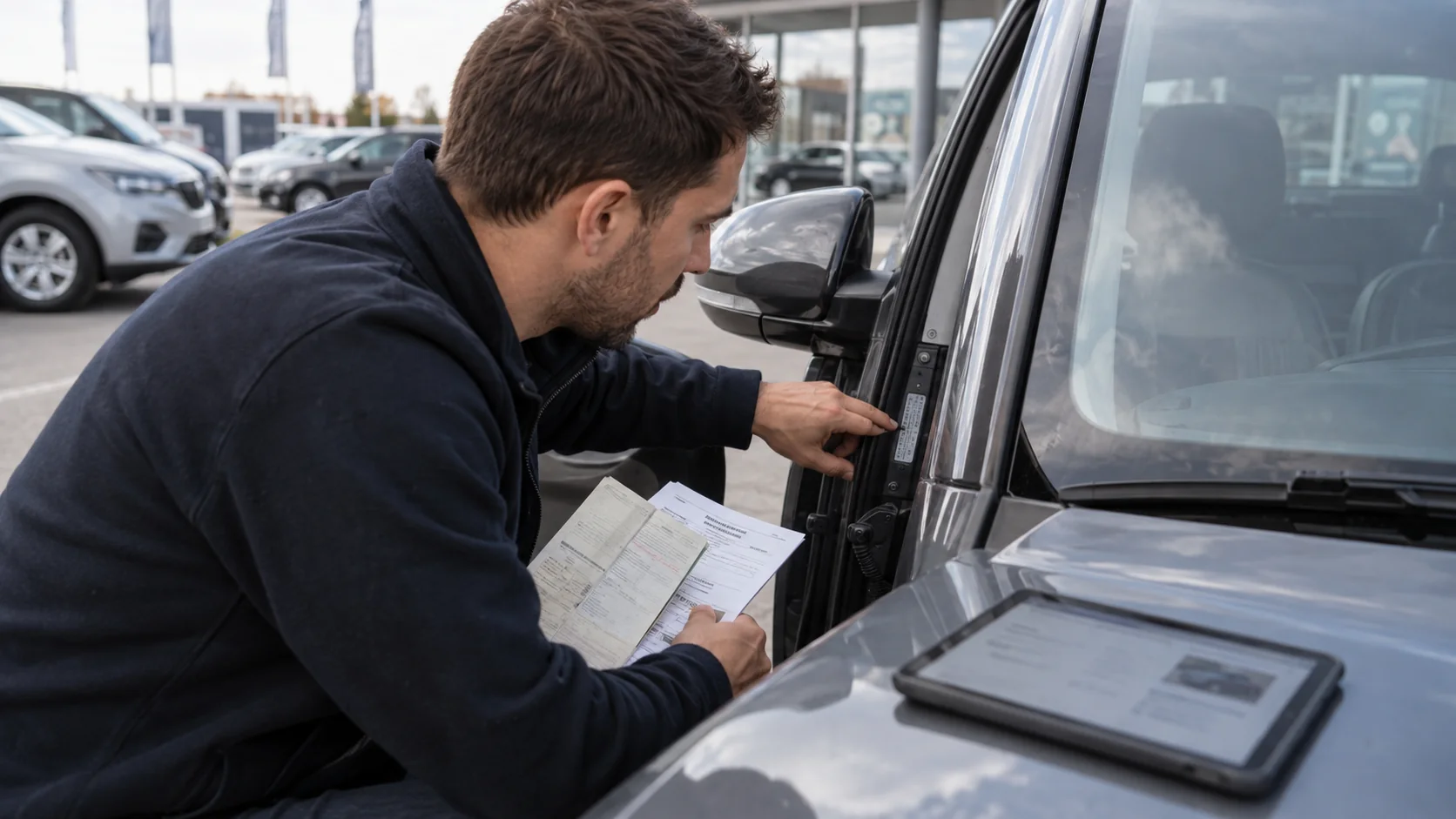
Compare the Vehicle Identification Number (VIN; FIN in German) on the car, in the original documents and in the contract. Check the owner, registered keeper and authority to sell; for companies, also check the representative and any finance, leasing or lien releases. Possession of the keys or use under a lease does not establish authority to sell. Record mileage and damage assurances, the final price, documents, keys, payment and handover in writing. Seller status and the law governing the contract affect your rights; German residence does not automatically make all German statutory warranty rules apply. Resolve material discrepancies before paying or travelling. 3 2
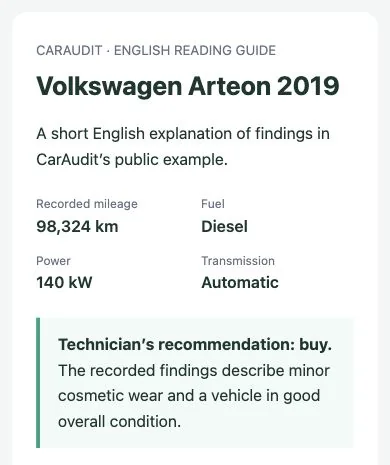
English editorial reading guide to the public example. The original has English navigation and Spanish technician notes; it is not the reader's vehicle. The guide is not a fully localised English version supplied by the provider.
Read the register history alongside the condition
The Register prevádzkových záznamov vozidiel (RPZV), Slovakia's register of vehicle operating records, offers different extracts:
| Evidence | What it tells you and the next step |
|---|---|
| ODO-Pass | Historical mileage readings; check the complete current extract. |
| AUTO-Pass | Depending on version, details such as first registration, number of owners and theft; Extended adds blocks, liens/leasing, while Full adds available damage details. |
| Originality inspection | Identity in the export procedure; clarify the requirement and exceptions with the authority. |
| Pre-purchase inspection of the car | Compare condition, photographs and findings with the price and seller statements. |
Request the complete current ODO-Pass rather than a cropped screenshot. Match the VIN, issue date and invoices, and verify the pass number and generation date with the operator. A newer pass, incompatible new entries or more than six months make the old pass invalid. Even a valid pass may omit later compatible entries; request a new one for all available records. It mainly shows Slovak readings, rather than a confirmed current total mileage. 1
Rising readings do not rule out tampering between records or before the first entry. Gaps are questions to resolve; falling readings or instrument replacement need evidence. Ask about previous countries of registration and their documents. An absence of reported damage does not prove the car is accident-free. 1 2 If you are considering a Czech alternative, the guide to buying a car from Czechia (in German) helps you compare mileage evidence and export documents.
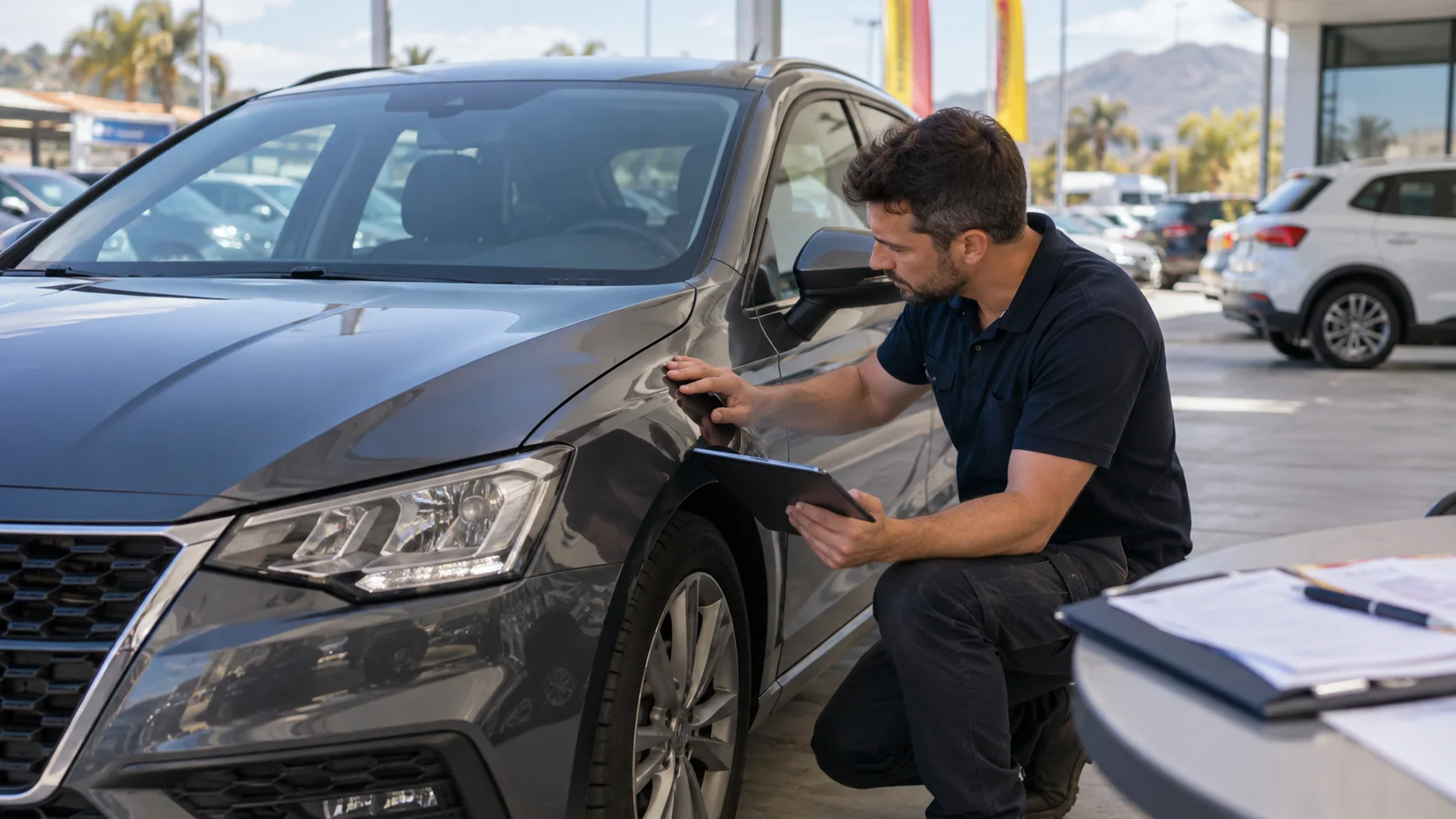
Have paint measurements assessed in the context of repairs and individual panels, alongside the bodywork, underbody, corrosion, brakes, tyres, suspension, leaks, cold start, engine and transmission. Add diagnostics and a legally permitted test drive: a fault code is not a repair quotation, and an empty fault memory is not proof of freedom from defects. 4
Arrange Slovak export before collection
Under § 119 of Slovak Road Traffic Act No. 8/2009, in the version effective from 1 October to 30 November 2026, the registered owner or keeper arranges export deregistration. This requires proof of identity, the required form, details of the new foreign owner/keeper, original registration certificate Parts I and II where issued, proof of insurance and, where applicable, an originality inspection report. Number plates must be surrendered; statutory cases involving loss, theft or declared retention of plates are separate exceptions. The police check insurance data and, if no entry is available, require proof of insurance or conclusion of an insurance contract. 3
If you are not personally present as the new foreign owner and keeper to be entered in the register, a written power of attorney or proof of acquisition bearing your certified signature is generally required. Exceptions remain possible for close persons and qualified electronic authorisations. Clarify the appropriate form beforehand. 3
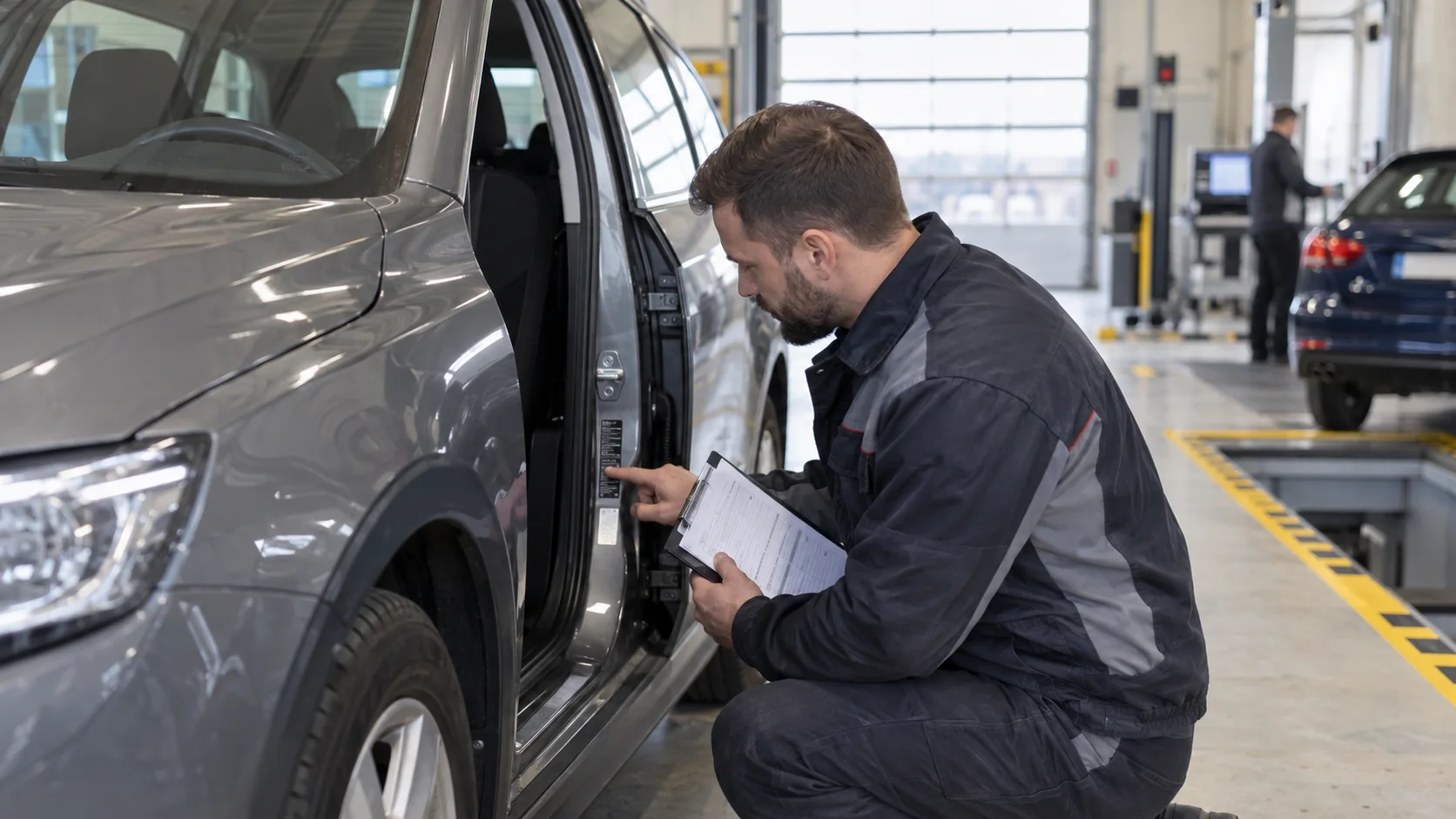
The Kontrola originality (KO), Slovakia's originality inspection, provides administrative evidence of identity and originality. A report rated “fit”, no more than 15 days old, is generally required. For export, a “temporarily fit” report of the same maximum age is sufficient only if the identifiers are legible and can be reliably determined. The requirement does not apply if the keeper remains unchanged or the first registration was no more than 60 days ago. This inspection answers different questions from a pre-purchase inspection. 3
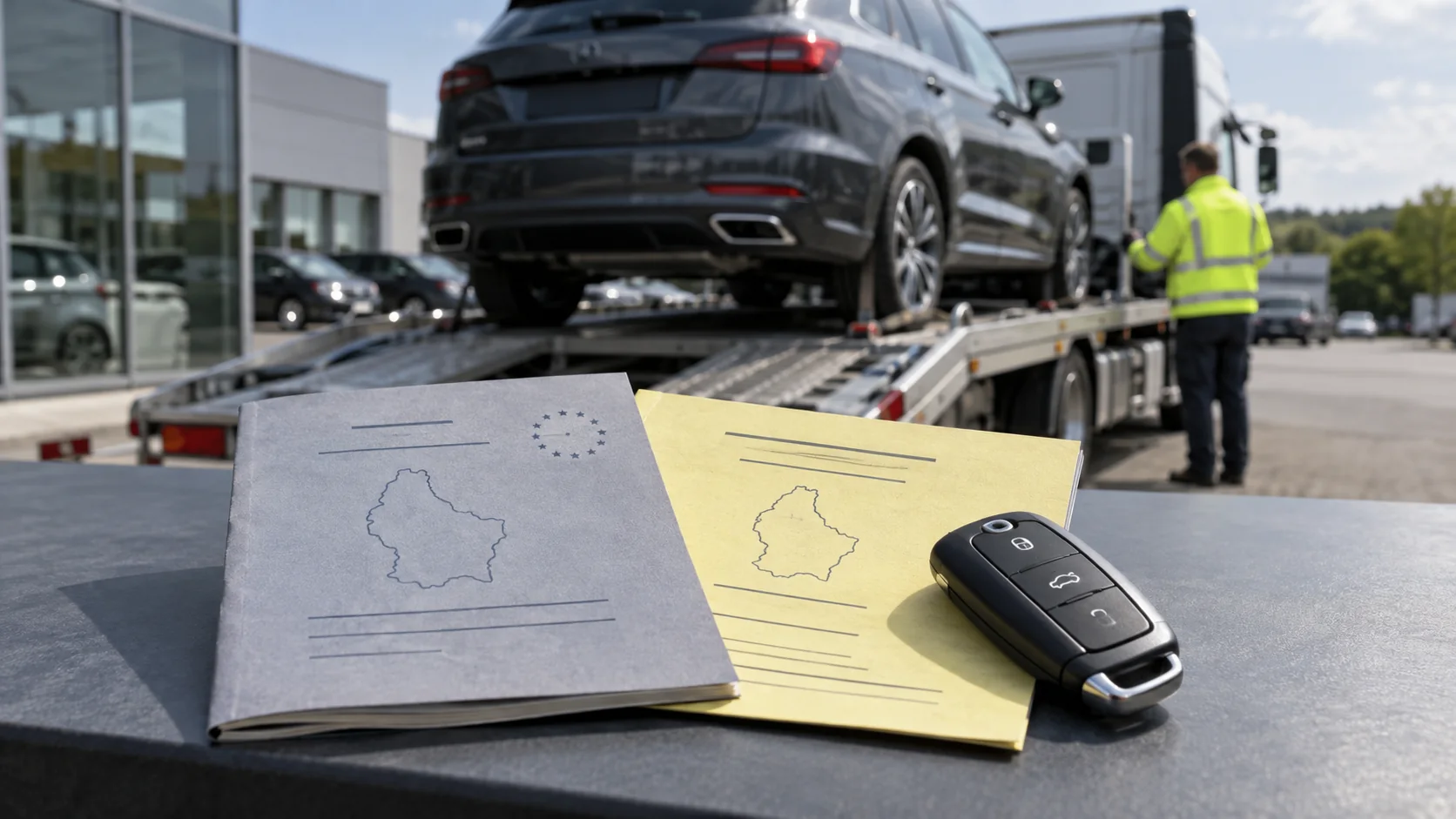
Agree the handover of the paper Part II document, the recipient of the personalised Part I card delivered later, and how that card will reach you. The qualified electronic procedure requires the prescribed buyer attachments, the appropriate electronic signature and a designated Slovak delivery address; a German electronic identity card alone does not establish access. V export plates and documents issued on request are valid for no more than 30 days from export deregistration. Later collection or delivery of Part I does not start a new period. 5 3
Before paying, check the actual registration, insurance, seizure and enforcement status with the owner/keeper and the police. Previous removal from a register can prevent the export procedure; export deregistration and permanent removal are different procedures. German notification does not guarantee automatic Slovak deregistration. For Polish offers, the guide to buying a car from Poland (in German) helps you compare seller evidence and the documents provided. 3 17
Drive it home or carry it as a load?
| Option | Confirm before collection |
|---|---|
| Driving it home | Valid registration status and plates, required originals including Part I, roadworthiness and insurance for the entire route and period. |
| Carried on a transporter/trailer | Obtain a quotation for suitable transport; continue to coordinate export deregistration, status and handover of originals. |
Obtain written confirmation from the insurer of cover for every travel day and transit country; do not assume the seller's policy continues after sale or export. Where possible, plan the journey and German registration within the actual validity period. To compare a longer collection journey, the guide to buying a car from Romania (in German) offers pointers on transport quotations and the overall budget. 5
Prepare for German registration and the correct tax treatment
Your registration authority will confirm the documents required for the particular vehicle. Typical requirements include original foreign documents and any existing plates, proof of purchase, proof of identity, an electronic insurance confirmation (eVB) and a Single Euro Payments Area (SEPA) direct debit mandate for motor vehicle tax. For a type-approved car, Berlin accepts the EC Certificate of Conformity (CoC) or a manufacturer's data confirmation. A missing CoC alone does not make an expert report under § 21 of the German Road Traffic Licensing Regulations (StVZO) compulsory; without type approval, that expert-report route is required. If Part II of a two-part foreign registration certificate is missing, § 8 of the German Vehicle Registration Regulation (FZV) requires confirmation from the foreign authority via the German Federal Motor Transport Authority (KBA). 11 17 12
For a vehicle with European Union (EU) type approval previously used in the EU or European Economic Area (EEA), § 8 FZV requires an inspection under § 29 StVZO before registration if it would be due under German intervals. A documented, qualifying inspection under Directive 2014/45/EU from the EU/EEA state of use can replace it; the next inspection date follows German intervals. Without evidence of first use, a § 29 inspection is required. Previous use outside the EU/EEA separately triggers a compulsory § 29 inspection. Ordinary privately used passenger cars have their first periodic roadworthiness inspection (Hauptuntersuchung, HU) after 36 months and then every 24 months; special uses have different intervals. 12 18
For tax purposes, the car is new if, at acquisition, it has travelled no more than 6,000 km or no more than six months have passed since first use. Used means that both thresholds have been exceeded. A private buyer's intra-Community acquisition of a car that is new for tax purposes generally attracts 19 % VAT in Germany. No VAT is charged on a private sale of a used car; dealers may invoice under ordinary VAT rules or the margin scheme. The presence or absence of separately stated VAT alone does not establish the applicable treatment. There is no automatic net price and no further German acquisition VAT merely because the car crosses the border. No customs duty applies to an ordinary EU car purchase from Slovakia to Germany. 9 10 19 20
Calculate costs for the option you actually choose
The German Schedule of Fees for Road Traffic Measures (GebOSt) distinguishes the base fee from conditional surcharges. Select the applicable alternatives below:
| Item | Amount | When to include it |
|---|---|---|
| Purchase price | To be determined | Contract, seller status/invoice type; establish the actual currency. |
| German registration: base fee | €30.00 | GebOSt 221.1; additional services are separate. |
| CarAudit Slovakia | €269.00 | Including VAT and travel; car available and seller agreement confirmed. |
| Battery diagnostics, optional | €179.00 | Additional; eligible electric/plug-in hybrid cars only. |
| Cebia Autotracer, optional | €23.90 | Additional; coverage depends on the vehicle history. |
| Driving home/transport | To be determined | Obtain a quotation for the route, date and chosen option. |
| German acquisition VAT | To be determined | 19 % of the statutory taxable amount, only for a car that is new for tax purposes. |
| Technical/data evidence | To be determined | Obtain inspection centre/manufacturer quotations for the particular vehicle. |
| German plates/additional services | To be determined | Ask about manufacturing and local additional costs; avoid double-counting. |
| Annual motor vehicle tax | To be determined | Separate recurring cost; exact vehicle data required. |
| Data surcharge | €15.30 | Only if KBA retrieval is impossible AND the data are absent locally. |
| Personalised registration number | €10.20 | Only for a registration number chosen outside the regular allocation. |
| Exchange of Fahrzeugbrief | €5.10 | Only for exchange of the former German vehicle document for registration certificate Part II. |
| Interchangeable number plates (Wechselkennzeichen) | €6.00 | Only when these are allocated. |
| Two Slovak metal plates | €100.00 | €50 each; associated documents included, no additional €18. |
| Slovak documents without plates | €18.00 | Alternative: Part I €9 + Part II €9. |
| Expedited Part I, on request | €45.00 | €45 instead of €9; have the applicable procedural option confirmed. |
| Originality inspection, where required | To be determined | Obtain an inspection centre quotation for this vehicle. |
| ODO-Pass | €7.90 | Maximum price; depends on the number of entries. |
| AUTO-Pass Basic | €5.90 | Alternative version; check the coverage you need. |
| AUTO-Pass Extended | €9.90 | Alternative with block, lien and leasing data. |
| AUTO-Pass Full | €16.90 | Alternative; damage details only where available. |
Sources: 6 7 8 5 3 9 10 11 12 13 14 1 2
For qualifying electronic Slovak submissions with electronic attachments, the fee is generally halved, with a maximum reduction of €50. Check access and the specific fee decision. On request, expedited Part I costs €45 instead of €9 for two working days including delivery; this does not guarantee completion of the entire administrative procedure. Unknown quotations are not zero amounts. Add repairs and travel costs; annual motor vehicle tax based on engine capacity, powertrain, carbon dioxide (CO₂) emissions and first registration, plus ongoing insurance, belong separately in the running-cost calculation. 14 13
Four steps before you commit
Settle these four stages before payment and collection:
| Four steps before you commit | Progress |
|---|---|
| Match the VIN, seller, authority to sell and original documents. | Open |
| Check the register history, invoices and current condition together. | Open |
| Agree export, both documents, insurance and lawful transport. | Open |
| Clarify technical evidence, insurance and tax documents with the German registration authority. | Open |
Some evidence is still missing. Use the next steps listed.
Frequently asked questions
Are ODO-Pass and AUTO-Pass the same?
Slovakia's register of vehicle operating records (RPZV) separates historical mileage readings in ODO-Pass from version-dependent AUTO-Pass data. Extended adds block, lien and leasing data; Full adds available damage details. Match the complete current ODO-Pass with the Vehicle Identification Number, invoices and date, then verify the number and generation date. A newer pass, incompatible new data or more than six months make it invalid; validity does not guarantee inclusion of later compatible entries. 1 2
Do rising readings prove the total mileage?
No. Mainly Slovak readings can miss tampering before the first entry or between records. Compare the current reading, invoices and evidence from previous countries. Gaps, decreases or instrument replacement need documented clarification; they do not alone establish fraud. An absence of reported damage does not establish that the car is accident-free either. 1 2
When do I need the Kontrola originality?
Slovakia's originality inspection (KO) provides administrative evidence of identity. A report rated “fit”, no more than 15 days old, is generally required; for export, “temporarily fit” is permitted only if the identifiers are legible and can be reliably determined, also with a maximum report age of 15 days. Exceptions: an unchanged keeper or first registration no more than 60 days ago. A pre-purchase check of wear and repairs remains a different inspection. 3 4
Whose certified signature is needed for export deregistration?
The owner or keeper arranges it with proof of identity, the foreign buyer's details, proof of insurance and original registration certificate Parts I/II where issued. If the police lack insurance data, they require proof of insurance or conclusion of an insurance contract. If the new owner/keeper to be entered in the register is absent, their written power of attorney or proof of acquisition bearing their certified signature is generally required. Exceptions for close persons and qualified electronic authorisation remain. Plates must be surrendered; loss, theft and declared plate retention have separate statutory exceptions. 3
When do I receive both documents, and when do the 30 days start?
Part II is handed over, while the personalised Slovak registration certificate Part I is forwarded after delivery. Agree the recipient and handover of originals beforehand. V plates and documents issued on request are valid for no more than 30 days from export deregistration, rather than collection or card delivery. An electronic application requires a qualified signature, the prescribed buyer attachments and a Slovak delivery address. 3 5
Can I drive straight to Germany on V plates?
Only once valid registration/plate status, the necessary original documents including Part I, roadworthiness and insurance for every country on the route and every travel day are confirmed. The seller's cover does not automatically continue. Otherwise, obtain a quotation for carriage as a load on a suitable transporter/trailer; export status and document handover still need to be settled. 3 5
When can a Slovak inspection replace the German periodic inspection?
For a vehicle with European Union (EU) type approval previously used there or in the European Economic Area (EEA), § 8 of the German Vehicle Registration Regulation (FZV) concerns an inspection under § 29 of the German Road Traffic Licensing Regulations (StVZO) due before registration under German intervals. A documented, qualifying inspection under Directive 2014/45/EU from the EU/EEA state of use can replace it; the next date follows German intervals. Without evidence of first use, § 29 is required. Previous use outside the EU/EEA separately triggers § 29. Ordinary private passenger cars: first periodic roadworthiness inspection (Hauptuntersuchung, HU) after 36 months, then every 24 months; different intervals apply to special uses. 12 18
When is the car new for tax purposes?
At acquisition, no more than 6,000 km or no more than six months since first use means new; used requires both thresholds to have been exceeded. A private intra-Community purchase of a car that is new for tax purposes generally attracts 19 % German VAT. A private sale of a used car and a dealer invoice under ordinary VAT rules or the margin scheme are separate cases. There is no automatic net price and no new German tax merely because the car is transported across the border; an ordinary purchase within the European Union is free of customs duty. 19 9 10 20
What do Slovak export plates and documents cost?
€50 per metal plate, so two for an ordinary passenger car cost €100 including the associated documents. Without plates, the alternative is Part I €9 plus Part II €9 = €18, rather than an addition to €100. Expedited Part I on request: €45 instead of €9 for two working days including delivery. A qualifying electronic submission with electronic attachments generally receives a 50 % reduction, up to €50; have the specific procedure confirmed. 14
What does CarAudit cost for a car in Slovakia?
€269 including VAT and technician travel; confirm the car's availability and the seller's agreement before ordering, and select Slovakia in the form. You receive photographs, a condition report and a purchase recommendation from up to 270 checkpoints. Optional: battery diagnostics at €179 for eligible electric/plug-in hybrid cars, and Cebia at €23.90 with history coverage depending on the vehicle. 7 8 4
Use the findings to decide on your chosen car
Sources
- RPZV — ODO-Pass and verification
- RPZV — AUTO-Pass versions and coverage
- Slov-Lex — Act8/2009, current119 and referenced provisions
- CarAudit Deutschland — Was wir prüfen
- Slovensko.sk — export to another Member State
- GebOSt Anlage — Gebührennummer 221
- CarAudit German form — Slowakei selected
- CarAudit Deutschland — Leistung, Preis, Optionen und Länder
- UStG § 1b — innergemeinschaftlicher Erwerb neuer Fahrzeuge
- UStG § 12 — Steuersätze
- Bundesportal — Zulassung eines gebrauchten Kraftfahrzeuges aus einem EU-
- FZV § 8 — Zulassung nach vorheriger Zulassung in einem anderen Staat
- Zoll — Übersicht zur Kraftfahrzeugsteuer
- Slov-Lex — Act145/1995 tariff68a,76 and6(2)
- CarAudit Deutschland — FAQ
- Carvago global vehicle selection directory
- Berlin — EU/EEA used vehicle registration
- StVZO Anlage VIII
- Your Europe — VAT when buying or selling a car abroad
- UStG § 25a — Differenzbesteuerung