How to inspect a car in Czechia, identify the documents, obtain export plates, transport the car and register it in Poland.
Prague, Ostrava and Brno are close to Poland. That proximity tempts a buyer to set off after work, inspect the car on the street and expect to return that evening. Administration does not work like a quick border crossing, however. Without the correct document and plates, a short trip can easily turn into several days of waiting.
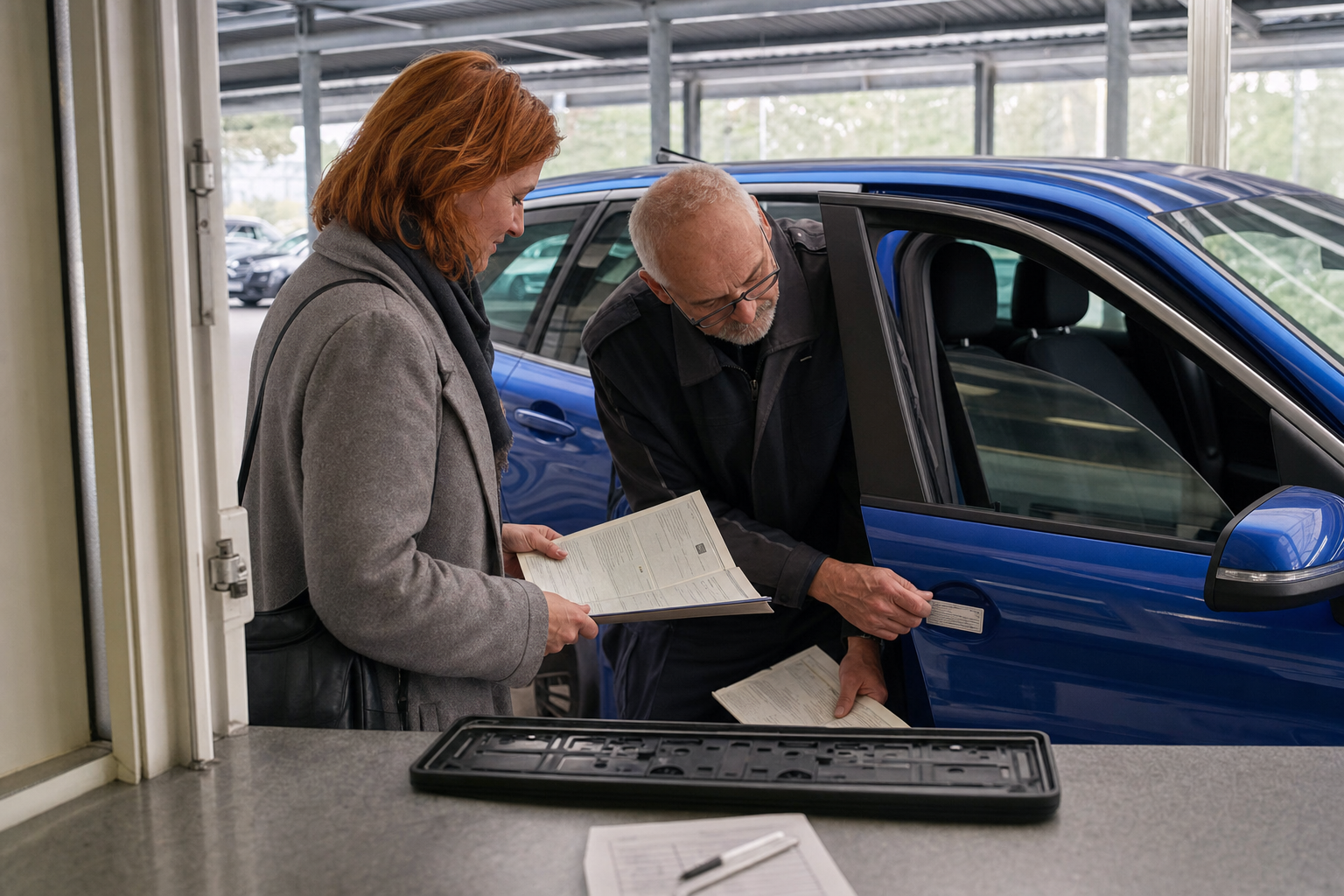
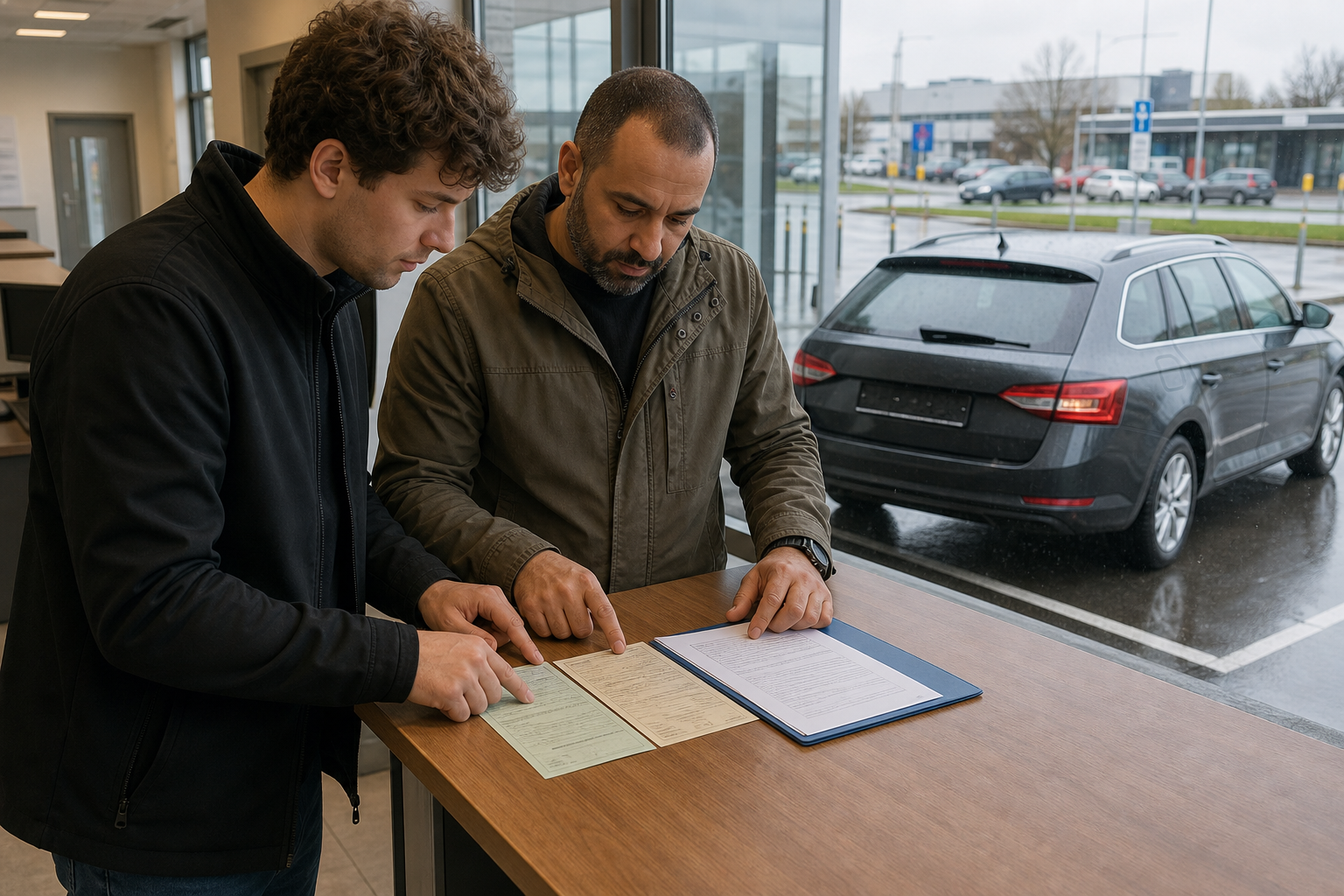
Czech documents have changed, but older cars may have the previous format
Since 2024, Czechia has issued a single vehicle registration document. Previously, a small and a large technical certificate were used. Older valid documents did not have to be replaced automatically, so a buyer may encounter either system.
The most important points are consistency of the VIN, owner and technical data, and continuity of the contract. Do not rely on the colloquial term “large technical certificate”. Check what was actually issued for the specific car and what the Czech register will retain or confirm during export.
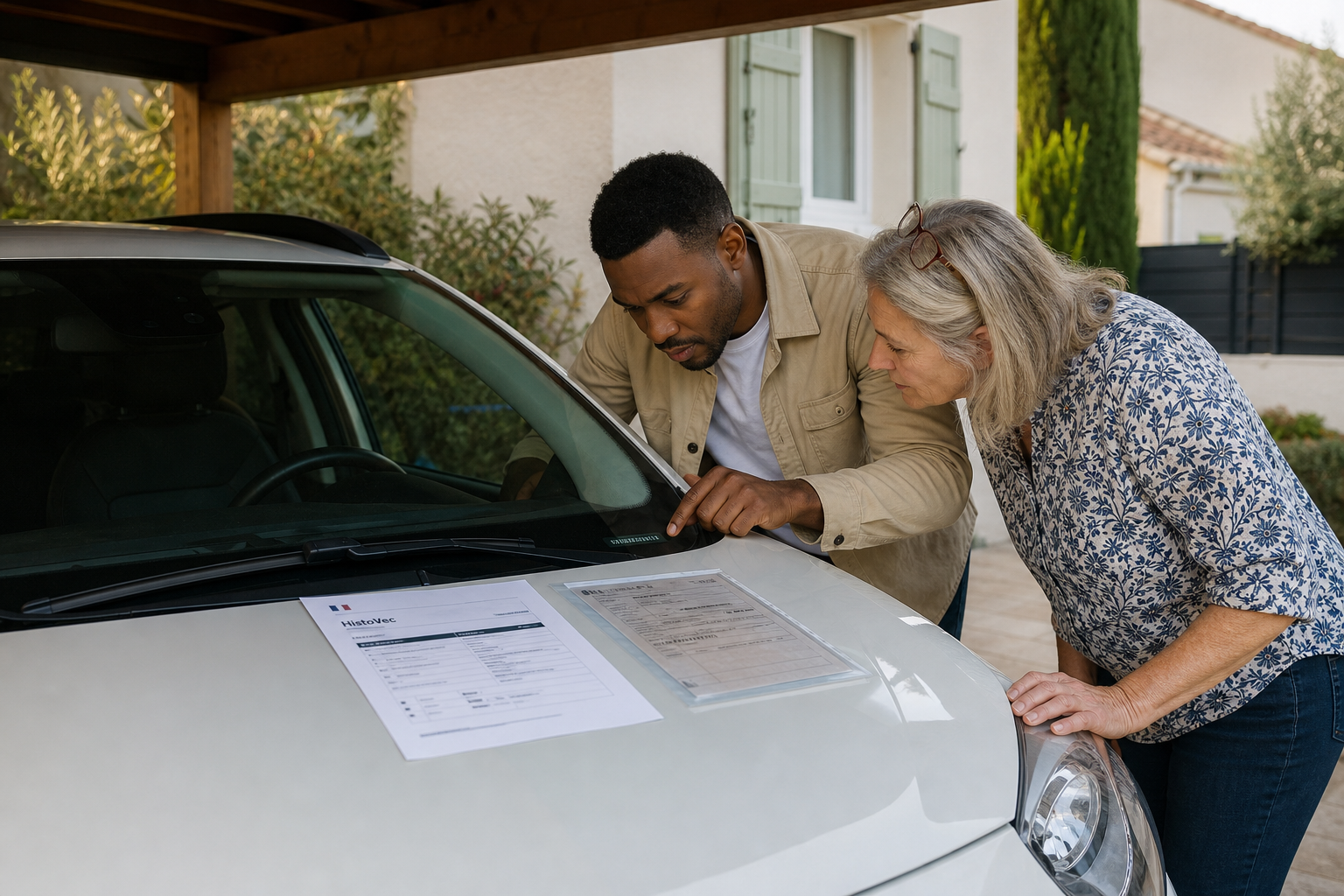
History and mileage: Czech data are only one layer
Czechia has commercial vehicle-history services and public technical records of varying scope. For an imported car, its Czech history may begin only when it was registered in Czechia. Compare the date of first registration, the date of import, STK inspections, service invoices and physical wear.
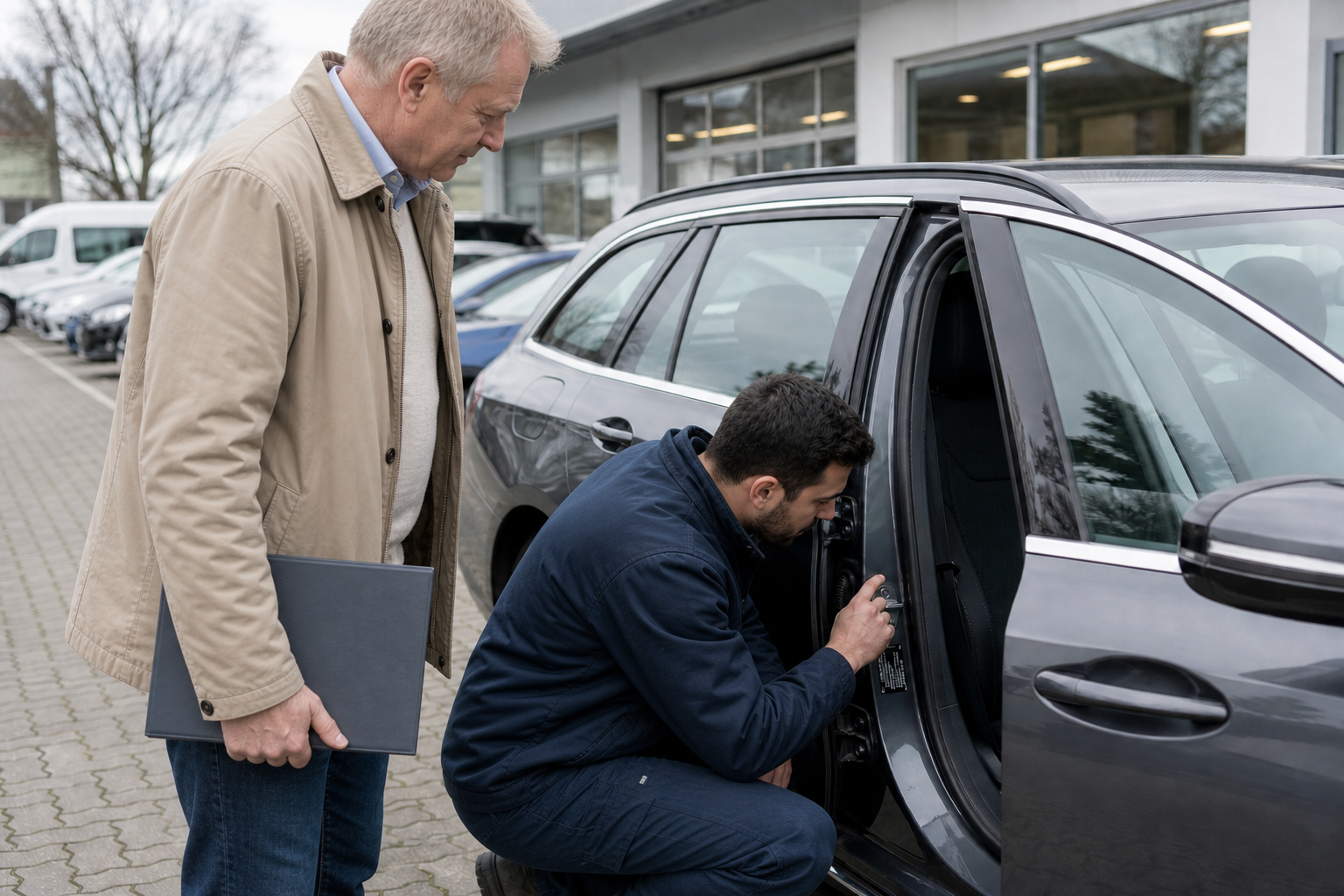
The technician should check the paint, welds, underbody, corrosion, brakes, engine, transmission and diagnostics and conduct a road test. For cars frequently driven between urban roads and motorways, pay attention to the DPF, clutch or automatic transmission, brakes and damage to the front of the car.
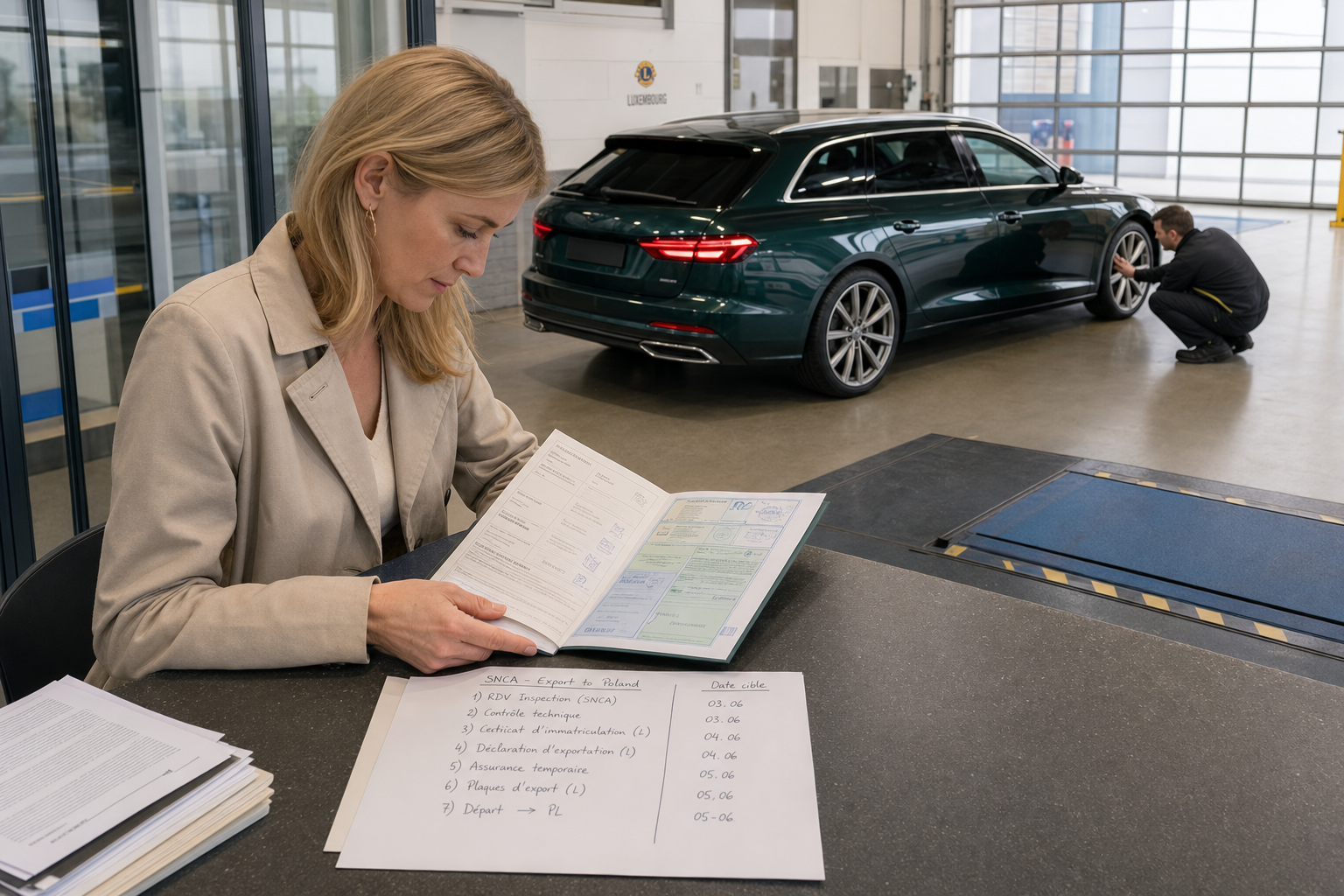
Czech export registration
The Ministry of Transport describes the process for exporting a vehicle to another country. The application is handled by the registration office with the documents for the vehicle, ownership and identity. Export plates and a temporary registration document are issued. The fees are relatively low, but the office needs complete documents and often the physical surrender of the existing plates.
Before travelling, check the office's opening hours, whether representation is possible, and whether the seller will attend with you. If the vehicle is financed, leased or registered to another person, the export may come to a halt.
Proximity reduces transport costs, not technical risk
One advantage is the ability to send a technician without expensive logistics and, if necessary, return to the car. Use it. Do not cut the inspection short simply because you are an hour from the border. A lift, cold start and diagnostics are as valuable as they are for a car 1,500 km away.
If export plates cannot be obtained on the day of purchase, leaving the car with the seller or booking a transporter may make more economic sense. Driving on the previous owner's Czech plates must have a clear legal and insurance basis.
After entering Poland
The car is not administratively ready simply because it has crossed the Polish border. Customs duty is generally not due on a used car from the EU, but the buyer must deal with Polish excise duty, registration, insurance and, where applicable, a technical inspection or translations. The AKC-US declaration is normally filed within 14 days of the tax liability arising, and the tax is paid within 30 days. An application to register a car imported from an EU Member State must be submitted within 30 days of import.
VAT cannot be determined merely from the fact that the car is described as used in an advert. Under EU rules, a vehicle is new if it has travelled no more than 6,000 km or was supplied within six months of first registration. It is used only when both opposite conditions are met. For a dealer invoice, the VAT scheme applied also matters. Under the older Czech document system, check which originals the Polish authority will retain and whether the technical entries need to be translated.
A Polish administrative step cannot make up for a missing Czech document. Before paying, therefore, check that the purchase document, foreign registration certificate, any deregistration confirmation and the technical records form an unbroken chain for a single VIN.
What is often underestimated
The buyer sees a valid STK and assumes export registration is a formality. The seller promises a power of attorney only after payment. The car is registered to a company, but the invoice is issued by another entity. Or one part of the older documentation is missing. The country's proximity solves none of these problems.
FAQ
Does Czechia still have a large and a small registration document?
Since 2024, one document has been issued, but older valid documents may remain with cars registered previously.
How do I obtain Czech export plates?
An application is submitted to the registration office with the required documents and plates. Check the current list and fees.
Is a Czech STK inspection sufficient?
No. An STK is not a complete inspection for the buyer and does not assess future costs in the same way.
Can I return on the seller's plates?
Only when the registration and insurance have been clearly verified. Otherwise, choose export plates or a transporter.
Primary sources
- Ministry of Transport of the Czech Republic — vehicle export — export registration, documents and fees
- Ministry of Transport of the Czech Republic — new registration document — one registration document since 2024
- PUESC — AKC-US — declaration within 14 days and payment within 30 days
- Polish Ministry of Infrastructure — vehicle registration — the 30-day deadline and registration framework
- Your Europe — VAT when buying or selling a car across borders — new versus used vehicles for VAT purposes