HistoVec, carte grise, certificat de cession, contrôle technique, transport and registration. How to buy a car safely in France.
In France, a good transaction can be recognised before the technician even opens the bonnet. The seller must be able to prepare the document package without improvisation. An incorrectly crossed-out carte grise, an outdated certificat de situation administrative or an unclear transport method can delay registration just as effectively as a technical fault.
Ask the seller for HistoVec, not a random paid website
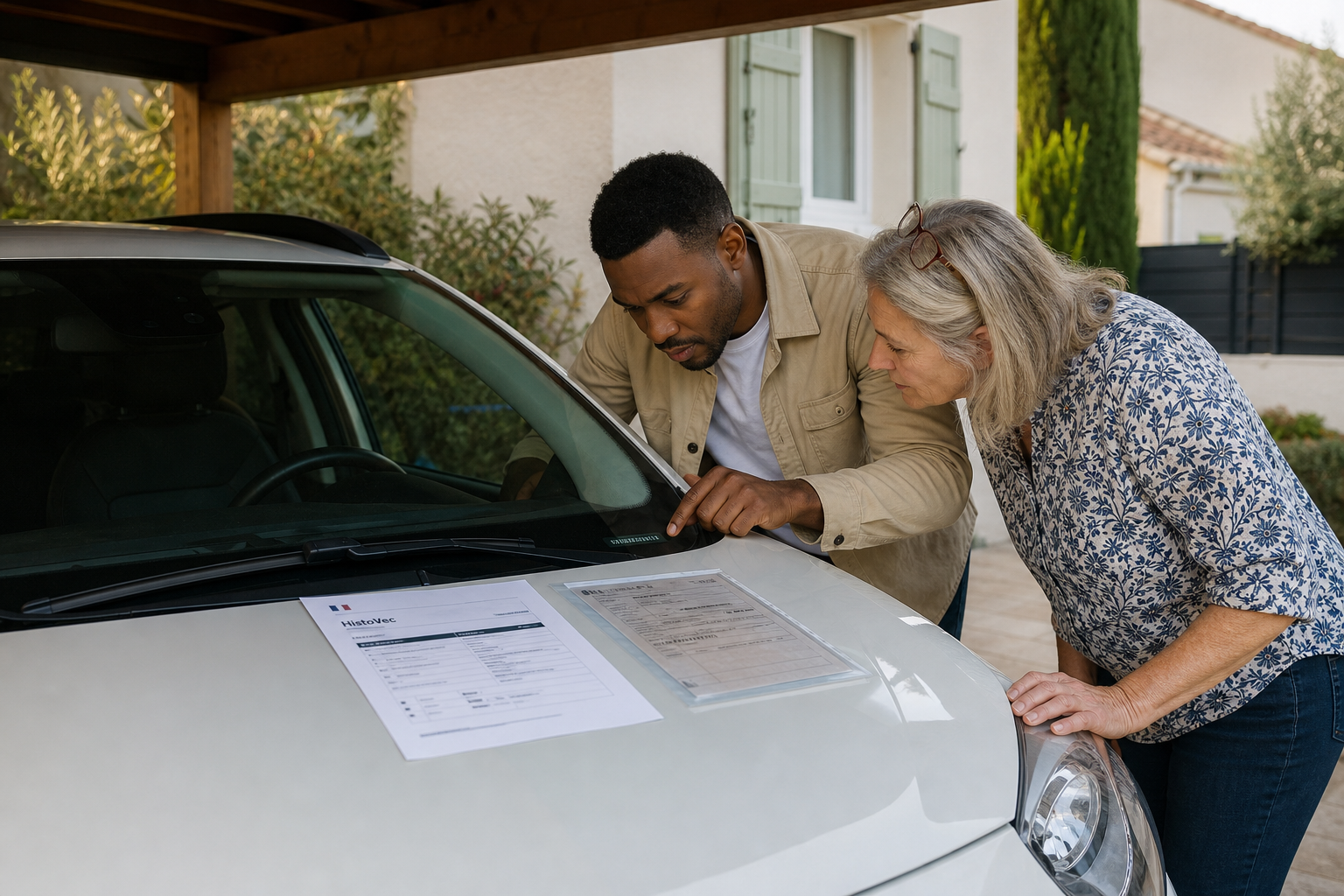
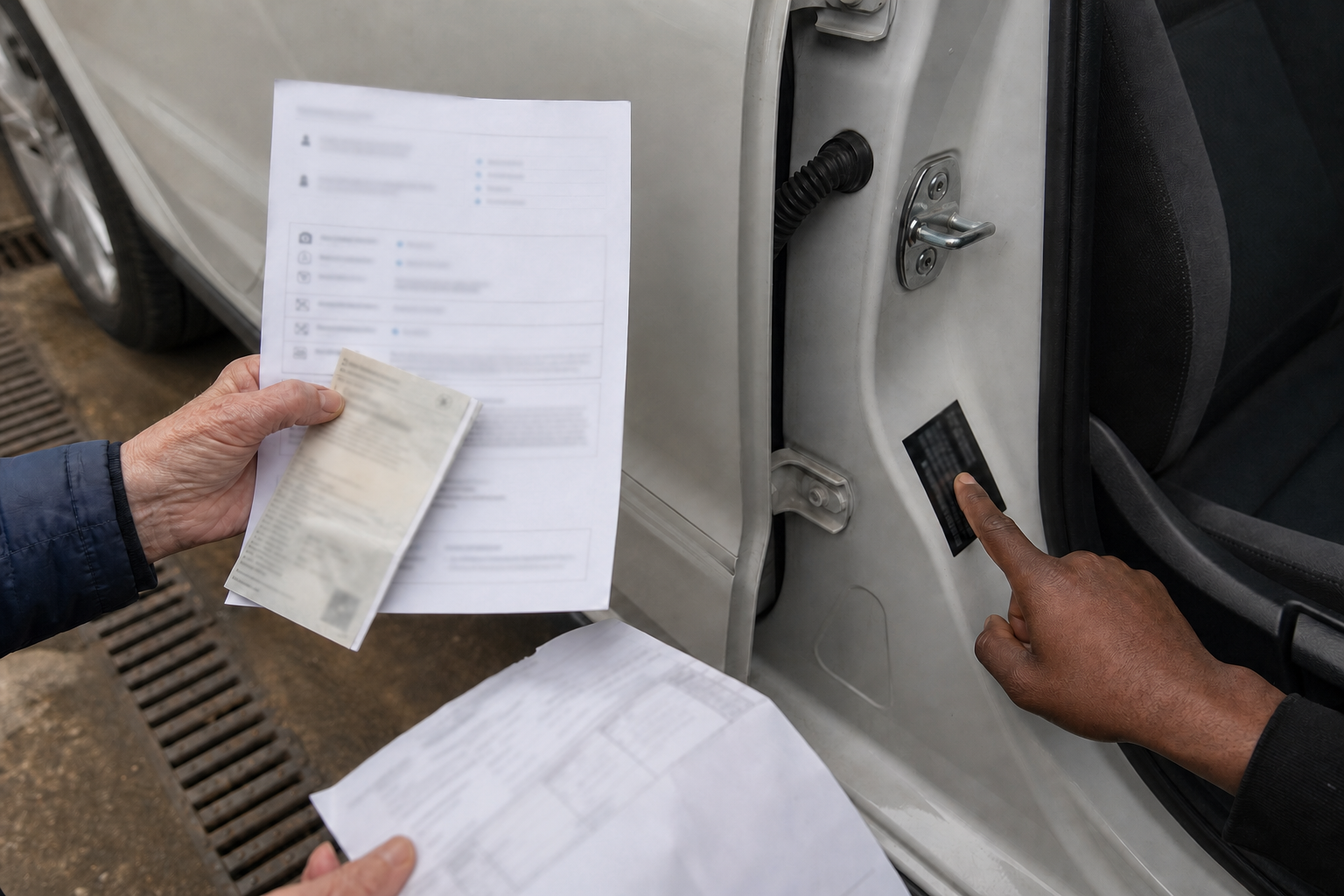
HistoVec is a government tool through which the owner shares information about the vehicle's history and administrative status. The buyer should receive the link before travelling so they can compare the VIN, registration, owners, technical inspections and other available events.
The report is useful for screening. It cannot, however, reveal the quality of the paintwork, play in an axle, the sound of a cold engine or the real condition of the clutch. For a car imported into France, also check when the French data trail actually begins.
French documents have a precise moment of handover
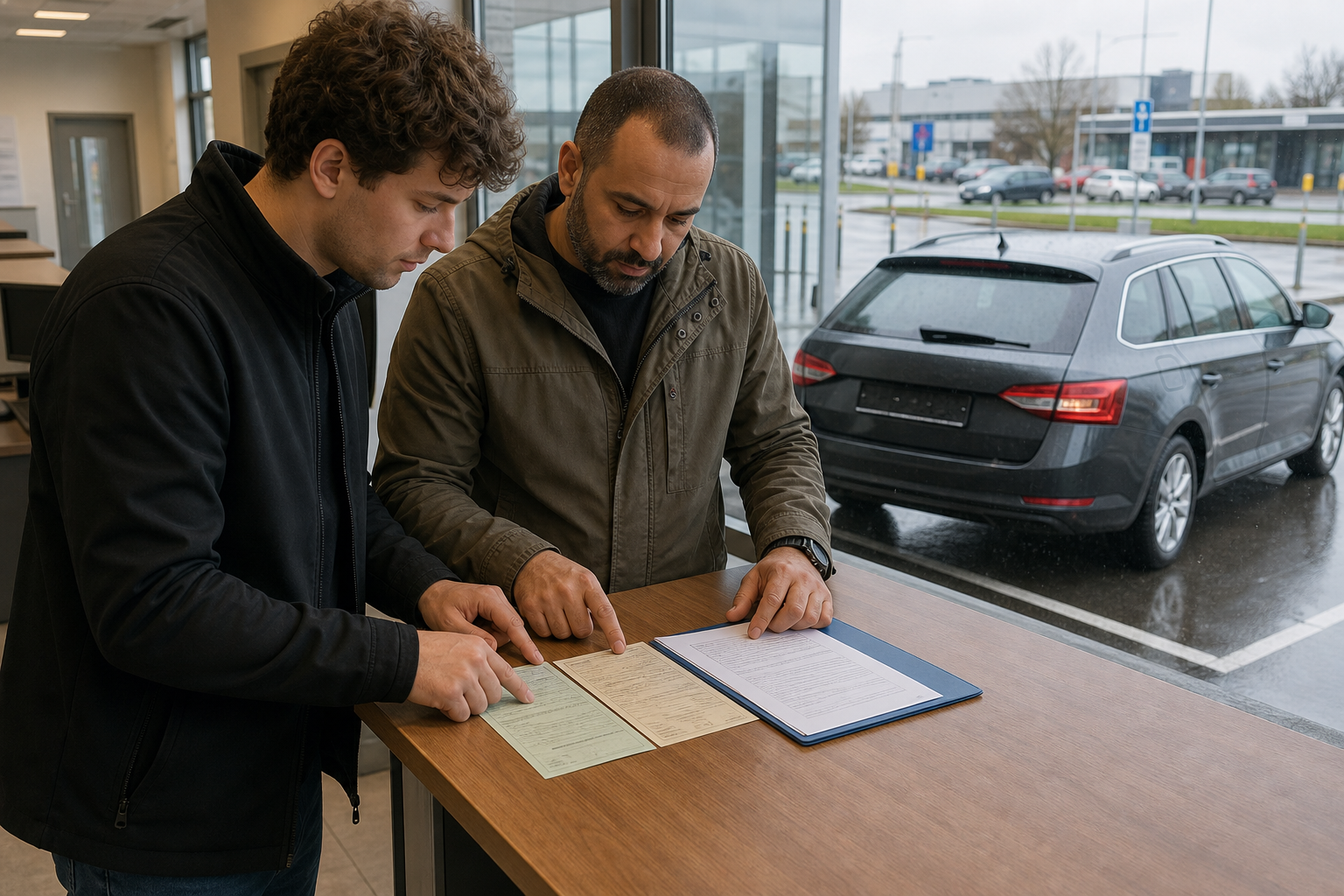
When the sale is concluded, the seller hands over the certificat d’immatriculation, commonly called the carte grise. The document is crossed out, “vendu le” is added with the date and time, and the seller signs it. In addition, the transaction involves the certificat de cession, the administrative status certificate and, for vehicles subject to inspection, a contrôle technique of the required recency.
The date and time are not decoration. They separate the seller's and buyer's responsibilities. Before signing, check that the name in the document matches the seller, or that there is a lawful power of attorney and a clear chain of authority.
The coupon détachable is not a European export plate
After the sale, the detachable coupon from the carte grise may permit limited driving in France. Official French information expressly warns, however, that it is not a universal document for driving abroad. Transport to Poland must therefore be arranged separately.
In practice, a transporter or an export administrative solution is used depending on the current situation. Before buying, establish who arranges the insurance, which document will be recognised in the transit countries and whether you have the CoC or another technical document for registration in Poland.
Technical inspection of a French car
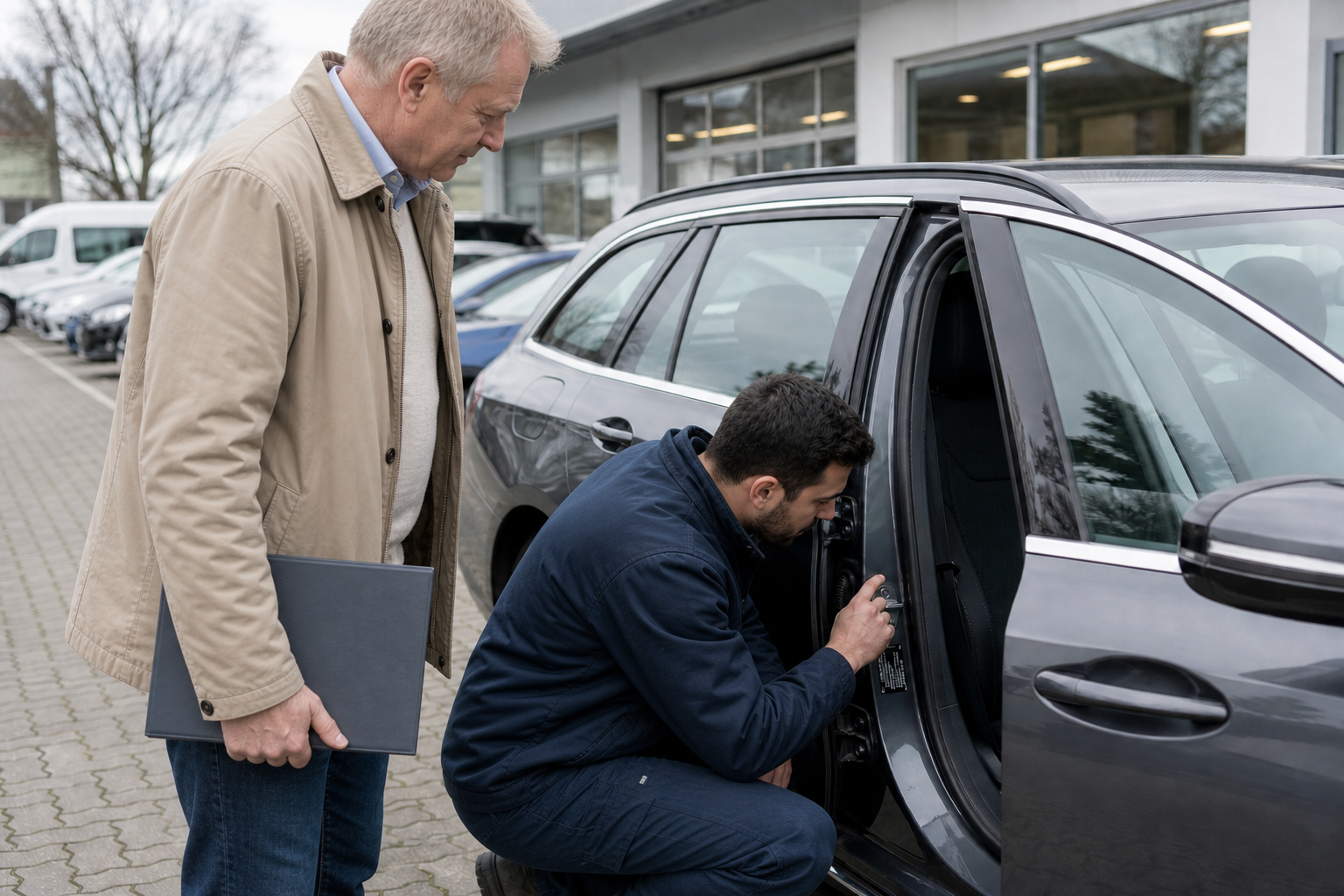
A contrôle technique is not a purchasing audit. The technician should verify the car's identity, body repairs, structural parts, corrosion, engine, transmission, brakes, suspension, tyres and electronics, as well as conduct a test drive. On modern diesels, pay attention to the emissions systems and the quality of regular servicing. On French fleet cars, compare the interior, pedals and steering wheel with the declared mileage.
If the CT report contains findings, knowing that the car passed is not enough. You need to find out what was repaired, who performed the repair and whether the problem recurs during the physical inspection.
Arriving in Poland without a second search for paperwork
The administrative process is not complete when the car crosses the Polish border. Customs duty does not normally apply to a used car from the EU, but the buyer must deal with Polish excise duty, registration, insurance and, where necessary, a technical inspection or translations. The AKC-US declaration is normally filed within 14 days of the tax liability arising, and the tax is paid within 30 days. An application to register a car imported from another EU member state must be submitted within 30 days of import.
VAT cannot be determined solely from the fact that the listing describes the car as used. Under EU rules, a vehicle is new if it has travelled no more than 6,000 km or was supplied within six months of first registration. It is used only when it meets both opposite conditions. For a dealer invoice, the VAT scheme applied also matters. With French documents, check whether the Polish authority will require translations of particular parts and whether the CoC covers the technical data.
A Polish administrative step cannot rescue a missing French document. Before paying, therefore, check that the purchase document, foreign registration document, any deregistration confirmation and the technical records form an unbroken chain for one VIN.
Document warning signs
The seller has not sent HistoVec, the carte grise is not in their name, the administrative certificate is old, the date and time of sale are missing, the CT is close to expiry or the buyer receives only the coupon with no clear export plan. These are reasons to pause the transaction until a complete solution is in place.
FAQ
Who shares the HistoVec report?
The vehicle owner creates and shares the report or link. The buyer should request it before travelling.
How should the seller mark the carte grise?
When the car is sold, the document is crossed out and completed with the date and time of sale and a signature. Recheck the current French procedure before publication.
Does the coupon détachable allow me to drive back to Poland?
Do not rely on it for a journey abroad. Official information limits it to driving in France.
Does the contrôle technique replace an inspection?
No. It is a statutory technical layer, not a complete inspection for making a purchase decision.
Primary sources
- Service-Public.fr - vendre ou donner son véhicule - carte grise, HistoVec, CT and documents
- Service-Public.fr - HistoVec / certificat de situation administrative - official history and administrative status
- PUESC - AKC-US - declaration within 14 days and payment within 30 days
- Polish Ministry of Infrastructure - vehicle registration - the 30-day deadline and registration framework
- Your Europe - VAT when buying or selling a car across borders - new versus used vehicles for VAT purposes