Documents, TÜV, vehicle inspection, the sales contract, export plates, excise duty and registration. A step-by-step guide to buying a car safely in Germany.
A German listing can look trustworthy simply because it includes a long equipment list, service stamps and a recent HU. That is a good start, not the end of the checks. The worst-case scenario is not only a technical fault. It is paying for the car and only then discovering that Teil II is missing, that export plates cannot be issued or that the seller named in the contract is not connected to the documents.
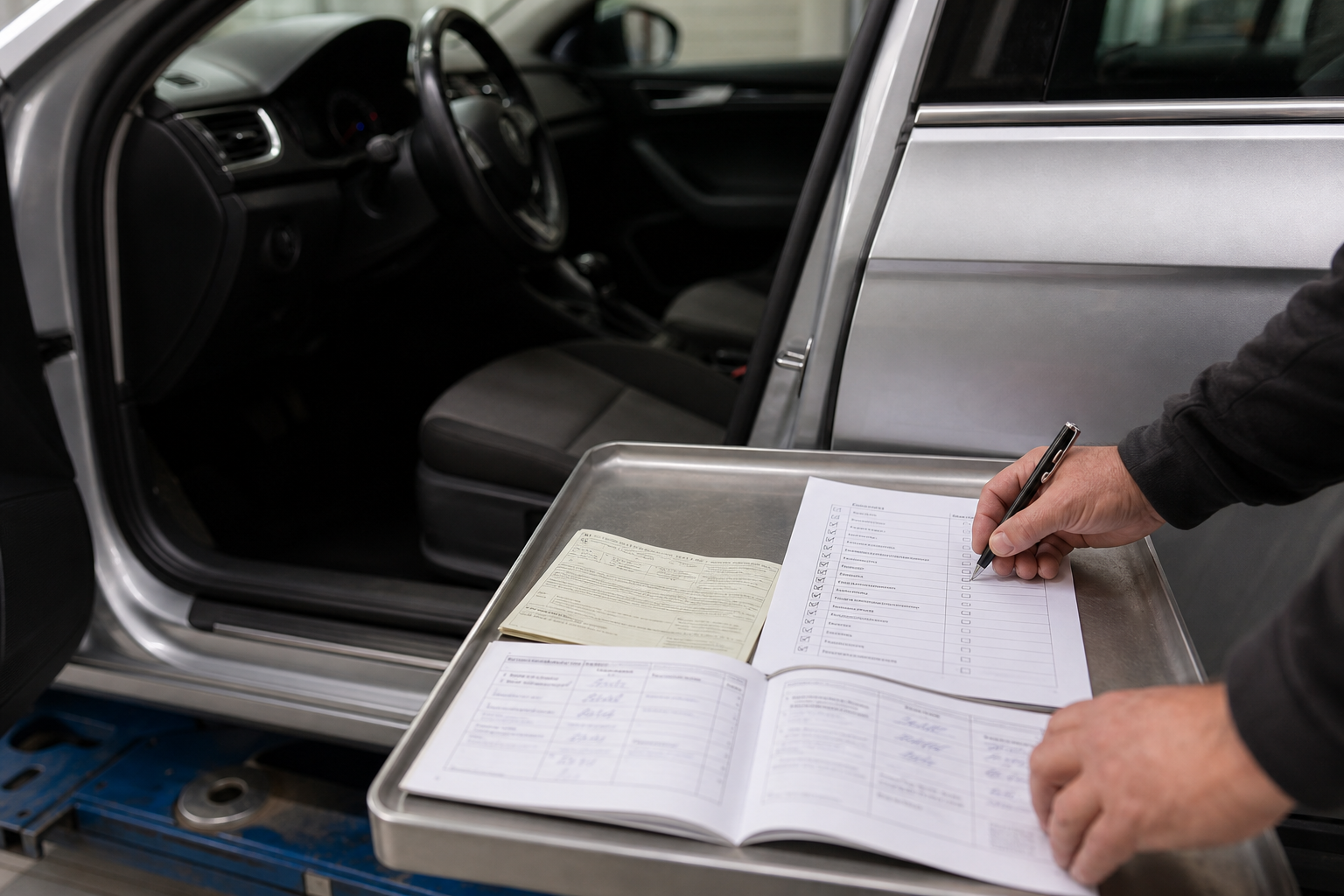
Germany has an efficient process, but the buyer must put it together correctly
The German market offers a wide choice and relatively clear documentation. At the same time, several different layers operate there and are easily confused. Zulassungsbescheinigung Teil I is the registration document associated with operating the vehicle. Teil II is crucial to registration and the chain of ownership. The HU, often colloquially called the TÜV, confirms the result of a statutory technical inspection on a particular date. It does not say whether a gearbox problem is developing, whether the chassis was repaired poorly or how many panels have been repainted.
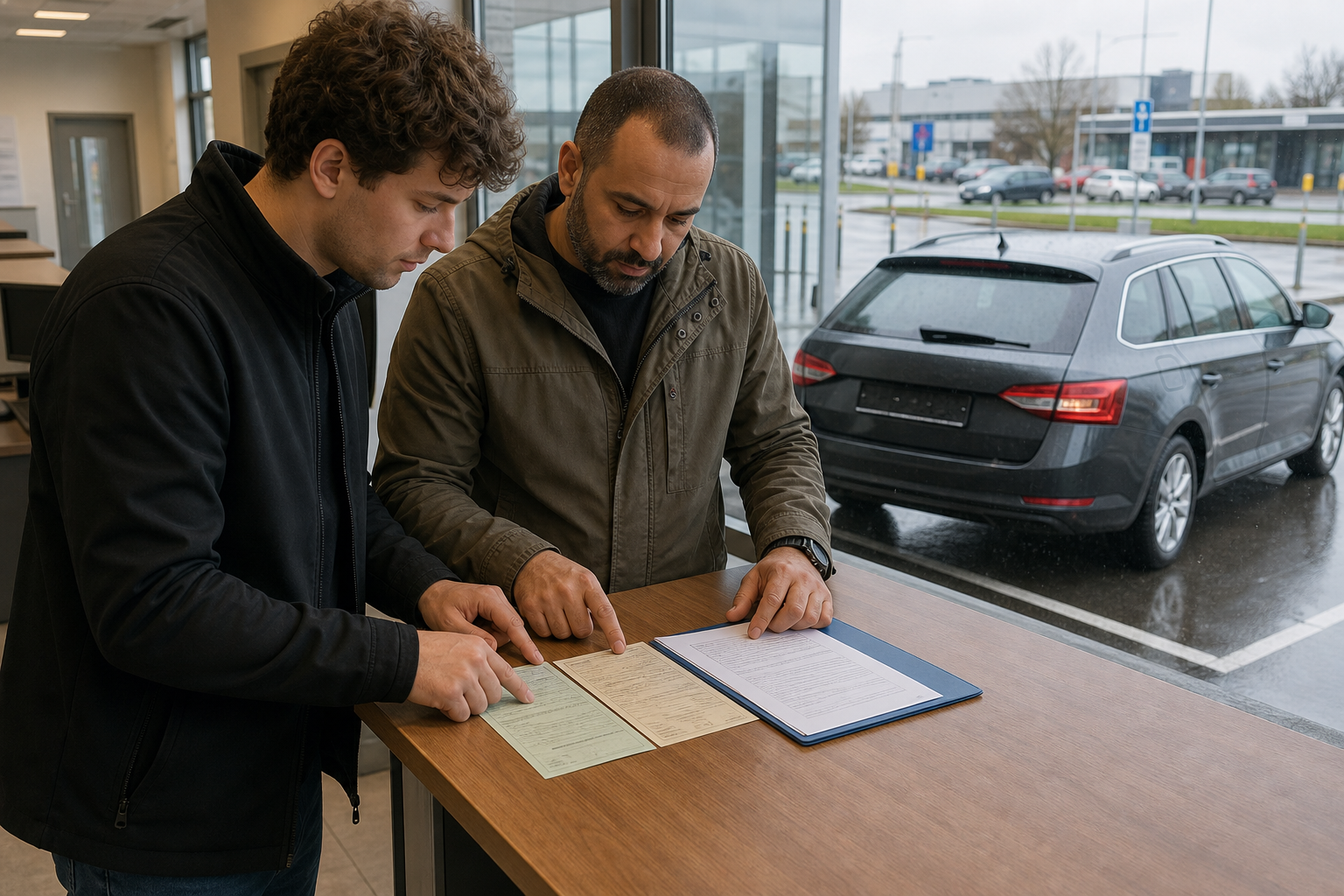
At the first contact, ask for the VIN, photographs of both parts of the registration document, the latest HU report, the number of keys and a clear answer as to who will be named on the invoice or contract. A dealer who shows only redacted fragments of documents may be protecting personal data, but the VIN and continuity of the documents must be verifiable no later than before payment.
What should happen before you travel
Do not make the trip to Germany the first stage of your checks. First compare the price with cars of the same generation, engine, transmission and specification. Then ask for a short video of a cold start, a close-up of the instrument cluster, body gaps and tyres, as well as the service records. Ask the seller a question that leaves no room for a vague answer: “Which parts were repainted or replaced, and why?”.
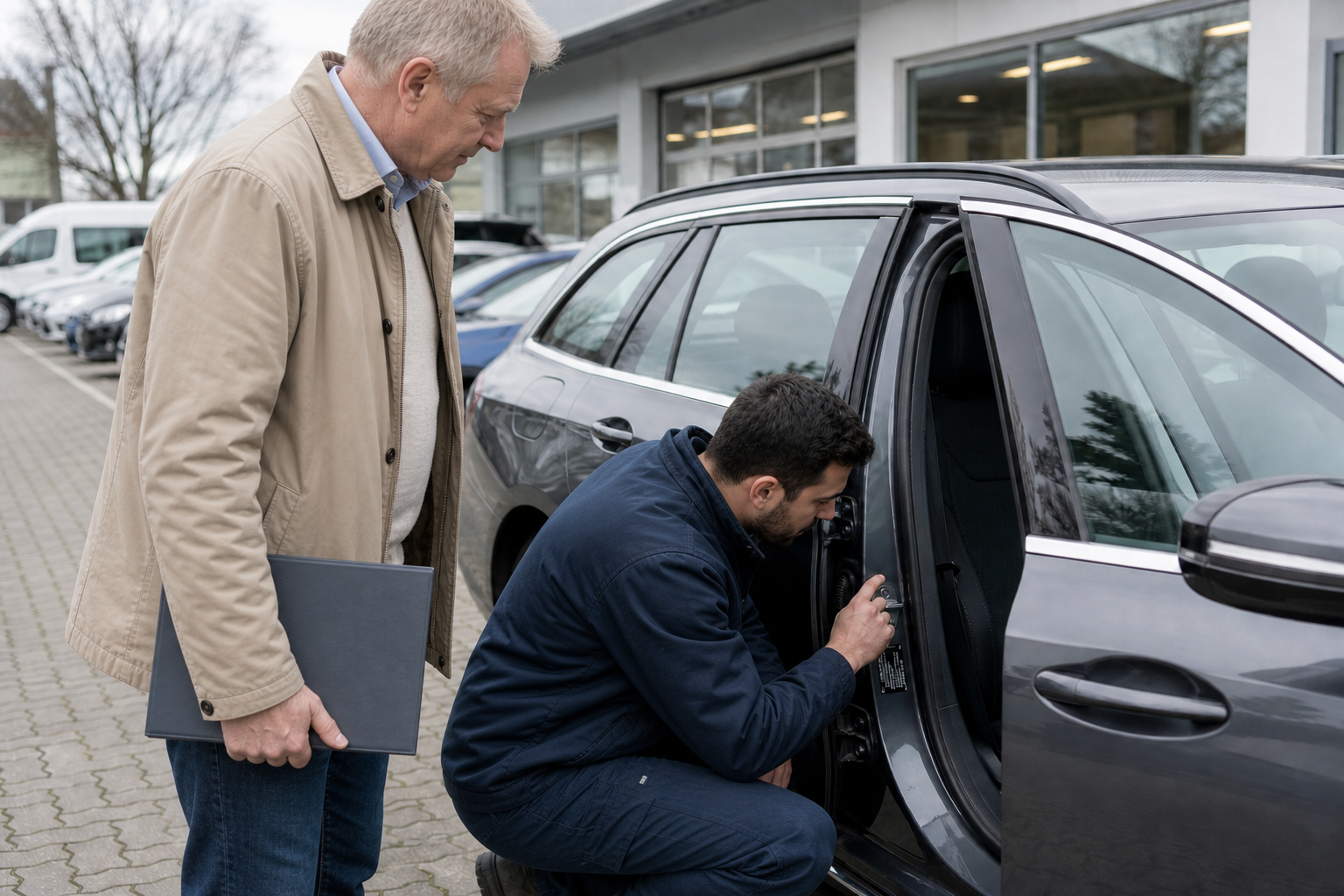
Agree to an independent inspection before setting a travel date. The technician needs access to the VIN, bodywork, engine bay, diagnostics and a test drive. A lift is ideal as well. If the seller allows only a ten-minute look around the car in a parking area and refuses diagnostics, that is not a proper inspection.
The documents and the physical car must tell the same story
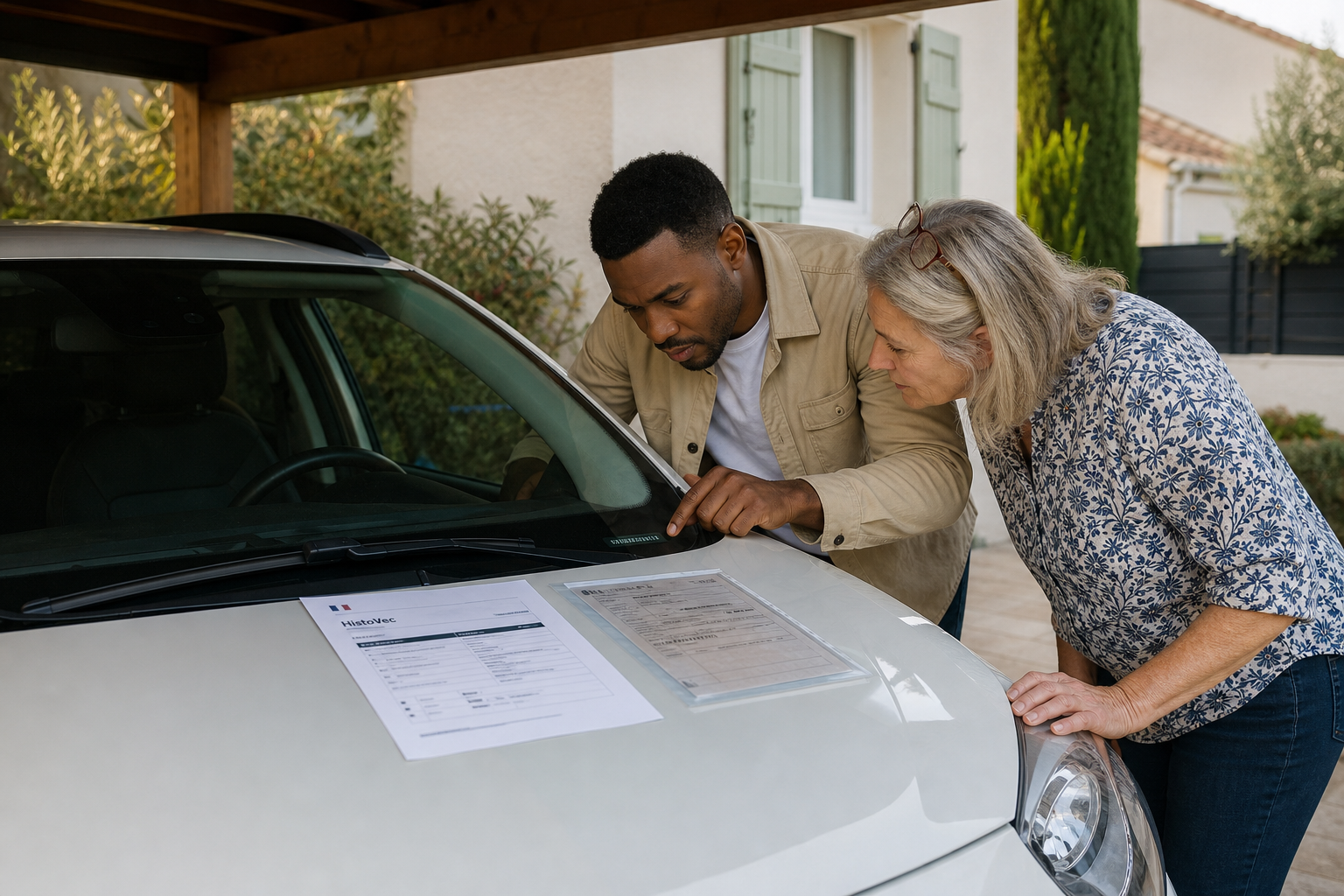
At the car, compare the VIN in Teil I, Teil II and the contract with the VIN on the vehicle. Also check the date of first registration, the engine variant and power, the tyres, any equipment changes and the latest HU. Service invoices are useful only when they form a coherent sequence in mileage and time.
The physical inspection must separate cosmetic matters from structural risk. A repainted wing is not automatically a reason to walk away. Uneven welds on a chassis rail, work on a pillar, active airbag faults or a deformed floor are assessed differently. An automatic car needs to be driven both cold and fully warmed up. On a diesel, checking the warning lights is not enough: within the data available, the technician should examine DPF behaviour, correction values and signs of problems with the emissions systems.
An Ausfuhrkennzeichen is more than a coloured plate
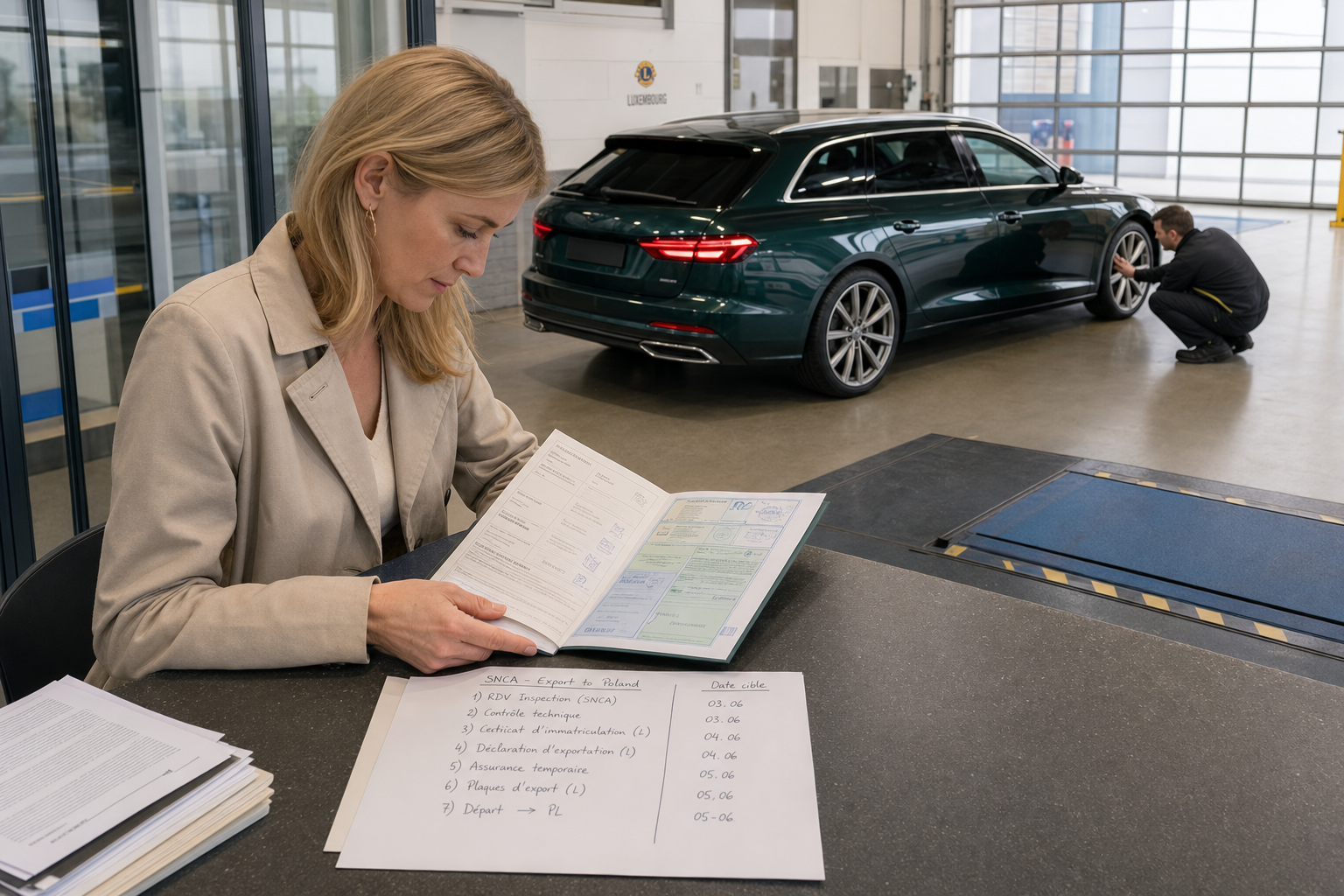
A German car normally needs an Ausfuhrkennzeichen for permanent export. Among other things, the official process requires proof of identity, insurance for the export plate, Teil I, Teil II and a valid HU if the vehicle is already subject to that requirement. If the car is still registered, its existing plates are also surrendered.
Do not confuse an export plate with a short-term Kurzzeitkennzeichen. For a cross-border journey, verify the insurance and recognition of the plate in every transit country. The simplest alternative is a vehicle transporter, which reduces road-traffic and legal risk but adds a logistics cost. Make the decision before signing, not in the car park after the office has closed.
After arriving in Poland
The administrative process is not complete when the car crosses the Polish border. Customs duty does not normally apply to a used car from the EU, but the buyer must deal with Polish excise duty, registration, insurance and, where necessary, a technical inspection or translations. The AKC-US declaration is normally filed within 14 days of the tax liability arising, and the tax is paid within 30 days. An application to register a car imported from another EU member state must be submitted within 30 days of import.
VAT cannot be determined solely from the fact that the listing describes the car as used. Under EU rules, a vehicle is new if it has travelled no more than 6,000 km or was supplied within six months of first registration. It is used only when it meets both opposite conditions. For a dealer invoice, the VAT scheme applied also matters. With a German dealer, separately verify whether the price is gross, net or under the margin scheme, and which documents the dealer requires for any refund of secured VAT.
A Polish administrative step cannot rescue a missing German document. Before paying, therefore, check that the purchase document, foreign registration document, any deregistration confirmation and the technical records form an unbroken chain for one VIN.
When to stop the purchase
Be alert if Teil II is missing, the VINs differ, the seller refuses to record known defects in the contract, the payment account belongs to somebody else without explanation or the export is to be “sorted out somehow later”. Refusal of a cold start, a lift or diagnostics on a higher-value car is equally serious. One warning sign may not prove fraud, but several inconsistencies change the rational decision.
FAQ
Is a recent TÜV enough before buying a car in Germany?
No. It confirms the result of the statutory technical inspection, not the car's complete condition for the buyer. Add history checks, a physical inspection, diagnostics and a test drive.
Which documents should the seller provide?
At minimum, a sales contract or invoice and the German Teil I and Teil II registration documents. Depending on the car, also obtain the HU report, CoC and service records.
Can I drive back to Poland on yellow plates?
Do not assume that automatically. An Ausfuhrkennzeichen is standard for permanent export. For every temporary plate, verify the insurance and its recognition in the transit countries.
When should I arrange an inspection in Germany?
Before travelling and before paying a non-refundable deposit. First confirm that the car is available and that the seller agrees to the scope of the inspection.
Primary sources
- Bundesportal - Ausfuhrkennzeichen - export plates and documents
- ADAC - Gebrauchtwagen kaufen - the German buying process and risks
- PUESC - AKC-US - declaration within 14 days and payment within 30 days
- Polish Ministry of Infrastructure - vehicle registration - the 30-day deadline and registration framework
- Your Europe - VAT when buying or selling a car across borders - new versus used vehicles for VAT purposes