The DGT report, owner, encumbrances, ITV, baja por exportación, green plates, transport and registration of a Spanish car in Poland.
A Spanish car is tempting because of the prospect of a dry climate and a body free from road salt. That may be true for a particular vehicle, but a long export journey adds new risks: an administrative encumbrance in DGT, deregistration, green plates, insurance across several countries and a mechanical problem hundreds of kilometres from the seller.
Get the DGT report before paying a deposit
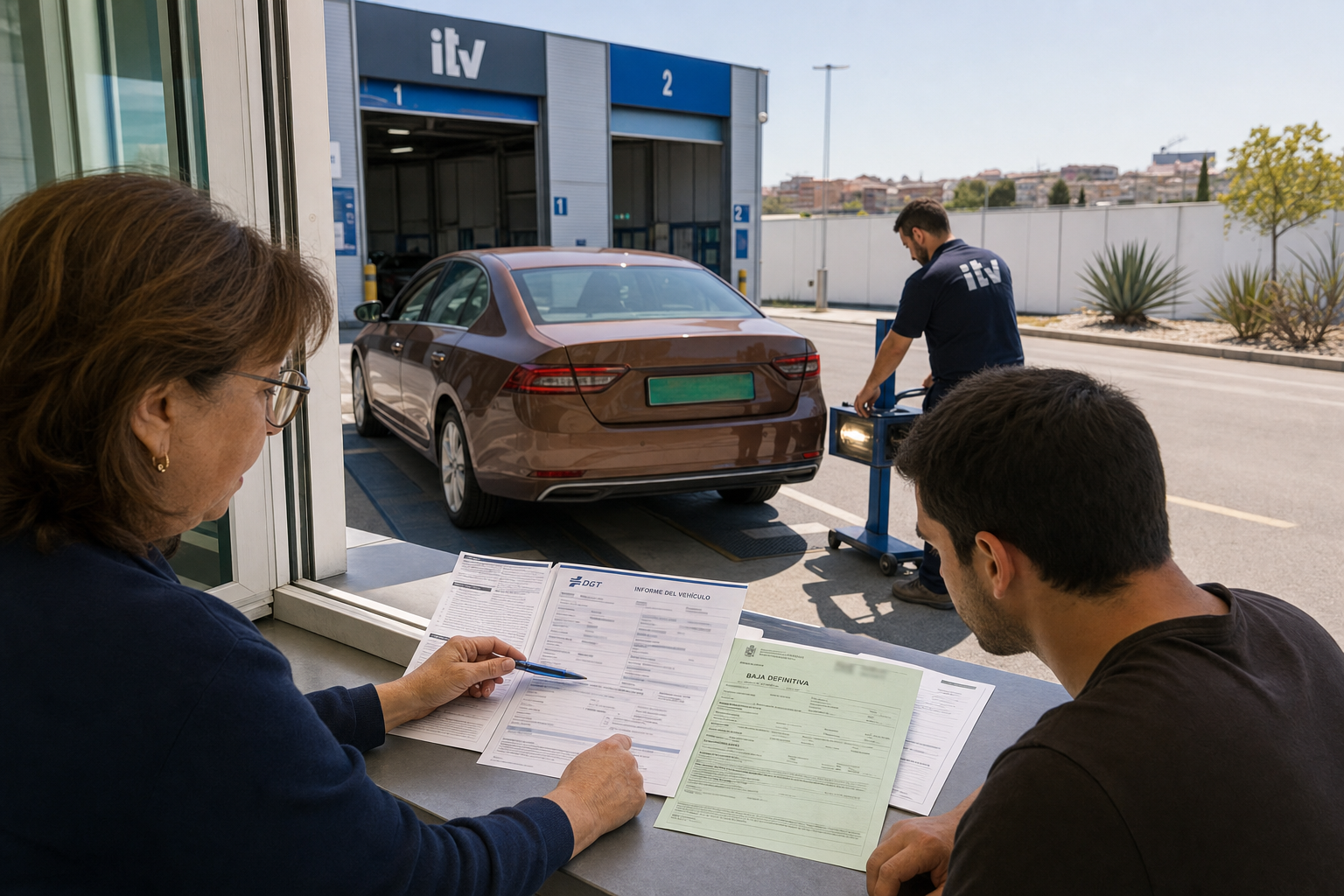
DGT offers several levels of vehicle report. For a purchase, the full report is worthwhile because it helps reveal registration and technical inspection data, the owner and any administrative restrictions or encumbrances. A basic extract is not enough for an expensive cross-border transaction.
Compare the report with the permiso de circulación, ficha técnica, VIN and the seller’s identity. If the car is subject to a reserva de dominio, embargo or another restriction, the export and transfer may be blocked. The seller must resolve the problem before payment.
A dry climate does not mean a damage-free car
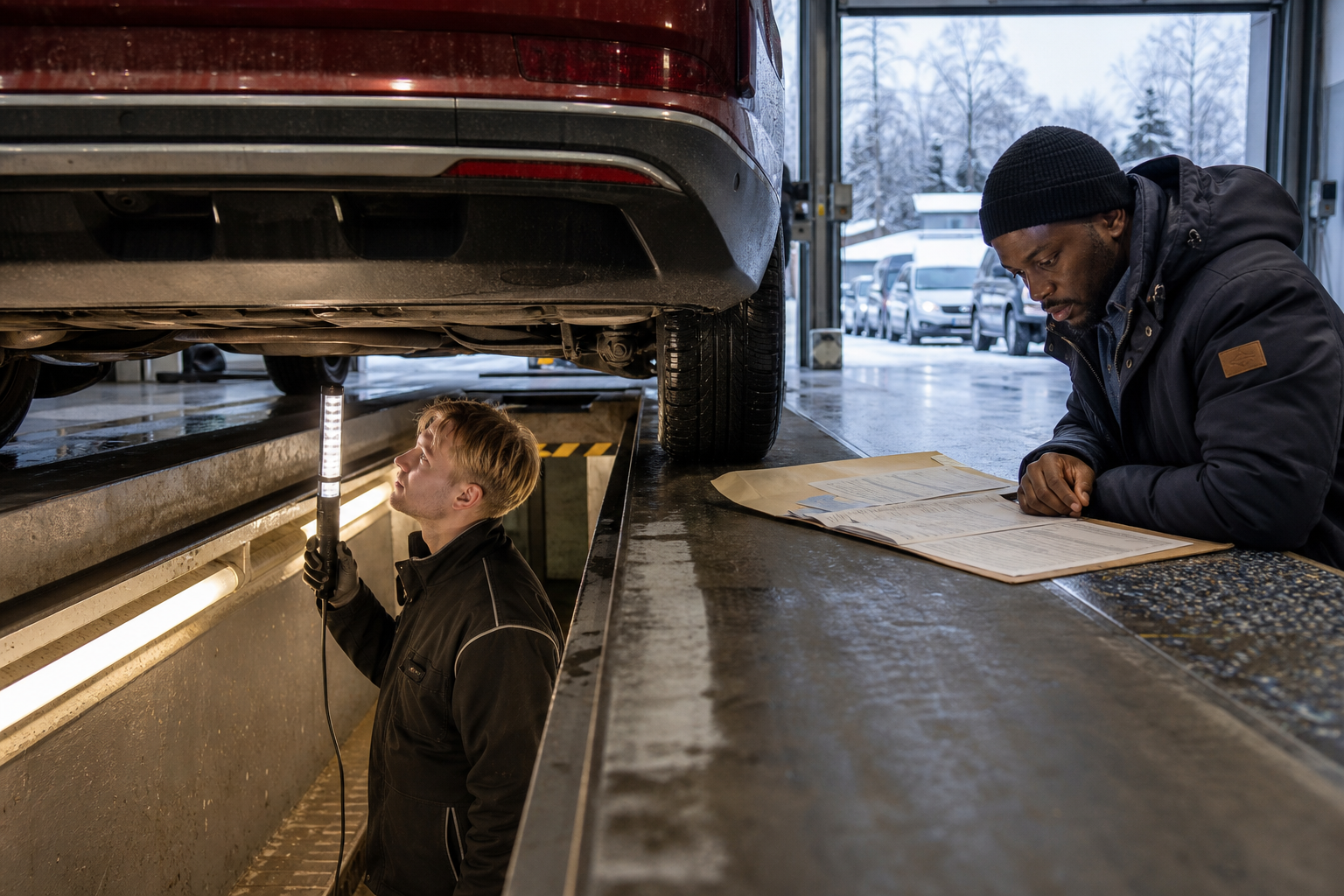
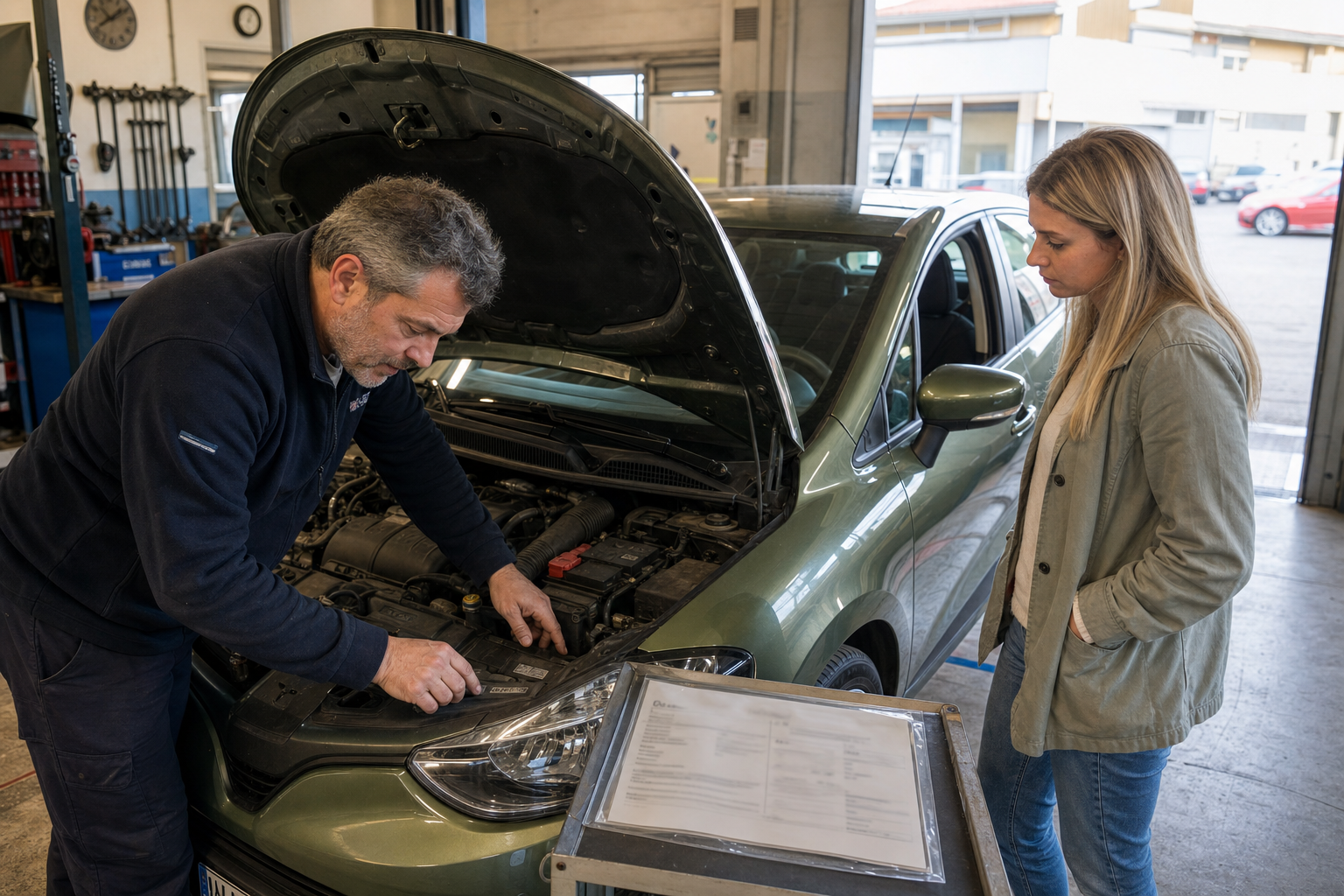
The inspection should look primarily for accident repairs, sun damage to the paint, seals, air conditioning, overheating, and the condition of the interior and tyres. Salt and humidity may have a local effect on coastal cars. Mountain regions may produce heavy wear on the brakes and clutch.
A lift inspection, diagnostics and a road test are essential even for a car with a valid ITV. A statutory technical inspection does not assess the purchase price, future servicing or every sign of a previous repair.
Baja por exportación comes before green plates
Permanent export requires the vehicle to be deregistered for export. You can then apply for temporary placas verdes, which DGT specifies for vehicles intended for export or awaiting definitive registration. The permit has a limited validity period.
A green plate alone does not provide insurance. For a route through France, Germany and possibly other countries, you need confirmation of the scope of cover. If the ITV is close to expiry or the car has not been inspected thoroughly, a vehicle transporter is safer than a 2,000-kilometre test.
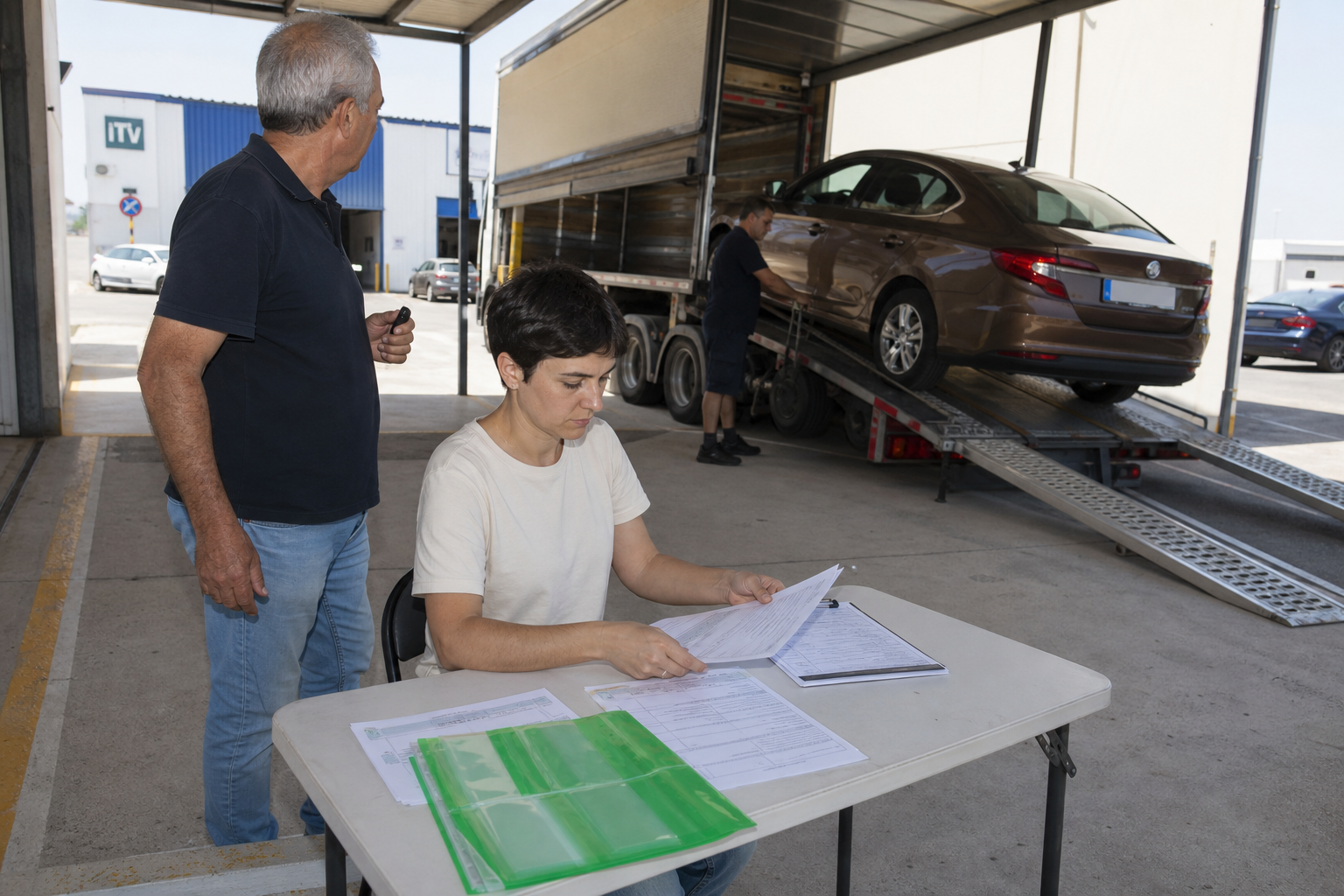
Transport is part of the car’s price
For Spain, include fuel, tolls, a flight, accommodation and at least one contingency day. A transporter has a higher direct cost, but it allows you to buy a car without temporary plates and reduces the risk of a breakdown on the journey.
Use the total landed cost in negotiations. A Spanish price that is EUR 1,500 lower may end up higher than the price of a comparable car in Germany after transport, tyres and air-conditioning work.
The Polish end of a long journey
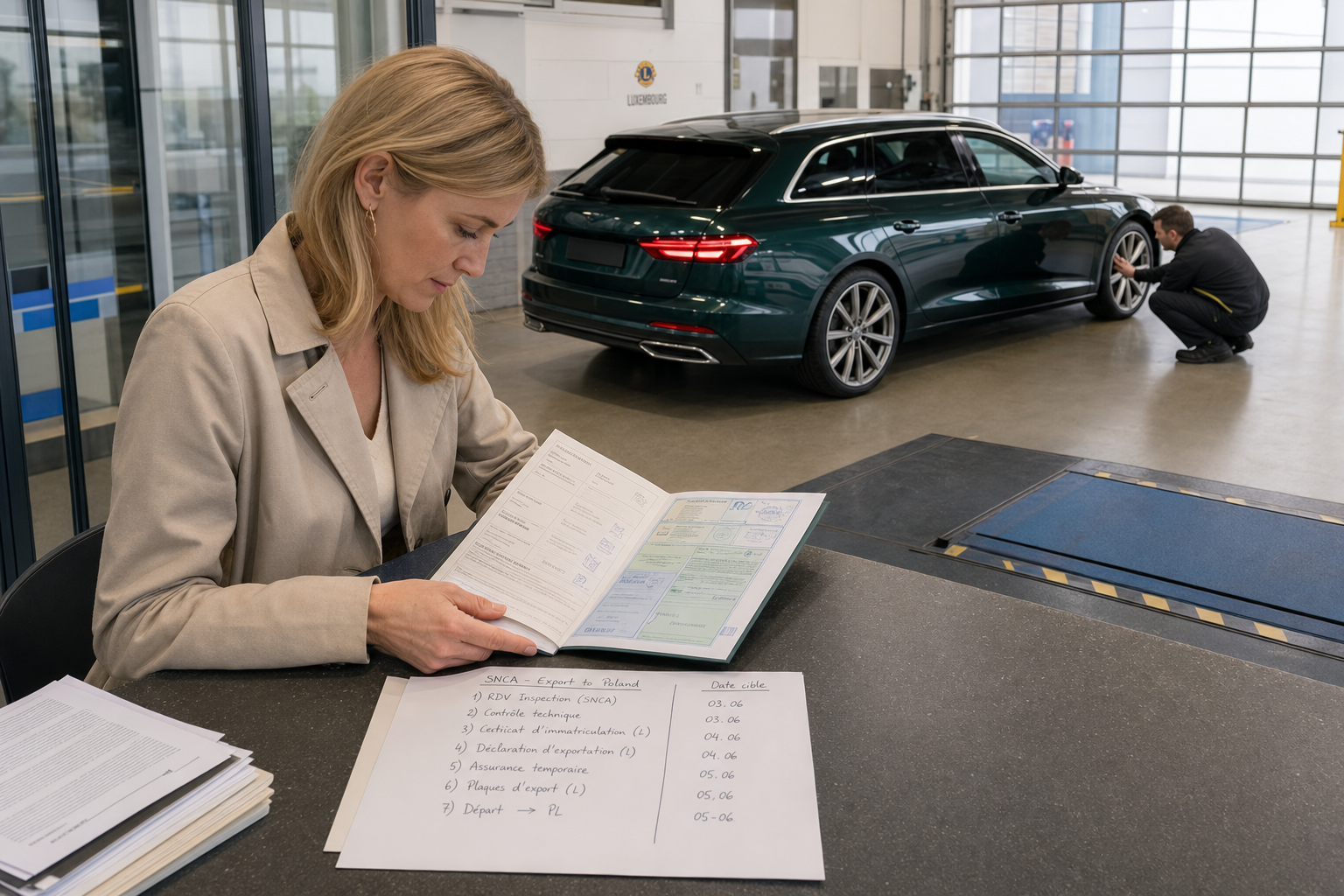
Crossing the Polish border does not make the car administratively ready. A used car from the EU is generally not subject to customs duty, but the buyer must settle Polish excise duty, registration and insurance, as well as a technical inspection or translations where necessary. The AKC-US declaration is normally filed within 14 days of the tax liability arising, and the tax is paid within 30 days. An application to register a car imported from another EU Member State must be filed within 30 days of import.
VAT cannot be determined merely from the fact that a car is advertised as used. Under EU rules, a car is new if it has no more than 6,000 km on the clock or was supplied within six months of first registration. It is considered used only when both opposite conditions are met. For a dealer invoice, the VAT scheme applied also matters. Pay particular attention to the technical data in the ficha técnica and to whether a CoC or an additional certificate may be required by the Polish authority.
A Polish administrative step cannot rescue a missing document from Spain. Before paying, check that the proof of purchase, foreign registration, any deregistration confirmation and technical documentation form a continuous chain for a single VIN.
When not to set off
The DGT report shows an encumbrance. The seller is not the registered owner. Baja has not yet been completed, but the buyer is expected to leave on the original plates. The insurer has not confirmed cover for the green plates outside Spain. The ITV expires during the journey. Any one of these points can turn the export into a road-traffic or legal problem.
FAQ
Which DGT report should you order before buying?
For a purchase you are seriously considering, the full report is appropriate, not merely the basic information.
What can encumbrances in DGT reveal?
Administrative obstacles that may block the transfer or export. Verify the precise meaning of an entry before paying.
How long are green plates valid?
They have a limited validity period. Check the current period again with DGT and in the insurance policy.
Is it worth driving the car back to Poland?
Only after a thorough inspection, with a valid ITV, insurance and a confirmed temporary registration arrangement. Otherwise, compare the cost of a transporter.
Primary sources
- DGT - vehicle report - official vehicle report
- DGT - green plates - temporary green plates for export
- PUESC - AKC-US - declaration within 14 days, payment within 30 days
- Polish Ministry of Infrastructure - vehicle registration - the 30-day deadline and registration framework
- Your Europe - VAT when buying or selling a car across borders - new versus used cars for VAT purposes