Documents, the export declaration, origin, customs duty, VAT, excise duty, plates and vehicle inspection: the complete process of importing a car from Switzerland to Poland.
A Swiss price tag can create the illusion of an exceptional opportunity. The car is well equipped, serviced and several thousand euros cheaper. But there is a customs border between the seller and Polish registration. If proof of origin, a correct export declaration or a realistic VAT and excise-duty calculation is missing, the price difference quickly disappears.
Customs origin is not the same as the brand or country of manufacture
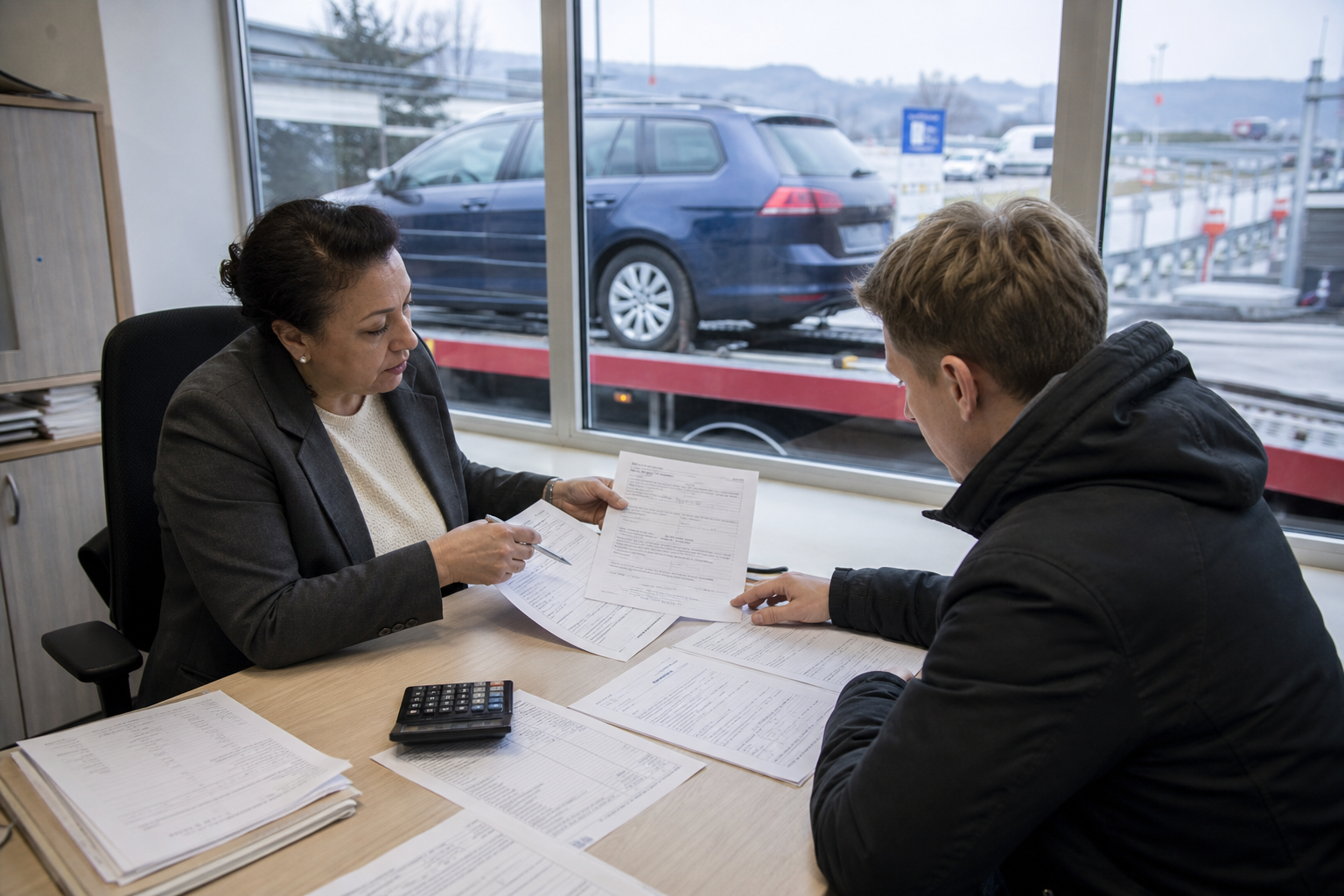
On import, the rate of customs duty may be affected by preferential origin and valid proof of that origin. It is not enough that the car was manufactured in Germany or has a European brand. There must be a document that meets the rules of origin for the particular transaction.
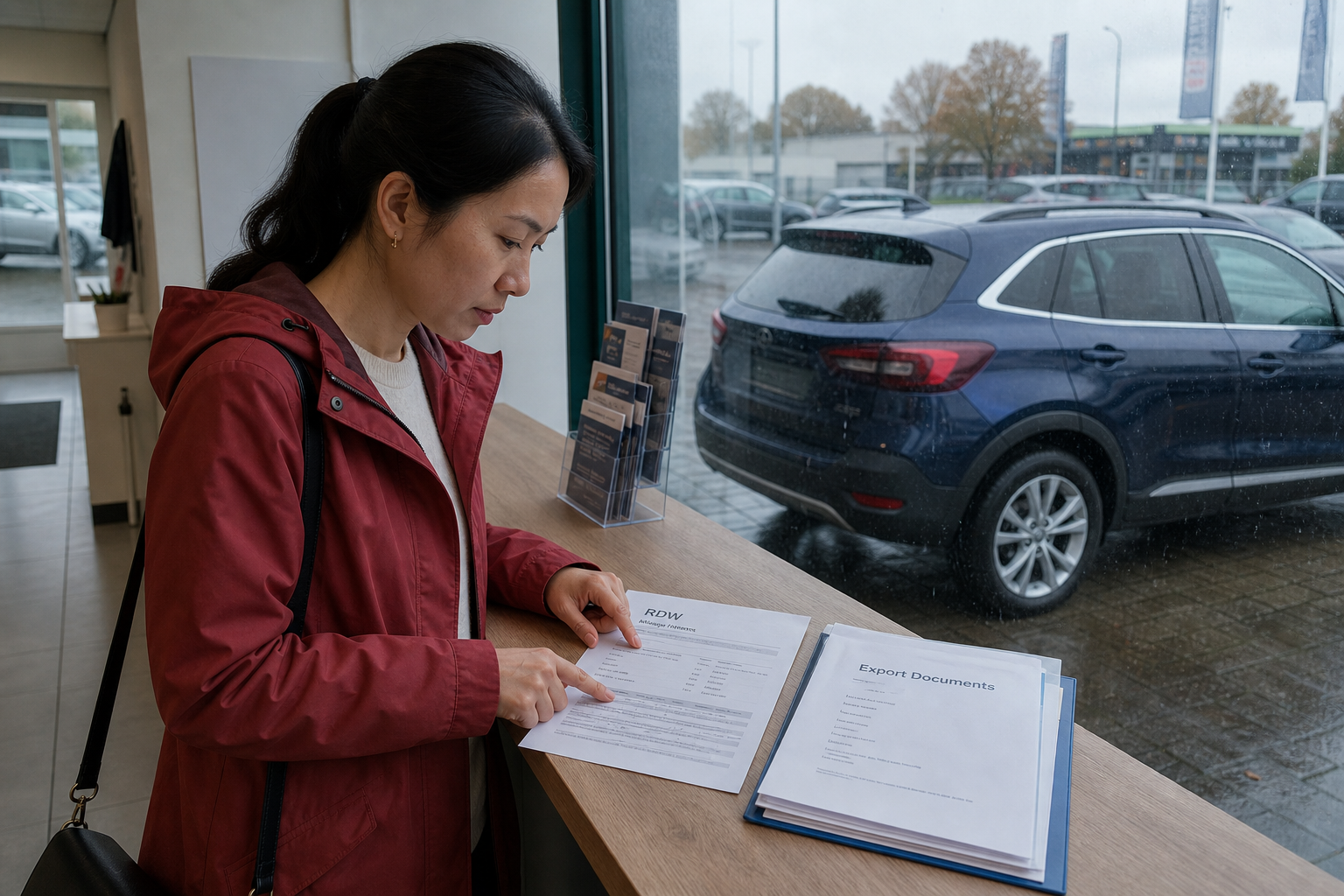
Before paying a deposit, send the VIN, invoice and available origin documents to a customs representative. Obtain written confirmation of the working scenarios: customs duty with preference, customs duty without preference, import VAT, excise duty, the declarant’s fees and currency conversion.
Swiss export starts at a customs office that handles goods
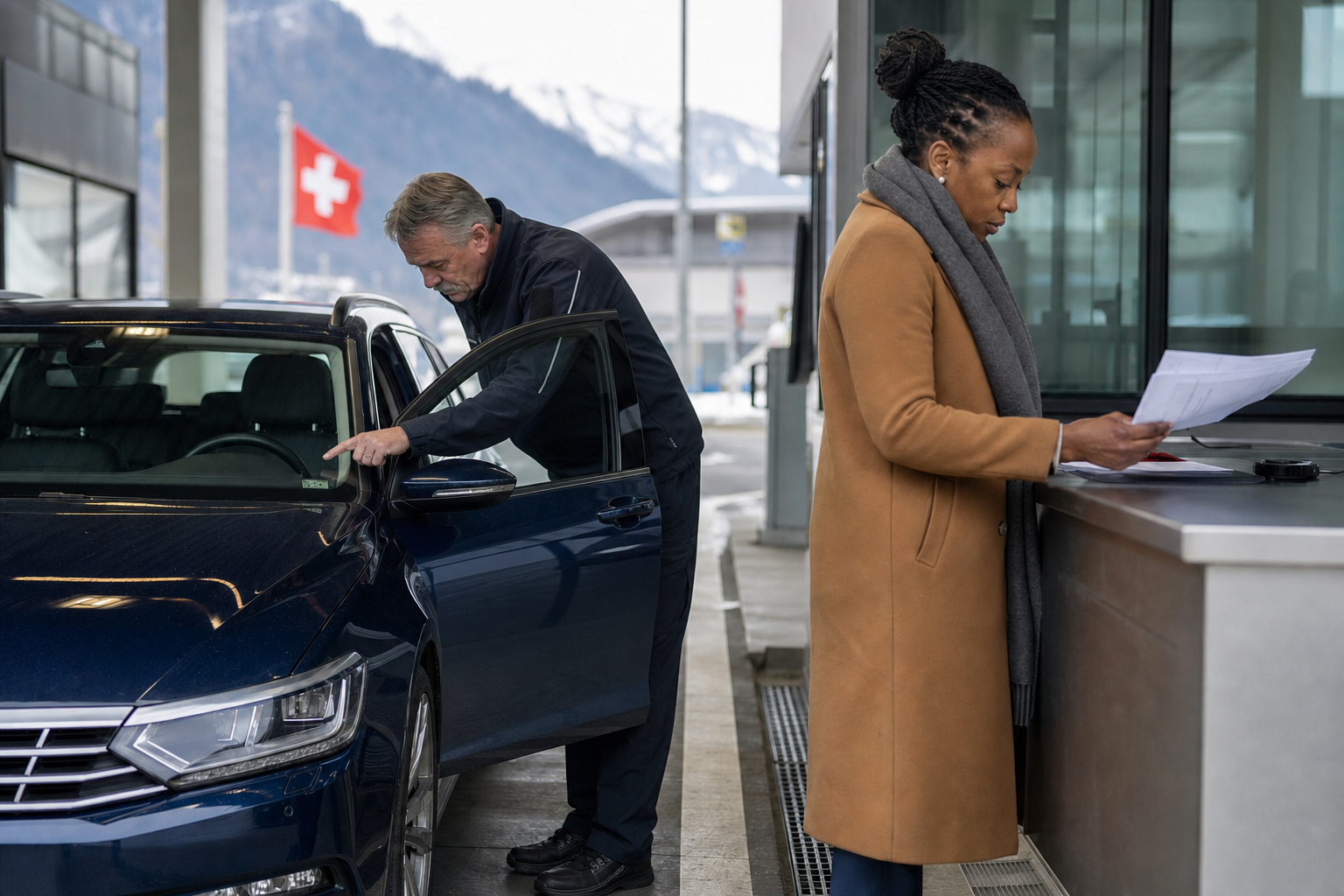
For permanent export, the federal customs authority requires a spontaneous export declaration at the competent customs office. The supporting documents include the registration document, identification, the e-dec export declaration and any proof of origin.
Check the border customs office’s opening hours, whether it handles commercial goods and whether the declaration will be prepared by the seller, buyer or freight forwarder. A border crossing for tourists may not be the right place to export a car.
Export plates or a transporter
Temporary export plates are administered by the Swiss cantons, and the rules may differ. You need insurance, a valid technical inspection and the documents. The alternative is a vehicle transporter with customs transit documentation.
Driving the car adds Swiss export plates, customs clearance on exit, import on entry into the EU and insurance. A transporter usually costs more on the invoice, but may reduce the risk of border errors and provides professional evidence of transport.
The technical condition must still make sense after taxes are added
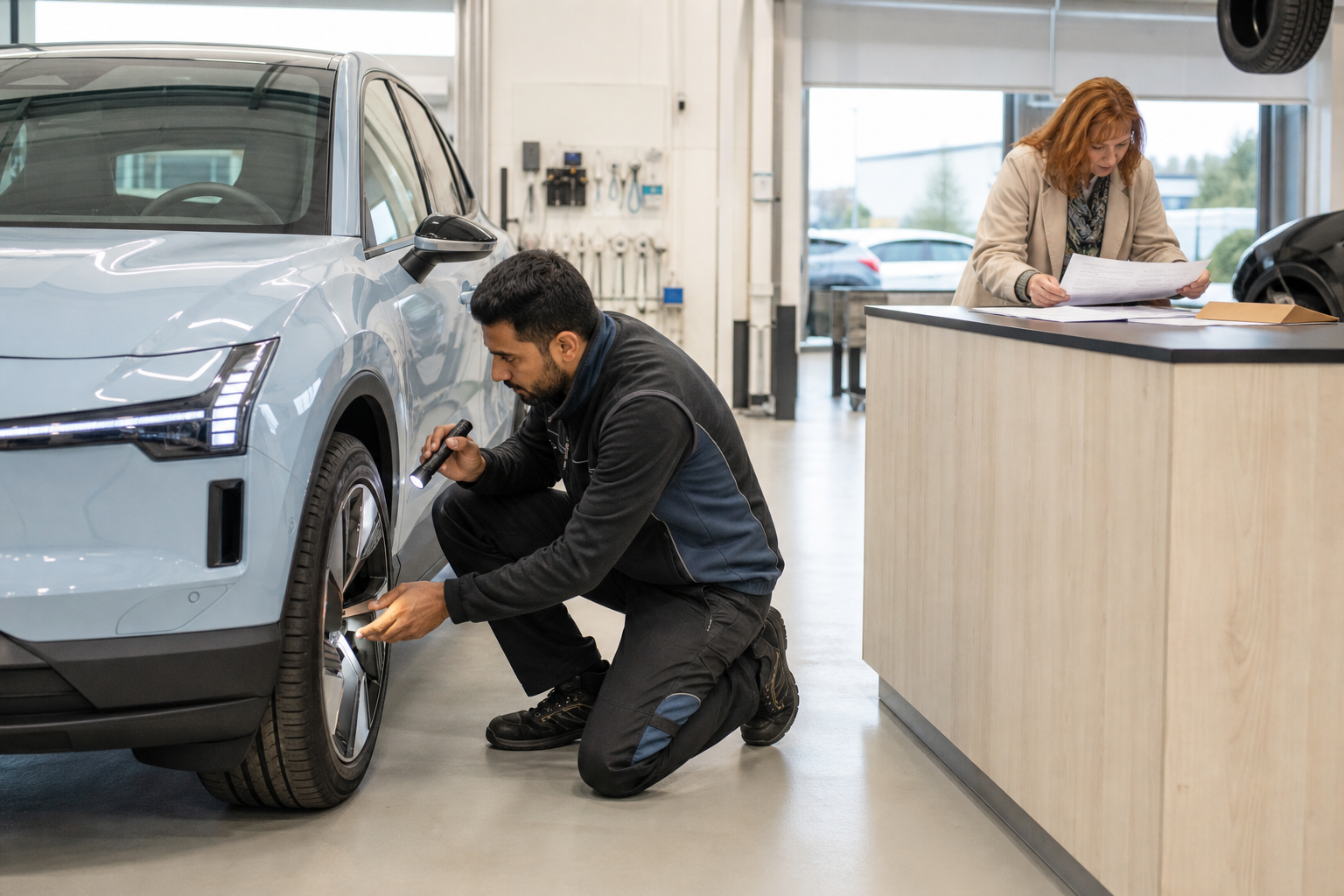
The Swiss MFK is a statutory technical inspection, not a pre-purchase audit. The technician should inspect the bodywork, underbody, corrosion, engine, transmission, brakes and electronics, and assess the car on a road test. For a car used in the mountains, pay attention to the brakes, four-wheel drive, automatic transmission and unevenly worn tyres.
Recalculate the total landed cost after the inspection. An expensive repair has a greater impact once customs duty, VAT and excise duty have been added because the buyer has already invested in non-refundable administrative costs.
Polish import from a non-EU country
When importing from Switzerland, the process is divided across two borders: export from the country of sale and import into the EU customs territory. A Polish buyer must account for customs formalities, import VAT and, depending on the vehicle’s parameters, excise duty. The amount of customs duty may depend on customs origin and whether valid proof of preferential origin exists. The place of manufacture stated in the advert is not enough.
The Polish registration deadline starts once the vehicle is released for free circulation. Customs-clearance documents are also attached to the application. A vehicle without European type approval or with a different specification may be subject to additional technical requirements. Check the CoC, lights, emissions documentation and instrument readings before buying.
The practical consequence is simple: never compare the price of a Swiss car with the price in a Polish advert without separate lines for transport, customs duty, VAT, excise duty, type approval and registration. After every step is added, a cheap car may become more expensive than a comparable vehicle from the EU.
When a Swiss offer is effectively unpriced
The seller claims that a European brand means zero customs duty. Proof of origin is missing. The price excludes Swiss VAT, but the exemption conditions are not in writing. The customs representative has not seen the invoice or VIN. The car has no CoC and has a US specification. In that situation, you do not know the final price and should not pay a non-refundable deposit.
FAQ
Is a car from Switzerland subject to customs duty?
It is an import from a non-EU country. Preferential origin and valid proof may affect the outcome. Confirm the specific rate with a customs representative.
Does a German brand mean zero customs duty?
No. The brand or place of assembly is not enough without the appropriate proof of origin.
Which documents are needed for export?
The registration document, identification, proof of purchase, export declaration and any proof of origin. Check the precise list with the Swiss customs authority and the relevant canton.
Does MFK replace a pre-purchase inspection?
No. MFK confirms statutory technical roadworthiness at a particular time, not a complete economic assessment of the purchase.
Primary sources
- Swiss FOCBS - exporting a vehicle - customs export declaration and documents
- Swiss customs - proof of origin - preferential origin and documents
- Polish Ministry of Infrastructure - vehicle registration - the 30-day deadline and registration framework
- PUESC - AKC-US - declaration within 14 days, payment within 30 days
- Your Europe - registering a car in another EU country - general cross-border framework